
In My Mom Jayne, Mariska Hargitay digs through the emotional and public ruins of her own origins with both courage and tenderness. Best known for playing Detective Olivia Benson in Law & Order: SVU, Hargitay makes her documentary directing debut with a project that feels like a love letter, an attempt at reconciliation, and a personal emancipation. At its center is her mother, actress and 1950s sex symbol Jayne Mansfield, who died tragically in a car accident on June 29, 1967 (exactly 58 years ago today)—when Mariska was just three years old and riding in the same vehicle, injured but alive.

Premiering at the 2025 Cannes Film Festival, My Mom Jayne is not simply a biography of a Hollywood figure; it is an attempt to peel back the mythology. Jayne Mansfield—often dismissed as a poor man’s Marilyn Monroe—was, in reality, a multilingual, musically trained, intelligent woman with real ambitions. Mariska herself refers to the documentary as an “archaeological dig,” trying to uncover who her mother truly was.
That need for excavation is personal. For much of her life, Mariska felt more embarrassment than pride in her mother’s legacy. Raised in Catholic schools and yearning for a more conventional maternal figure, she instead faced a constant barrage of images of a woman in swimsuits, spilling cleavage, posing for tabloids. “I just wanted a mom like everyone else,” she confesses in the film. “Less boobs, less scandal, less exaggeration.”
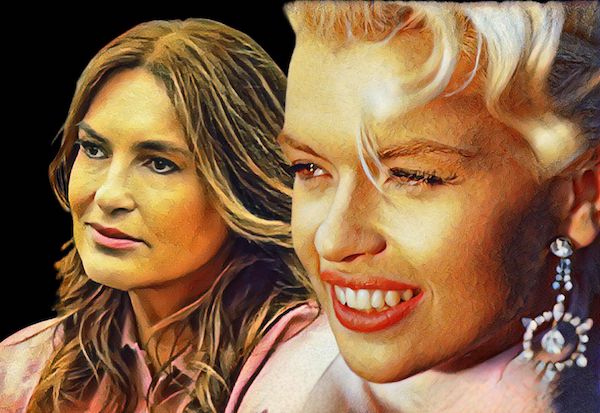
The narrative deepens with a revelation that had long haunted Hargitay’s private life: her biological paternity. Though Mickey Hargitay—Hungarian bodybuilder turned actor—raised her as his own, in adulthood, Mariska discovered that her biological father might actually be Italian entertainer Nelson Sardelli, with whom her mother had a brief affair. Mickey denied it when confronted, and out of loyalty, Mariska never brought it up again while he was alive. “The ground disappeared under my feet,” she recalls. “But I had a father—I didn’t need another.”
The film weaves this emotional lineage with striking honesty. Hargitay interviews siblings from both paternal lines and exposes how loss, silence, and shame fractured and shaped them all. Perhaps the film’s most powerful moment comes when the entire extended family—both Hargitays and Sardellis—gather to watch the documentary together, holding hands as they face a past long buried. “Memory fragments you in so many ways,” Hargitay says. “To see the story organized was like, ‘Oh, now we can deal with that.’”
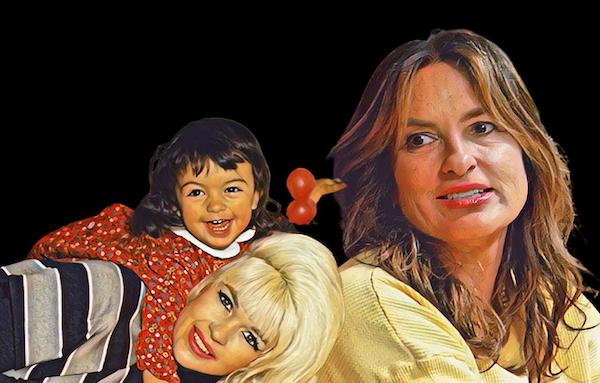
The film also sheds new light on Hargitay’s own career. Her iconic role as Olivia Benson—television’s most steadfast protector of victims—takes on added depth when viewed through the lens of a daughter who grew up embarrassed by a hypersexualized mother and confused about her origins. Hargitay, who leaned into a tomboyish persona in youth, seems to have redefined womanhood on her own terms: strong, maternal, respected, and unsexualized.
Ultimately, what makes My Mom Jayne resonate is its refusal to either sanctify or vilify. Jayne Mansfield is not painted as a martyr or a monster—just as a woman. In an era addicted to extremes, this balanced portrayal is radical. It is also a kind of historical repair: Mansfield, long reduced to tabloid fodder and male fantasy, is finally given a voice—through the daughter who had to heal enough to listen.
Descubra mais sobre
Assine para receber nossas notícias mais recentes por e-mail.
 miscelana.com