
When Downton Abbey premiered on British television in September 2010, few could have predicted that a period drama about an aristocratic family and their servants in the English countryside would become a global phenomenon. Created by Julian Fellowes, an Oscar-winner for Gosford Park, the series was set in the early 20th century and blended drama, politics, history, and the complex social dynamics of a country on the verge of modernity. With sharp scripts, sumptuous costumes, and an emotionally accessible approach to themes like class, tradition, and progress, Downton Abbey quickly established itself as one of the most successful British productions of the 21st century—so much so that its unofficial spin-off, The Gilded Age, is following a similar path to success.

The story of Downton Abbey begins in 1912 with the sinking of the Titanic, an event that drastically alters the fate of the Crawley family. With the death of the heir to the title Earl of Grantham in the disaster, a new heir must be found: Matthew Crawley, a middle-class lawyer who suddenly finds himself entangled in aristocratic affairs. This premise already introduces one of the series’ central themes—the clash between tradition and change. While Robert Crawley (Hugh Bonneville), the patriarch, tries to preserve the estate and the values of the nobility, his daughters and the household staff begin to question and subvert the social roles assigned to them.
Over six seasons (2010–2015), Downton Abbey followed the Crawleys and their servants through turbulent historical periods, including the First World War, the Spanish flu pandemic, the collapse of the British Empire, and the early winds of social revolution that would redefine Europe in the 20th century. Mary (Michelle Dockery), Edith (Laura Carmichael), Tom Branson (Allen Leech), and the iconic matriarch Violet Crawley (Maggie Smith) became central figures in a narrative that balanced romance, scandal, political twists, and family tragedies.
The success was meteoric. The show was broadcast in over 200 countries, became the most Emmy-nominated British series to date (rivaling American productions), and gained a devoted global fanbase. In the United States, aired by PBS, Downton Abbey became a symbol of sophistication and high-quality escapism—a rare example of a period drama with massive popular appeal. Part of the fascination stemmed from its historical rigor and attention to detail, with authentic sets such as Highclere Castle, used as the Crawleys’ family residence.

However, not everything was flawless. The series faced criticism for idealizing the British aristocracy and for addressing issues like colonialism, inequality, and racism in superficial or anachronistic ways. The arc of Daisy, for instance, was considered promising but underdeveloped. Storylines involving Thomas Barrow, a gay character living in a hostile time, were praised for humanization efforts but also critiqued for lacking deeper exploration. Another notable controversy was a storyline involving sexual assault—which divided both audiences and critics regarding the necessity and tone of such a plot in a series generally known for its restraint.
In 2015, the show concluded its sixth season with a finale that delivered happy (or at least hopeful) endings for most characters. Yet the allure of the Downton Abbey universe was so great that films soon followed. The first movie premiered in 2019, featuring a royal visit from King George V and Queen Mary as a plot device to reunite the cast. It was a box office hit, proving public interest remained strong. In 2022 came Downton Abbey: A New Era, which took some characters to the south of France, introduced new plots, and carried a tone of farewell—especially in the final arc of Countess Violet, played by Maggie Smith, who dies, leaving Mary the symbolic legacy of Downton.
Now, a third and final film has been confirmed as “the definitive conclusion” to the saga. The trailer for Downton Abbey: The Grand Finale makes it clear the farewell will be dramatic, elegant, and emotional. Set to premiere at the end of 2025, the preview reveals that Lady Mary (Michelle Dockery), always the rational and modern anchor of the family, will face one of the biggest scandals of her journey: her divorce from Henry Talbot (Matthew Goode). The trailer’s central sequence shows Mary at a lavish ball, publicly exposed by a new character, played by Joely Richardson, who loudly announces, “She’s divorced!”, drawing stares of judgment and widespread embarrassment. This pivotal scene underscores the weight reputation still holds—even for a forward-thinking woman like Mary.
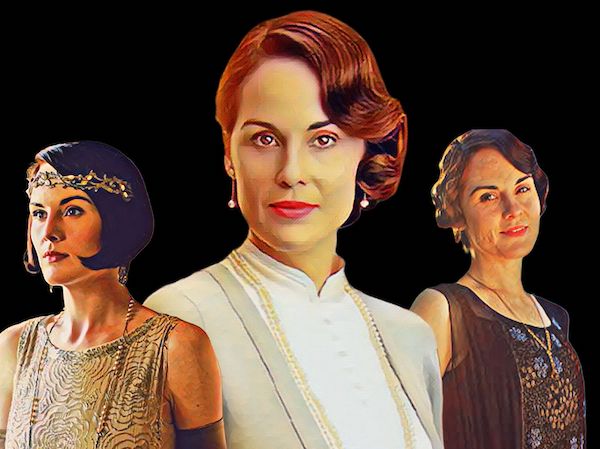
Mary’s divorce appears to mark a turning point both personally and institutionally for Downton Abbey. While dealing with the scandal, she is pressured to prove she can lead the estate and uphold the family legacy amid social and economic upheaval. The trailer also hints at financial troubles and internal conflicts, suggesting the Crawley legacy is once again at risk—but now under the leadership of a new generation.
The trailer also features the return of key characters like Harold Levinson (Paul Giamatti), Cora’s brother, and introduces new faces like Alessandro Nivola, whose role remains mysterious. Set in the 1930s—with all its glamour, political tension, and signs of transformation—the tone is solemn and nostalgic. The golden lighting, ballroom scenes, and old portraits reinforce that this is, indeed, the final chapter.
One especially moving moment in the trailer is the tribute to Dowager Countess Violet Crawley, played by Maggie Smith. In one scene, Mary gazes at a portrait of her grandmother and says, “Everything has led to this”—a line that serves both as narrative closure and a nod to Violet’s lasting impact. Maggie Smith passed away in September 2024, and the film seems to incorporate this real-life farewell to add emotional weight.


Reactions to the trailer have been intense. On social media, longtime fans expressed deep emotional responses to the scenes. Comments like “Fifteen years with this family” and “No one’s leaving that cinema with dry eyes” flooded fan pages and forums. On platforms like Reddit, some users voiced fatigue with the franchise’s longevity, saying the previous films felt unnecessary—but admitted they’d still watch out of attachment to the characters. Others highlighted that Mary’s divorce adds relevant drama and is consistent with her character arc, showing her ongoing struggle to balance personal freedom and traditional duty.
Matthew Goode, who played Henry Talbot, confirmed he would not appear in the film, joking in interviews that his character had become “a soggy lettuce”—a humorous way of saying Henry had lost dramatic relevance. His absence, already noticeable in the previous two films, is now directly explained by the separation.

Critics have begun to speculate that the film may address heavier themes, such as the rise of fascism in Europe, the evolving role of women in British society, and the end of the aristocratic estate era. All signs point to Downton Abbey: The Grand Finale being not just an affectionate farewell but also a portrait of a world in dissolution—a swan song for a society that resisted modernity for as long as it could.
Thus, more than a decade after its debut, Downton Abbey remains a symbol of nostalgia, tradition, and the enduring global fascination with Britain’s past. More than just a series about a noble family, it is a chronicle of a changing world—a world that still echoes in the living rooms of the 21st century.
Let me know if you’d like this formatted for publication, adapted to a specific platform, or accompanied by image suggestions.
Descubra mais sobre
Assine para receber nossas notícias mais recentes por e-mail.
 miscelana.com