
This was my first album — and my first rock album. Technically, it belonged to my father, since he was the one who bought it, but he always said it was “for me.” And when I demanded ownership, it was granted. Fruto Proibido was the record that stayed fixed in the living room of my home in Brasília when I was just a five-year-old child. Little did I know it would become a lifelong love and obsession.
At that age, the connection was purely melodic: I couldn’t understand the lyrics, the context, the coded messages. But I listened to it endlessly. I would put the vinyl on, sit on the floor, and journey into a universe I only later came to understand — a universe of freedom, irony, and invention.
As I grew older, the lyrics began to reveal themselves to me. And now, at 55, what moves me most is Rita, the woman — complex, irreverent, feminist, always ahead of her time.
And in 2025, we celebrate the 50th anniversary of the release of Fruto Proibido.
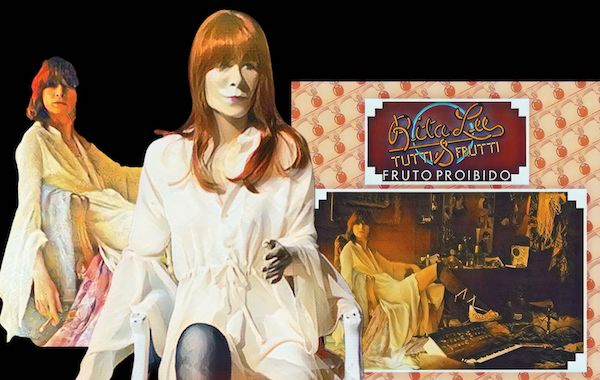
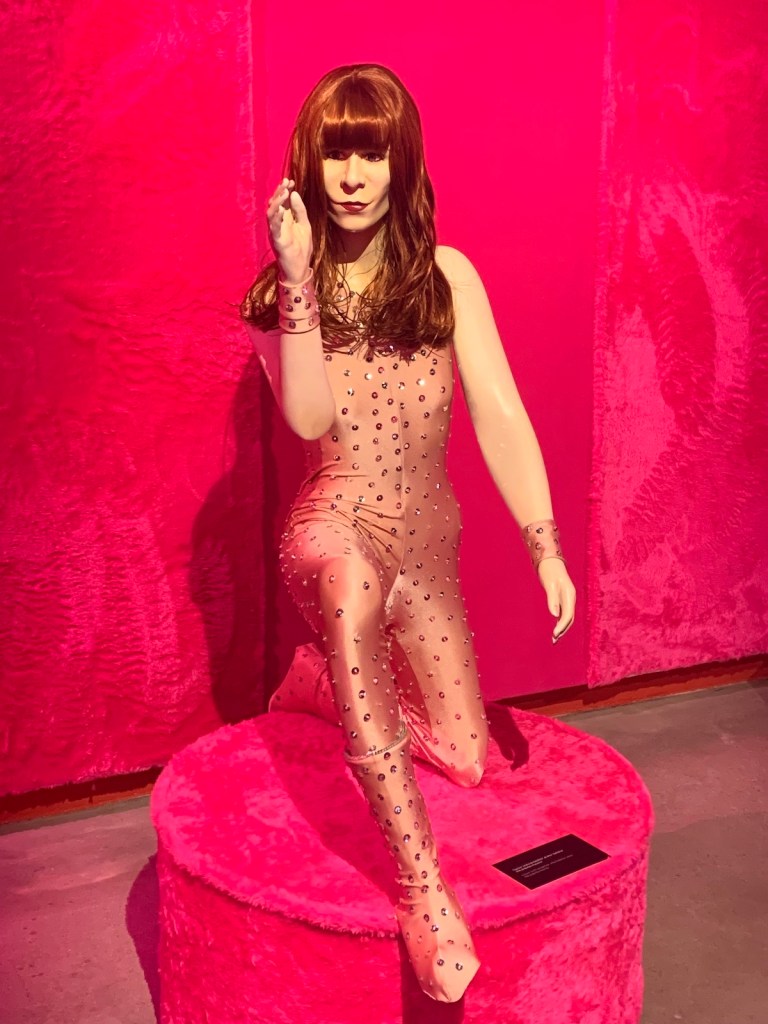
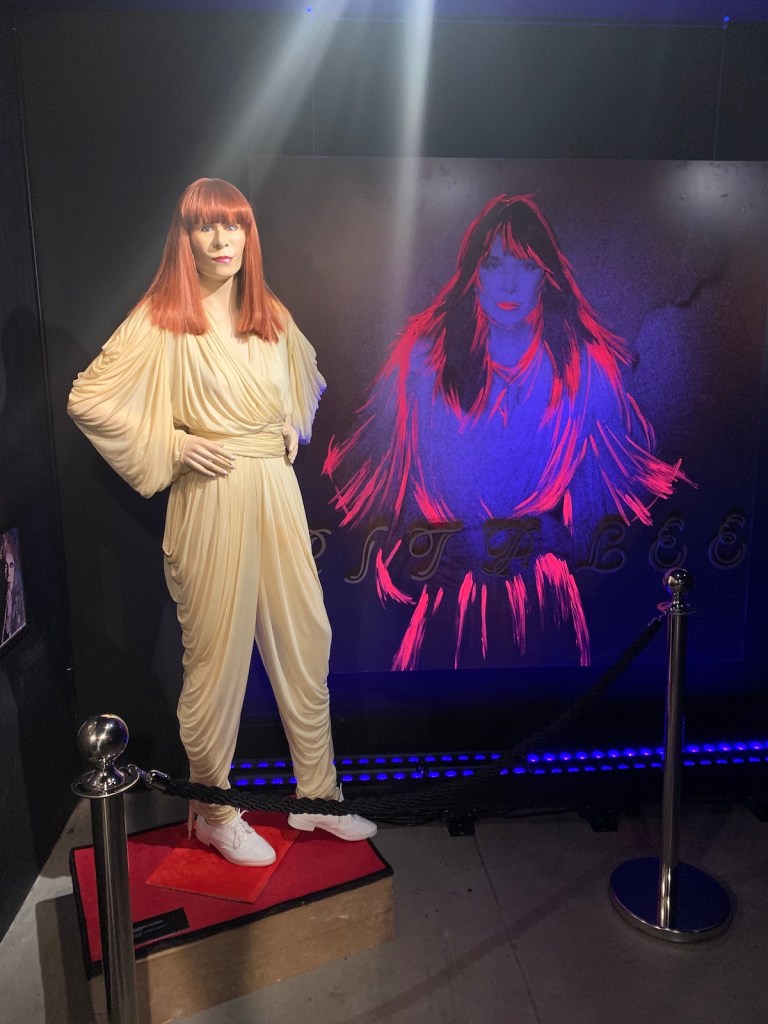
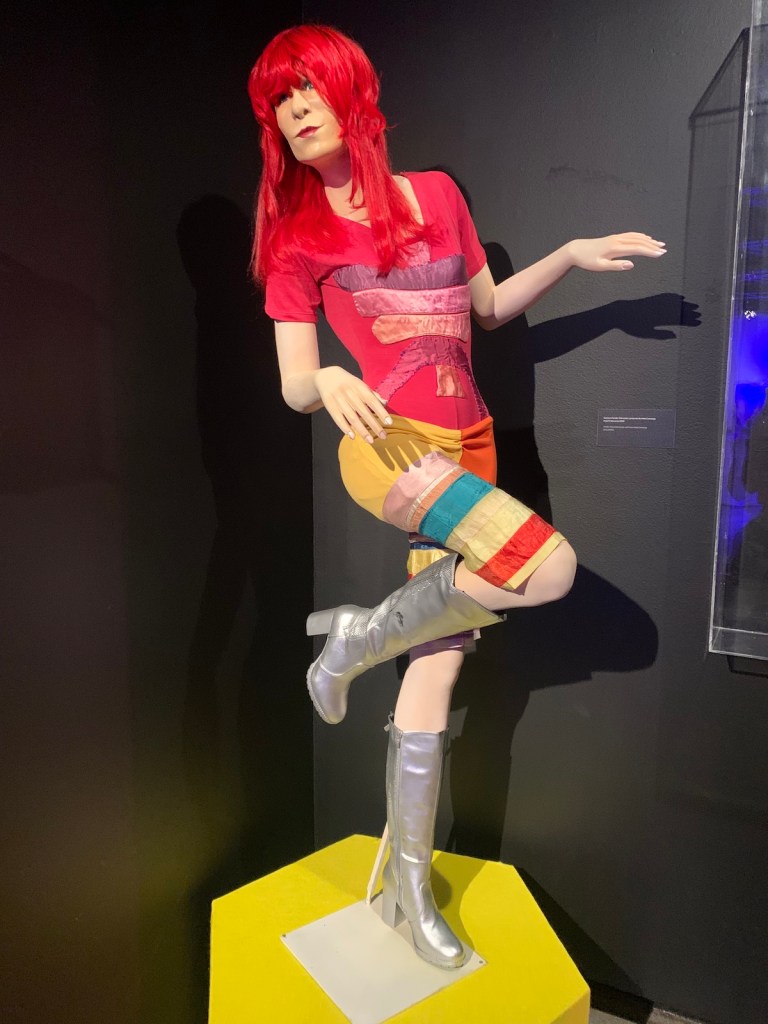
In 2023, not long before her passing, I visited her retrospective at the MIS museum. I cried when I saw, up close, the original dress from the album cover and the recreated living-room-like set — a space I had long imagined as a child. It was then, as an adult, that I truly understood Fruto Proibido was more than a record: it was a portal into a Brazil that few dared to show — especially a woman. Years earlier, I had already turned into a child again when I found the CD at an antique fair in Sampa — it was hard to find in stores, and I was so happy to have stumbled upon it. Yes, Rita Lee has always made me happier.
And in everything I do
There’s a reason why
I know I was born
I know I was born to know
Rita Lee, “Agora Só Falta Você”
Released on June 30, 1975, Fruto Proibido was Rita Lee’s second album with the band Tutti Frutti, led by Luiz Carlini (guitar), Lee Marcucci (bass), Franklin Paolillo (drums), Guilherme Bueno (keyboards), and Rubens and Gilberto Nardo (backing vocals). Produced by Andy Mills, Rita’s partner at the time and a former roadie for Alice Cooper, the album was recorded at Estúdio Eldorado in São Paulo. It marks the precise moment Rita Lee shed the “ex-Mutante” label and emerged as Brazil’s undisputed queen of rock.


She had attempted a fresh start with Atrás do Porto Tem Uma Cidade (1974), though it was heavily shaped by the label’s input. But with Fruto Proibido, released under Som Livre, she was finally free to compose, play, sing, and produce her way. The result was a record that not only embodied the spirit of rock but twisted it on its head.
The album is short (a little over 30 minutes) and features nine tracks — all written by Rita, either solo or in collaboration — exploring themes like personal freedom, feminist rebellion, irony, and pleasure. “Agora Só Falta Você,” co-written with Carlini, became an anthem of female autonomy and even made its way into a popular soap opera soundtrack. “Esse Tal de Roque Enrow,” written with Paulo Coelho, cheekily mocked Brazil’s uptight middle class and their incomprehension of youth culture. Other tracks like “Cartão Postal,” “O Toque,” and “Dançar pra Não Dançar” blended blues, psychedelia, and mystical vibes — Rita’s witchy energy was already peeking through.
He’s such a smart boy, doctor
He wants to change the world
That so-called Rock ’n’ Roll, Rock ’n’ Roll
Rita Lee, “Esse Tal de Roque Enrow”

But nothing compares to the power of “Ovelha Negra.” The folk-rock ballad that closes the B-side became the album’s signature hit and a generational symbol. Featuring an iconic guitar solo by Carlini — which he dreamed up, literally — the song spoke to everyone who had ever felt like an outsider. Women who didn’t fit the mold, teens resisting family expectations, and artists refusing conformity.
It’s important to remember the context: 1975, still under Brazil’s military dictatorship. Rock itself was suspect, dangerous. And if male rockers were already considered rebellious, imagine a woman. A woman in red lipstick, name-dropping Isadora Duncan, channeling Luz del Fuego, mocking moralists with a grin that said, I’ve already won. Rita Lee dared more than anyone.



No wonder Fruto Proibido was a critical and commercial success. It sold 200,000 copies by the end of 1976 and is still considered one of the greatest albums in Brazilian music history. It hasn’t aged because it was never tied to a specific time — it was tied to an idea: that freedom is the greatest scandal of all.
Baby, baby
There’s no use calling out
When someone is lost
Trying to find themselves
Rita Lee, “Ovelha Negra”
I still have the original LP, though the cover got pretty much destroyed over time and after moving from city to city. It’s the soundtrack of my childhood, the foundation of my teenage years, the soul of my adult life. Fruto Proibido is Rita Lee in full — wild, sweet, provocative, free. And that’s why it will never leave my living room, or my heart.
Descubra mais sobre
Assine para receber nossas notícias mais recentes por e-mail.
 miscelana.com