
Apple TV+’s new series Smoke is presented as a fictional crime thriller about arson, but it’s far from just a stylized detective story. Created by Dennis Lehane — best known for Black Bird — the show is a dark, haunting blend of psychological suspense and loosely based true-crime retelling. Beneath the slick production lies the chilling inspiration of John Leonard Orr, a real-life fire investigator who turned out to be one of the most prolific arsonists in U.S. history.
In the series, Taron Egerton plays Dave Gudsen, a charismatic, intelligent, and seemingly principled fire investigator. He teams up with Detective Michelle Calderon (played by Jurnee Smollett) to track down a string of arson attacks on the U.S. West Coast. But by the end of episode two, the mask begins to slip: Dave is actually one of the two arsonists they’re hunting. He’s been lighting the very fires he’s pretending to investigate — using bags of potato chips as accelerants in mall food courts.
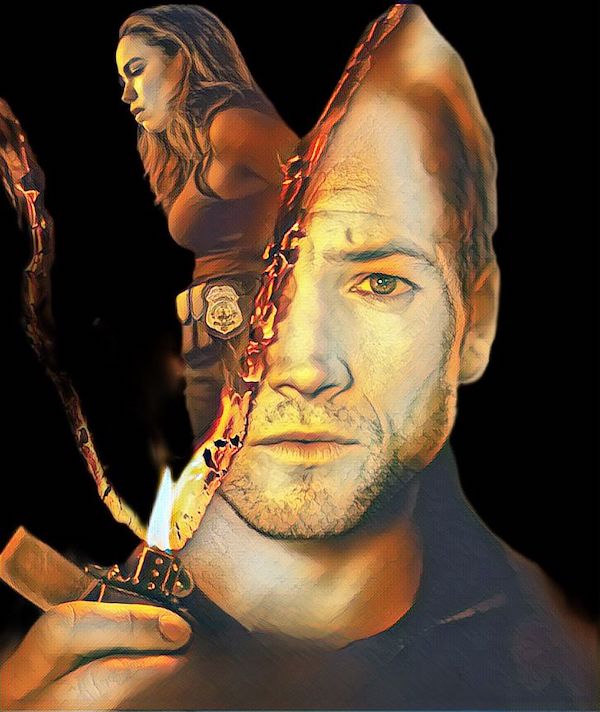
That twist, though shocking to viewers unfamiliar with the source material, is drawn almost directly from the case of John Leonard Orr. Like Dave, Orr was a fire captain and lead arson investigator who secretly set fires across Southern California over nearly three decades. He is believed to be responsible for as many as 2,000 fires between 1984 and 1991. One of the deadliest was the 1984 blaze at Ole’s Home Center in South Pasadena, which killed four people, including a 2-year-old child.
Orr used timed incendiary devices — often assembled with matches, cigarettes, and cellophane — and would regularly show up at his own crime scenes. Like Gudsen in the series, he was often the first to arrive and the most vocal in analyzing the aftermath. His obsession with fire extended to fiction: he penned a novel, Points of Origin, about a firefighter who is secretly an arsonist. Details in the manuscript closely matched scenes of real-life fires, and it was later used as evidence in court.
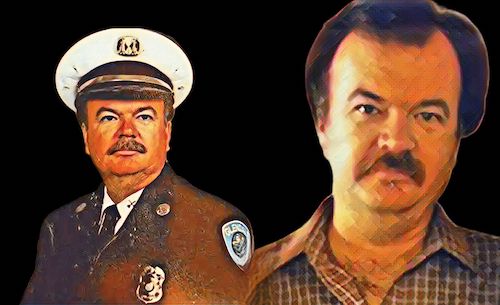
After months of surveillance — including the placement of tracking devices on his vehicles — Orr was arrested in 1991. In 1992, he was convicted on three counts of arson and sentenced to 30 years in prison. In 1994, state prosecutors brought 21 more arson charges and four counts of murder. He was found guilty on all but one charge and sentenced to life without parole in 1998. Orr still claims he’s innocent and remains incarcerated at California State Prison, Centinela.
Smoke largely lifts this biographical framework, transposing it into a contemporary setting. The fictional Umberland County, the modern tone, and the underlying commentary on surveillance culture and institutional trust all serve to make the story resonate today. Like Orr, Dave Gudsen is writing a book that supposedly draws from his investigations — but is likely based on his own crimes. And like Orr, he’s positioning himself at the center of the firestorm, not to solve it, but to control the narrative.
The highlight is Egerton, who has portrayed five roles based on real people (or directly inspired by them), and he is establishing himself as a standout actor in this niche — especially in biographical dramas with intense emotional or psychological depth.
Dennis Lehane and Taron Egerton previously collaborated on Black Bird, another Apple TV+ series based on a true crime case. Here, they deepen that collaboration. Egerton delivers a nuanced performance, portraying Dave as both magnetic and disturbing. His Gudsen is a man who seduces with intellect and apparent empathy — until we realize it’s all a facade. He doesn’t just light the fires. He choreographs them. He investigates himself. He seeks praise for putting out fires he started.

But while Smoke makes many bold, creative choices, it’s not without its flaws. The direction is stylish — sometimes too much so. Slow-motion shots, shadowy palettes, and a brooding score give the show a dreamlike, often overly polished feel. This slickness can blunt the emotional weight of certain scenes. Instead of amplifying the horror, the aesthetic sometimes shields it. It’s as if the story’s raw brutality is too dangerous to show without a filter.
That said, the show doesn’t claim to be a documentary. Lehane has said he wanted to create a character “inspired” by Orr, not recreate him. Smoke is a hybrid of fact and fiction — not just an investigation of an arsonist, but of human compulsion: for power, for recognition, for destruction disguised as purpose.
If you’re expecting a conventional crime procedural, you may find Smoke disorienting. But if you’re open to diving into the psyche of a man who needs to set fires to feel alive — and still craves admiration — the journey is well worth it. Fire, in this story, isn’t just a physical force. It’s ego. It’s vanity. It’s the institutional lie that burns hottest when nobody is watching.
Descubra mais sobre
Assine para receber nossas notícias mais recentes por e-mail.
 miscelana.com