
Even though it draws only loosely from the title and premise of the original novel, The Buccaneers, the series felt compelled to break a character who, until now, had only been a victim of schemes and circumstances: Theo. Villains aren’t always born. Sometimes, they’re made. And in the sun-drenched and emotionally charged world of The Buccaneers, the duke, played by Guy Remmers, may be one of the most fascinating examples of that transformation.
In the central episode of the second season — the one in which Theo finally discovers that the feelings between Nan (Kristine Froseth) and Guy (Matthew Broome) never really went away — his character undergoes such a seismic emotional upheaval that not a stone seems left standing of the man we once knew. What we see afterward isn’t exactly an antagonist, but rather a radicalized version of himself. Theo doesn’t become cruel; he becomes free. And for a man raised in a society that suppresses every emotional impulse, that freedom comes at an immense cost.
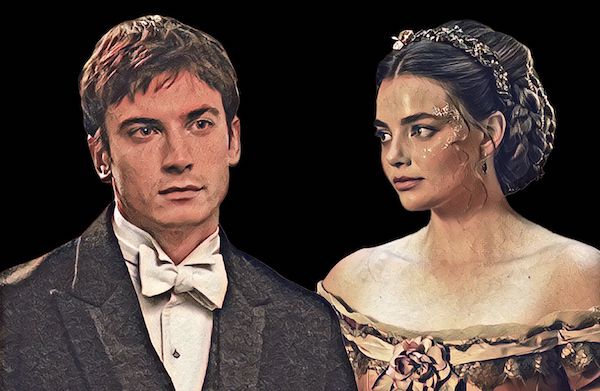
In this hysterical mismatch of characters driven by whirlwind emotions, Theo finds himself the victim of his mother’s schemes and a fool deceived by those he trusted most. He’s harsh with Nan, eternally irritating and emotionally tone-deaf — she admits to marrying him only for his title, but takes offense when he demands an heir. Such are the anachronisms of the series.
Once again, Nan throws herself into fate’s hands by humiliating the only person who never lied to her — like Guy, or even her in-laws, who never demanded anything of her beyond choosing him. I absolutely loathe this version of Nan in The Buccaneers.
And then there’s Lizzy, who accepted a proposal from a nice man but is now in love with Theo (she really does fall for all the St. Clair men, just saying), and there’s definitely a spark between them. But of course, there’s also Nan, marriages, and a dozen other barriers.
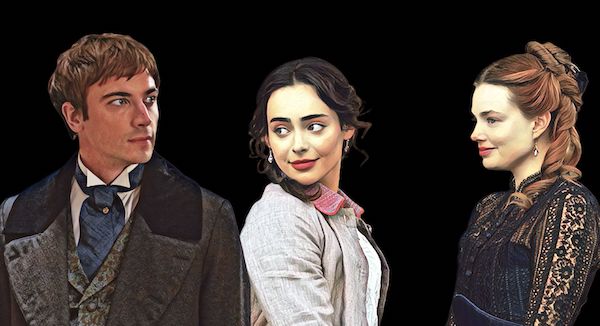
Guy’s transformation, at least, seems poised to inject more interest into what has otherwise been a dull storyline. More trouble looms: Jinny is getting involved with Guy, so Nan now faces serious competition — inside and outside her marriage.
Theo’s mother makes another misstep, further ruining what could easily have been avoided. As we learn, she too was once like Nan — a rebel who gave up happiness for Duty and a title — and now, reuniting with the love of her life (in a brief cameo by Greg Wise), she decides to tell Theo that Nan never meant to hurt him, that she was persuaded to marry and lie to protect her sister — an idea planted by the mother-in-law. Now that Theo has been harsh to Nan, he — always the “good guy” — wants to apologize. But she’s already heading to Italy. Meanwhile, Lizzy, who considers calling off her own wedding to be with Theo, is rejected by him. So many confused people!
We’re still only halfway through the season, with plenty of opportunities left to watch Nan rush from one place to another. I’m still dying to see the scene where Theo dances alone, unchoreographed, unbound, to the sound of You Give Me Something by Jamiroquai (a personal choice by the actor), which promises to be one of the most beautiful of the season.
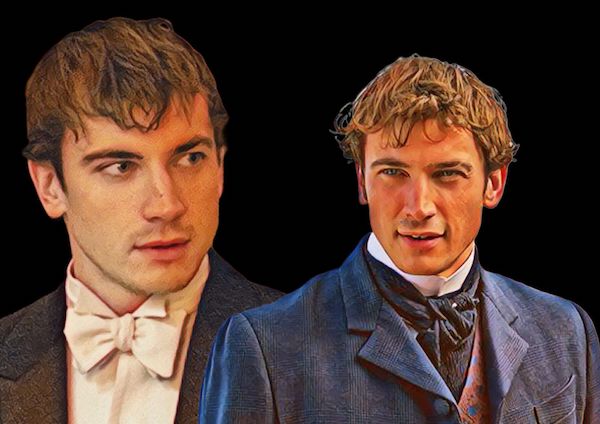
Even before that, though, this turning point repositions Theo on the show’s chessboard. In season one, he was the charming prince with depth — the one who made us question whether rooting for Guy was even right. Now, with his heart shattered and his rage finally surfacing, he gains the contours of an antagonist. But this antagonism isn’t that of a classic villain — it’s the antagonism of an obstacle. Theo becomes, undeniably, the greatest barrier to Nan’s freedom — and, in a way, to Guy’s happiness too. That’s what makes this conflict so compelling.
That tension is amplified by Remmers’ performance, which gives the character a depth that transcends the script. He doesn’t play Theo as vindictive or cruel, but as a wounded man trying to rebuild his identity after losing the foundation on which he built his life. And even when Theo veers into questionable territory, there’s always a flicker of humanity beneath the surface. His downfall doesn’t steal the spotlight from Nan — on the contrary, it sharpens the moral dilemmas she’ll now have to face. It also deepens the consequences of the choice she made.
In a series about young women breaking Victorian expectations, it’s especially powerful to watch a man crumble as those same expectations collapse. Theo is, after all, a product of his time — but also its victim. And now, perhaps, its most dangerous rebel. In the end, The Buccaneers shows us that love can be transformative — but so can pain. And when a duke breaks, the whole world hears it.
Descubra mais sobre
Assine para receber nossas notícias mais recentes por e-mail.
 miscelana.com