
Almost every time I talk about Henry James, I first mention my two favorite books — Washington Square, Portrait of a Lady, and Turn of the Screw —. Still, there are others like Daisy Miller, The Golden Bowl, The Bostonians, The Beast in the Jungle, among others. And, of course, The Wings of the Dove, one that is very personal to the writer.
The Wings of the Dove is not a love novel in the conventional sense — and perhaps precisely because of that, it speaks so much about what it means to love someone without courage, with guilt, with divided intentions. How to challenge your fate with the weapons you have at hand. Released in 1902, it is considered one of the highest achievements of English-language literature — not because it shouts, but because it whispers where it hurts.
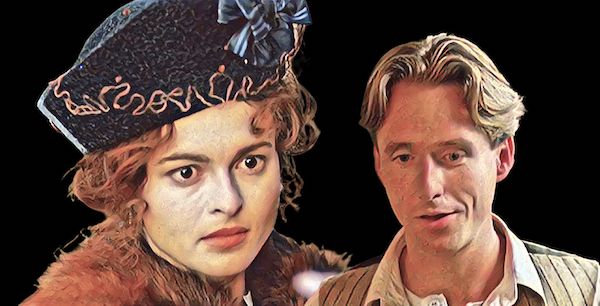
The story seems simple at first glance. A very wealthy young American woman, Milly Theale, is terminally ill. She travels to Europe to live her last months with some beauty and lightness. She finds herself surrounded by a society that sees her as an opportunity: behind the kindness, people are calculating, smiling too much. And among these people is Kate Croy, an intelligent, ambitious British woman, in love with Merton Densher, but without the money to marry. The plan she creates is subtle: Merton, who had already met Milly on a trip to the United States, must get close to the young woman again, win her over (since she clearly shows interest in him), perhaps even marry her. Thus, after Milly dies, they — Kate and Merton — will have a clear path and her fortune.
But it is not a classic scam. No one wants to harm Milly. They just wait for her announced and imminent end. And this is exactly what makes everything so cruel: Kate rationalizes that Milly will die anyway. That there is no “crime.” They are only positioning themselves in front of an inevitable tragedy. The emotional manipulation is subtle but corrosive. And Merton, hesitant at first, enters the game. What he did not expect — and maybe neither did Kate — was that Milly was so pure, so true, and that her presence would be able to disarm any cynicism.
What happens next is one of the most beautiful and heart-wrenching emotional moves in literature: Merton begins to see Milly as she really is. Not as a wealthy heiress, but as a complex, lonely, delicate woman, with an almost supernatural kindness. Milly demands nothing. She does not manipulate. She does not play games. She just is there, being who she is. And Merton, wrapped in shame and guilt, slowly falls in love with her — not passionately or romantically, but in a way that transforms him from within.
The turning point comes when Milly discovers the truth. Not directly — Henry James is never direct. But through Lord Mark, a cynical and spiteful character who hints that something is wrong in the relationship between Kate and Merton. Milly understands everything immediately. The way she reacts to this discovery says a lot about who she is: she does not confront anyone, does not take revenge, does not scream. She just falls silent. Withdraws. Dies quietly, with dignity, leaving Merton an inheritance in her will. Yes — she forgives him. Even after everything.

The end of the book is dry, empty, and cold. After Milly’s death, Merton refuses the inheritance. He tells Kate he can only marry her if she also refuses that money. It is his attempt to cleanse his own guilt. And the possibility that Merton loved Milly disturbs Kate. “We will never be as we were,” she concludes. And there, James ends the story. No kiss, no marriage, no official punishment. Just the acknowledgment that what was broken between them cannot be repaired.
It is because of this kind of construction that The Wings of the Dove is considered a masterpiece. Henry James writes as if carving in fog. He does not give us ready answers but forces us to feel the weight of the unspoken. Merton’s love for Milly is never declared aloud. But it is in the gestures, in the disarray, in the way he begins to see her as “a creature too refined for nature, too rare for art, too strange for fiction — and yet too real for a dream.” Milly becomes more than a character: she becomes a conscience. An echo.
Literarily, the book is part of Henry James’s so-called late phase, where his prose becomes denser, introspective, and psychologically rich. It must be read carefully, patiently — because every sentence contains layers. It is no wonder Virginia Woolf said that James “provided the raw material of tragedy with the weight of a single unsaid word.”

Some compare Kate Croy to Lady Macbeth; after all, they are determined women seeking inheritance and control over fate, but in truth, they embrace the inevitable tragedy of their choices. Others compare Milly Theale to Isabel Archer, but there is a big difference between them, since Isabel did not suspect Mrs. Merle and Osmond’s scheme until it was too late. Still, it is undeniable that they are young American women fighting against what seems predestined for them, unsuccessfully.
Behind the scenes, we know James was inspired by his cousin Minny Temple, who died young and prematurely. Milly is, in a way, a tribute to her — and an idealization of the woman who dies before the world can corrupt her. Milly’s purity is not naive: it is a challenge to the other characters. Merton cannot bear his own mediocrity in her presence. And that is what destroys him.
There are passages in the book that stay with you. When Milly realizes she is dying, and that everyone around her knows it too, James writes: “She was dying, and she knew it; but that was not the worst. The worst was that others knew it too.” The loneliness of death here is social. It is the embarrassment of being visible to others, like someone who is slowly abandoned to their own finitude.
Or when James writes that there was no crime, “only a kind of vile advantage.” This phrase defines what is most modern in the novel: there are no explicit villains, but there are gray areas. Kate loves Merton. Merton loves Milly. Milly loves both in her own way. And everyone loses. Everyone is, at the same time, a victim and an accomplice. And it is this moral dismay that turns the book into something much greater than a love triangle.

Reading The Wings of the Dove is like crossing a mirror: you see reflections of what you feel, what you have done, what you have left unsaid. With each rereading, something new emerges. Because it talks about what we rarely face head-on: what happens to love when there is money, illness, silence, and a plan that seems rational — until it no longer is.
There are many filmed versions of the novel, like the 1981 one with Isabelle Huppert, but the most praised is the 1997 adaptation, with Helena Bonham Carter (Oscar-nominated) as Kate Croy.
As in many of his books, the story ends inconclusively. Merton and Kate do not end up together, nor do they officially part ways. But Kate’s conclusion about how they were irreparably affected by what they set out to do is an honest one in a book that speaks, above all, about what cannot be undone. And in the way only Henry James knew how to describe.
Descubra mais sobre
Assine para receber nossas notícias mais recentes por e-mail.
 miscelana.com