
Even before the premiere of One Night in Idaho: The College Murders on Amazon Prime Video, the documentary was already making waves off-screen. Bryan Kohberger’s defense team argued in court that the series would compromise his trial by influencing public opinion. They asked for more time. The judge denied the request. Just weeks later—nearly three years after the brutal murder of four University of Idaho students—Kohberger pleaded guilty in exchange for avoiding the death penalty. Even with that outcome, the documentary remains essential in an era saturated with excessive true crime consumption—a genre that too often favors shock over care, villains over victims.
What sets One Night in Idaho apart is the powerhouse duo behind it: Liz Garbus and Matthew Galkin, both award-winning documentarians known for their ethical approach and sensitivity in handling difficult real-life stories. Divided into four episodes, the project revisits the murders of Ethan Chapin, Xana Kernodle, Madison Mogen, and Kaylee Goncalves, who were killed in their sleep on the night of November 13, 2022. While the case has dominated platforms like YouTube and TikTok—with an avalanche of speculation, conspiracy theories, and public judgment—Garbus’s series moves in the opposite direction, restoring depth, humanity, and context to the lives lost.
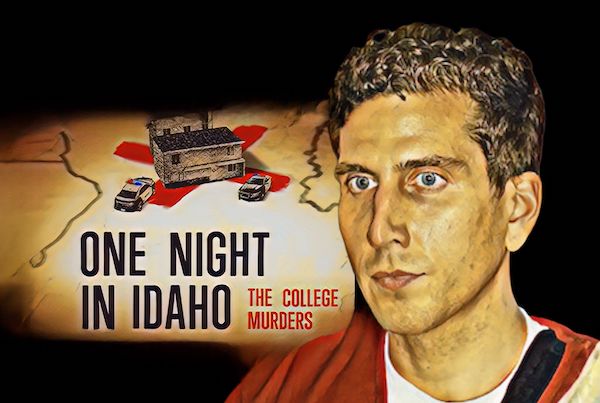
From its very first minutes, One Night in Idaho reveals its intention to avoid sensationalism. Bryan Kohberger’s name isn’t even mentioned early on. The focus remains entirely on the victims—their personalities, relationships, and interrupted dreams. The series rebuilds their lives using home videos, personal photos, and deeply moving testimonies from family, friends, and professors. It marks the first time the Chapin and Laramie families speak publicly about the tragedy, giving the series a level of emotional honesty rarely seen in this genre.
One of the most powerful aspects of the documentary is its sharp critique of digital culture. Garbus shows how YouTubers, TikTokers, and so-called “armchair detectives” exploited the case as entertainment. In a wave of livestreams, theories, and viral content, innocent people were defamed, and the victims’ families saw their grief overshadowed by a collective hunger for sensational narratives. Rather than focusing solely on the killer, Garbus turns the camera on us—on those who consume, share, comment, and transform real tragedies into digital content.
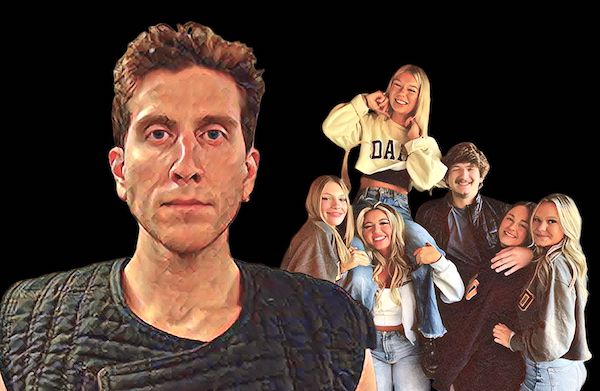
The series also details the investigation with accuracy. Among the key evidence: DNA found on a knife sheath, security footage, and phone records that placed Kohberger, a criminology student at Penn State, near the crime scene. In July 2025, just before the series premiered, he accepted a plea deal—admitting guilt and receiving four consecutive life sentences. This gives the documentary a rare sense of narrative closure and space for reflection instead of speculation.
A particularly disturbing moment comes in the final episode, which explores the possible online activity of Kohberger under the alias “Pappa Rodgers.” This account appeared to share inside knowledge of the case before details were made public. The series cautiously considers the possibility that the killer was feeding the media frenzy himself. It also touches briefly, but pointedly, on the idea that the crime may be linked to Incel culture—an interpretation raised earlier this year in Netflix’s Adolescence.

The critical reception has been largely positive due to the delicacy of the direction, the narrative intelligence, and the ethical commitment of the production. One Night in Idaho doesn’t aim to shock or “solve the crime” — that part is already done. Its strength lies in understanding and exposing the cultural and emotional consequences of the crime, both for the victims’ families and for a society increasingly addicted to consuming other people’s tragedies.
In a market saturated with true crime productions that often romanticize criminals or dilute the victims’ suffering, One Night in Idaho stands out as a milestone of respect and humanity. The documentary forces us to ask: Why do we consume pain as entertainment? What do we lose in the process? And what does it mean, today, to remember those who are gone without exploiting their deaths? Liz Garbus doesn’t offer easy answers—but she gives us what’s most lacking in this genre: empathy, memory, and silence where once there was only noise.
Descubra mais sobre
Assine para receber nossas notícias mais recentes por e-mail.
 miscelana.com