
Among the marble mansions of Fifth Avenue, the ballrooms where debutantes were displayed like family jewels, and the locked windows where secrets died muffled behind velvet curtains, lives Oscar Van Rhijn—perhaps the saddest and most realistic character in The Gilded Age. Julian Fellowes’ series, which has already delighted in exposing the social games of 19th-century American elites, finds in Oscar not merely a discreet villain, but a man cornered—by his time, his family, and his own desires.
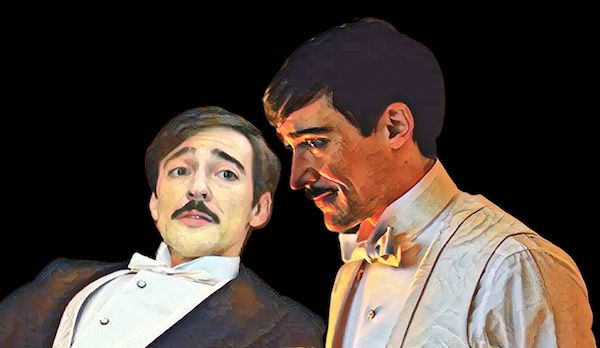
Oscar is Van Rhijn by blood, a member of one of New York’s most respectable and depleted old families. His mother, Agnes Van Rhijn, is the bastion of tradition: rigid, moralistic, ruthless toward what she considers vulgar. In this universe of appearances, the worst sin is failing to uphold the façade—and this is precisely the dilemma that eats away at Oscar. A homosexual in a time when desire between men was viewed as illness, crime, or scandal, he never had a choice. From an early age, his survival depended on performance.
Season one reveals his almost cynical plan: to marry Gladys Russell, daughter of the formidable Bertha Russell, and thus save the Van Rhijn estate with the young woman’s dowry. It would be a marriage of convenience—like so many real unions of that era—and for Oscar, a way to maintain a respectable façade while living a hidden life, away from his mother’s watchful eye and the judgment of society. The plan fails. Bertha, ambitious and sharp, sees through him and rejects the idea. Later, Oscar is deceived by Maud Beaton, a manipulative woman who, under the guise of being an ally, lures him into a financial trap that nearly ruins him.
It is in this context that John Adams emerges—Oscar’s secret lover and, at the same time, his greatest emotional abyss. John is a young teacher: discreet, educated, with a quiet sensitivity that contrasts with Oscar’s defensive arrogance. Unlike Oscar, John wants a real life: he yearns to live their love openly, free from hiding, from games, from manipulation. This creates a painful impasse between the two. Oscar loves him in his own way, but is so entangled in the social web of his own cowardice that he cannot reciprocate fully. He is afraid—of being seen, of being exposed, of losing everything—and so he sabotages the relationship with coldness and silence.

In one of the most emotionally charged scenes of season two, John demands that Oscar make a choice: either they live with integrity, or it ends. Oscar’s response—evasive, harsh, lacking the courage to break from his social role—drives John away. What remains is emptiness. Oscar, who worked so hard to maintain appearances, finds himself alone and emotionally wrecked. John’s departure marks more than the loss of a lover—it’s the loss of the only true chance at love he ever had.
But beneath his calculated coldness lies a deeper, more painful portrait. Oscar often appears bruised, with visible marks. This is not a metaphor: he takes real risks simply by being who he is. His encounters occur in shadows, with men who might be violent, manipulative, or dangerous. His loneliness is visceral. His need to disassemble suffocates. Oscar is a figure of classical tragedy—condemned to live a lie, with no real escape.
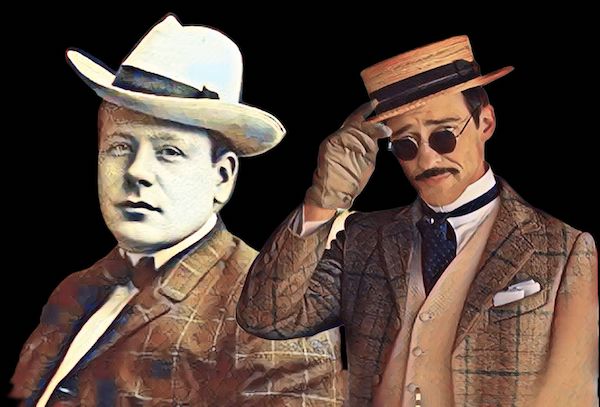
The inspiration for his character likely draws from real-life figures such as Henry Symes Lehr, known as Harry Lehr—or more theatrically, “King Lehr.” His name echoes with fascination and strangeness in the annals of New York’s Gilded Age elite. Charming, witty, a talented pianist and master of ceremonies at the city’s grandest receptions, Harry attempted to position himself as the successor to Ward McAllister, the self-appointed arbiter of elegance and creator of the legendary “Four Hundred” list that gathered Knickerbocker and industrial families into a club of absolute exclusivity.
Lacking noble lineage or personal fortune, Lehr compensated with presence, intelligence, and spectacle. To secure a place in New York’s rigid social hierarchy, he allied with Marion “Mamie” Fish, a satirical and spirited socialite, with whom he orchestrated legendary parties. One of the most talked-about was the so-called “dog’s dinner,” where over one hundred elite pets sat at decorated tables dressed in formal attire. On another occasion, Lehr dressed as the Czar of Russia, embodying the character with such conviction that he was henceforth known as King Lehr.
These hilarious and often self-deprecating performances masked a cruel bargain: to remain within the most exclusive circles, Lehr had to entertain without ever threatening real power. Like Oscar, he was needed as long as he was amusing—and disposable when he became inconvenient. The new matriarch of society, Grace Graham Wilson Vanderbilt, wife of Cornelius Vanderbilt III, had no patience for his performative flamboyance. Without the protection of figures like Mrs. Astor, Lehr came to be seen as excessive, his presence increasingly unwelcome in society columns and drawing rooms.
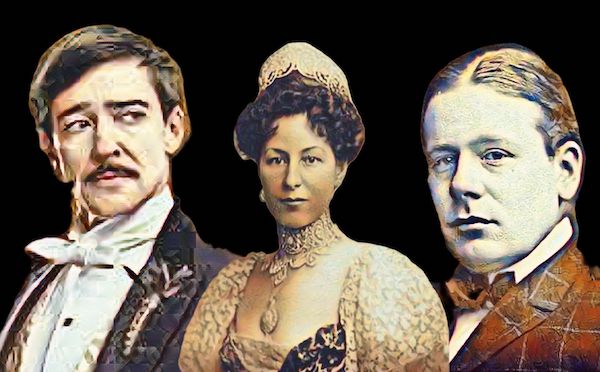
Lehr’s private life reveals even more striking similarities with Oscar’s. In 1901, he married heiress Elizabeth “Bessie” Drexel. On their wedding night, he coldly informed her that their marriage would never be consummated, as he found women physically repulsive. Bessie, isolated in a room filled with roses and caviar in anticipation of a romantic evening, was left in shock—a moment that became one of the most brutal anecdotes of emotional hypocrisy within America’s upper crust. Their marriage lasted nearly thirty years, upheld by social conventions and the pressure of Bessie’s mother, Lucy Wharton, a devout Catholic who would never allow a divorce.
Harry Lehr occasionally dressed as a woman—or wore flamboyantly feminine costumes—at social events, as part of his theatrical persona. But he did not live that way in daily life. It was an ambiguous way of challenging social norms without crossing them openly—much like Oscar Van Rhijn does in fiction.
As Oscar walks the tightrope between appearances and danger, Harry Lehr also lives under the constant need to perform. Gay in a time when such identity was not only unacceptable but criminalized, Lehr adopted an exaggerated persona as a form of protection. His parties masked not just the elite’s absurdities, but his own identity. Like Oscar, he lived in the shadow of himself—adored by powerful women, but never fully accepted.
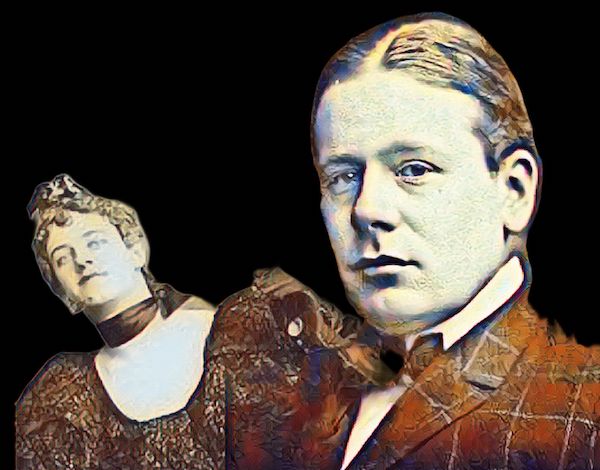

Season three of The Gilded Age intensifies Oscar’s tragic arc. One of his former lovers is murdered, and Oscar cannot even mourn him publicly. This denied grief is emblematic of a society unwilling to acknowledge the feelings of those who live outside the norm. The forced silence, the ashamed sorrow, the fear of exposure—all of it shapes Oscar’s daily life. And yet, he endures.
The blow delivered by Maud Beaton acts as a turning point. For the first time, Oscar is forced to confront not only the system, but himself. His social prestige collapses. His financial security vanishes. And he must rebuild without the traditional mechanisms—marriage, inheritance, rewarded discretion—that once upheld his place. The series suggests, with delicacy, that this collapse may lead him to a more authentic version of himself. But the cost is high. Very high.
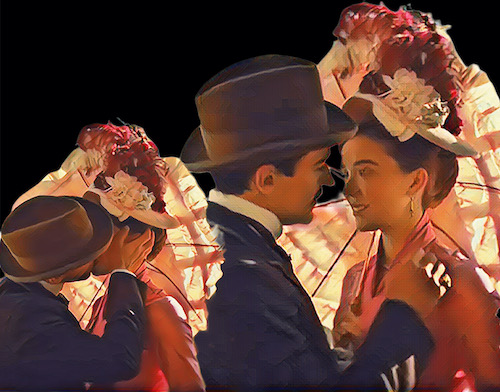
Harry Lehr, on the other hand, faced collapse in silence. Diagnosed with a brain tumor in 1923, he underwent surgery in 1927 and died two years later in Baltimore, far from the ballrooms that once celebrated him. His widow would remarry, recounting his story with a blend of tenderness and sorrow. Lehr died without leaving behind a true public legacy—only the hazy memories of an elegant clown who was never allowed to be who he truly was.
The phrase from a contemporary of the Gilded Age—“it was the original don’t ask, don’t tell”—aptly describes what both men lived: a pact of silence where everything could be tolerated, as long as it remained out of sight. The pain of this double existence—of constant vigilance, of the inability to love in public—accumulates in Oscar’s tense gestures, in Harry’s forced laughter, in the longing glances that beg for something more than a façade.
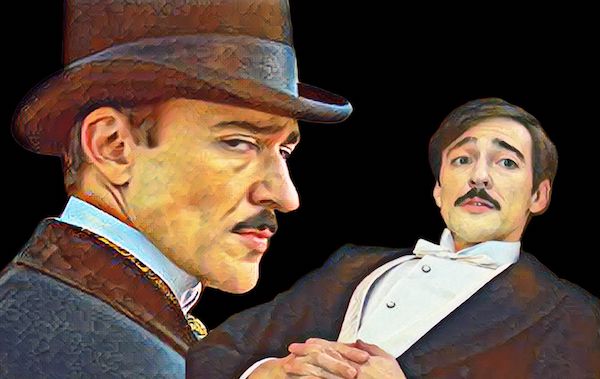
While Bertha Russell plays social chess with titans of industry and Agnes Van Rhijn maintains her tower of Victorian morality, Oscar moves through the series like a ghost of what might have been: a sensitive, intelligent man crushed by the demands of a world that turned affection into threat. In his story, The Gilded Age uncovers not only the sexual repression of the past, but the persistent echo of what still hides beneath the surface of so many rooms decorated in silence.
Descubra mais sobre
Assine para receber nossas notícias mais recentes por e-mail.
 miscelana.com