
When The Gilded Age premiered on HBO Max, it quickly became clear that the true protagonist of the series wasn’t just the opulence of Fifth Avenue mansions, but the silent and relentless force of money—especially that which came from the railroads. Around 1883, roughly the year depicted in the show’s third season, the United States was at the peak of its railroad expansion, and characters like George Russell perfectly embody the so-called robber barons—magnates who shaped (and exploited) this era of explosive growth.
The Railroad Boom in the United States
Between 1830 and 1900, the United States went from a few hundred miles of track to over 300,000 kilometers connecting the country from coast to coast. Railroads were the driving force of American industrialization, transforming the transport of people and goods, integrating regional markets, and facilitating westward migration.
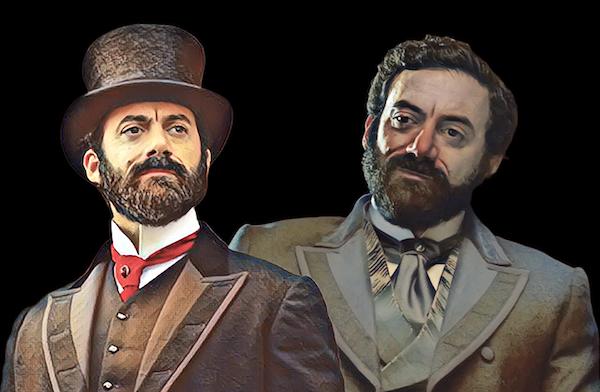
The turning point came with the First Transcontinental Railroad, completed in 1869, which connected the East (starting in Omaha, Nebraska) to the West (Sacramento, California), uniting the country after the Civil War. The construction was financed with generous government subsidies and land grants, creating massive opportunities—and many scandals.
In the following decades, hundreds of new lines emerged, many built hastily or purely for speculation. Some grew into lasting empires; others failed quickly. This environment of sudden wealth and abrupt ruin is the perfect backdrop for a series like The Gilded Age.
George Russell and the Empire on Rails
In the series, George Russell is a fictional character but inspired by real-life figures such as Cornelius Vanderbilt, Jay Gould, Collis P. Huntington, Leland Stanford, and James J. Hill. All these men grew rich through railroads, often operating in ethical and legal gray areas. George, in turn, appears in 1883 negotiating with J.P. Morgan to secure funding for a coast-to-coast railway line—an ambitious and plausible venture for the time.
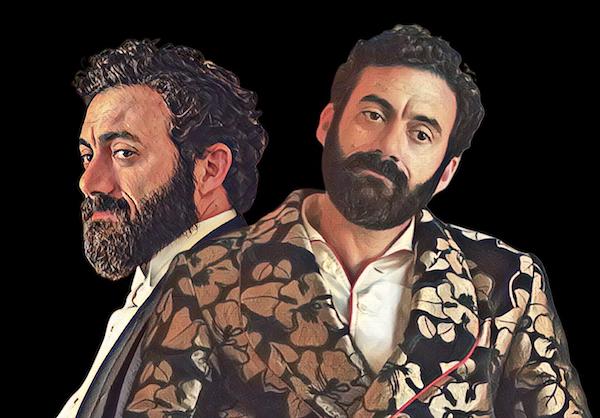
Although the transcontinental railroad had already been completed in 1869, what George seems to seek is control over new, parallel, and more profitable routes with access to industrial and mining regions such as Arizona (where he tries to acquire mines in Morenci). In practice, he wants to build a vertically integrated empire: trains, minerals, steel, and transport. This vertical logic was typical of the barons of the period, who sought to eliminate middlemen and control every stage of production.
Who Were the Robber Barons?
The term “robber baron” began to be used in the late 19th century to describe extremely wealthy industrialists and financiers who used aggressive and often unethical practices to amass their fortunes. The phrase carries an ambiguous tone: while many saw them as entrepreneurial geniuses, others viewed them as greedy exploiters.
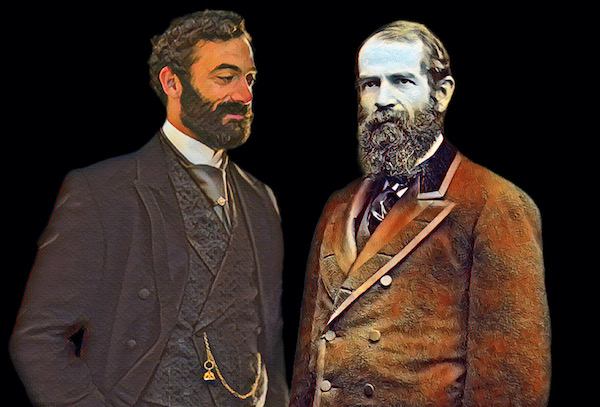
Among the most famous robber barons were:
- Cornelius Vanderbilt – Started with steamboats and became the king of Eastern railroads.
- Jay Gould – Notorious railroad speculator, involved in market manipulations and financial scandals.
- Andrew Carnegie – Dominated the steel industry (essential for railroads) and later reinvented himself as a philanthropist.
- J.P. Morgan – Not an industrialist, but a banker who financed and consolidated empires (like George‘s in the series).
- Leland Stanford – Co-founder of the Central Pacific Railroad and an influential political figure in the American West.
They amassed wealth like never before in American history—but also left behind a trail of inequality, corruption, and monopolies. Because of them, the first antitrust laws and market regulations emerged.
The Railroad Bubble and Its Consequences
The rapid growth of railroads also led to rampant speculation. Companies were founded just to sell stock—not to run trains. Many investors lost everything when bubbles burst—such as during the Panic of 1873, caused by fraud in the construction of the Northern Pacific Railroad.
This brings us back to The Gilded Age, where fans have speculated since Season 1 that hints are dropped suggesting that young Marian Brook inherited railroad stocks from her father. Tom Raikes, the lawyer in charge of the estate, tells her the shares are worthless. But fans speculate: what if he’s wrong? Or worse—what if he lied?

Marian Brook’s Forgotten Fortune
In the series, Marian is presented as a young orphan with no fortune of her own, living at the mercy of her aunts Agnes and Ada. But there’s an important clue: her father is said to have invested in railroads. Historically, this was one of the most common forms of investment for businessmen in the 1860s and 1870s—exactly the period during which Marian’s father would have built his wealth.
Tom Raikes, then a newly graduated lawyer, may not have understood the real value of the papers—or may have been dishonest, remembering that in the first season he tries to seduce Marian and ingratiate himself with the elite.
There’s also a historically accurate factor: stocks once deemed “worthless” could, years later, become highly valuable. If the railroad was bought by a larger company (like George Russell, for instance), the old shares could be converted into cash, bonds, or stock in the new company. In addition, delayed dividends could be paid retroactively, or the inheritance could include unaccounted assets.
In short, it is entirely plausible—both historically and narratively—that Marian might discover she is the heiress to a hidden fortune.

Wealth as a Dramatic Engine
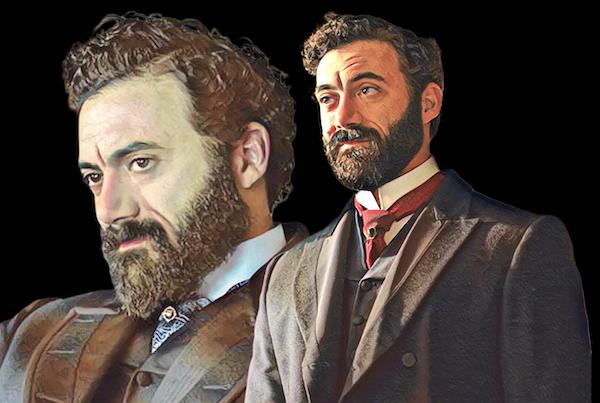
Such a discovery would carry dramatic weight: Marian, long positioned as dependent and subordinate, would gain autonomy. She could defy social conventions (and her Aunt Agnes), choose marriage for love, or even become an investor herself—something rare but not impossible for women of the time.
Moreover, this twist could mirror the very “gilded” age they inhabit: a time when ordinary people could suddenly become millionaires—but also lose everything overnight.
An Era Fueled by Rails and Ambition
The Gilded Age brilliantly captures the fascination and peril of the railroads. George Russell is a masterful synthesis of the robber barons: visionary, ruthless, and ambitious. Marian Brook, on the other hand, may represent the other side of that equation—the forgotten heiress, symbolizing the many ordinary people who, by chance or luck, were swept along by the tides of a frenzied economy.

If Marian discovers she’s a millionaire thanks to shares everyone thought were worthless, it won’t just be a stroke of luck. It will be a faithful reflection of an era where value often lay buried under layers of speculation, paperwork, and hidden interests. A time when gold—like the railroad tracks—might lie just beneath our feet, if only we knew where to step.
Descubra mais sobre
Assine para receber nossas notícias mais recentes por e-mail.
 miscelana.com