
Connie Francis, the American singer who defined the sound of teenage love in the 1950s and 1960s, passed away in July 2025 at the age of 87, at her home in Florida. With a crystalline voice, universal appeal, and a repertoire that spanned romantic, tragic, and hopeful themes, she was the first woman to top the U.S. pop charts—and, quite unexpectedly, became a cult favorite among Gen Z in recent years.
Born Concetta Rosa Maria Franconero, the daughter of Italian immigrants in Newark, New Jersey, Francis began her career as a teenager on talent shows. Her first major hit came in 1958 with “Who’s Sorry Now?”, a 1920s standard her father insisted she record—and which, after a televised performance, quickly climbed the Billboard Top 10.
Queen of 1960s Romantic Pop
Throughout the next decade, Connie Francis became the most recognizable female voice in American pop music, with hits like “Stupid Cupid,” “Lipstick on Your Collar,” “My Happiness,” “Where the Boys Are,” and “Everybody’s Somebody’s Fool”—the latter becoming the first song by a solo female artist to reach number one on the U.S. pop chart.
Her public image reflected the ideal of the “good girl” suffering for love—a persona that appealed to parents while emotionally resonating with teens. This made her distinct from edgier female performers of the time. Her songs conveyed heartbreak with sincerity and vulnerability, creating a feminine archetype that still echoes today—albeit reinterpreted.

A Bridge to Brazil: Celly Campello and the National Versions
In Brazil, Connie Francis’s influence was directly felt through the meteoric career of Celly Campello (1942–2003), considered the first female star of Brazilian rock. Celly’s breakthrough came in 1959 with “Estúpido Cupido,” a Portuguese version of “Stupid Cupid,” originally recorded by Connie just a year earlier. This wasn’t a coincidence: Connie was, in fact, the most direct reference for the vocal style, visual identity, and themes that Celly and other Brazilian singers of the era embraced.
Both artists shared the image of sweet, smiling girls, in love and at the mercy of heartbreak. While Connie recorded in multiple languages (including Portuguese), starred in films, and played sold-out shows, Celly retired early at age 20 upon marrying in 1962.
Still, the link between the two remains symbolic: Celly Campello was Brazil’s emotional and sonic translation of the Connie Francis aesthetic, paving the way for later stars of the Brazilian pop and Jovem Guarda scenes.
Trauma, Seclusion, and Revival
Connie Francis’s life, however, was marked by personal tragedy. In 1974, she was sexually assaulted in a New Jersey hotel—a violent event that led to years away from the spotlight and a long battle for justice and mental health. She was one of the first public figures to speak openly about such trauma, decades before movements like #MeToo.
Despite struggles with depression and psychiatric hospitalizations, Francis published a courageous autobiography in 1984, “Who’s Sorry Now?”, and gradually returned to performing in the 1990s, celebrated as a trailblazer for women in pop.
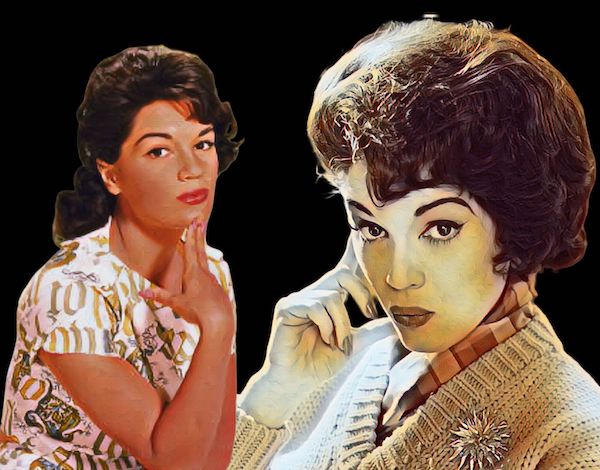
An Unexpected Gen Z Muse
Starting in the early 2020s, her songs began resurfacing in TV series soundtracks, TikTok videos, and themed playlists like “Sad Girl 60s” and “Melancholy Muses.” Tracks like “Where the Boys Are” and “Many Tears Ago” became the emotional background for confessional videos by young people searching for raw, sincere connection.
The peak of this revival came with the unexpected viral resurgence of “Pretty Little Baby,” a lesser-known ballad originally released in 1961. In 2024, the song went viral after it was featured in a TikTok video captioned: “This is what a heart really sounds like when no one texts you back.” The sound was used in more than 2 million videos, depicting everything from silent breakups to nostalgic black-and-white collages. Its tender sadness, childlike tone, and string arrangement created a sonic aesthetic that Gen Z embraced wholeheartedly.
“Pretty Little Baby” entered the Spotify Global Viral Top 10, 63 years after its release—becoming Connie Francis’s biggest posthumous success while she was still alive. Some media outlets dubbed her “the return of the romantic diva in a world oversaturated with irony and filters.”
Legacy and Timelessness
Connie Francis leaves behind more than just hits: she leaves behind a way of singing about love with honesty, vulnerability, and emotional clarity—something that remains powerful even for the children and grandchildren of her original fans. Her voice once played on jukeboxes, AM radios, and cassette tapes; today, it lives in Bluetooth earbuds, vertical video montages, and millions of reels and TikToks.
She was, is, and will always be the voice of those who loved too much, felt too deeply, and unforgettably sang it all.
Descubra mais sobre
Assine para receber nossas notícias mais recentes por e-mail.
 miscelana.com