
He believed in the inexplicable.
She, in the silence of colors.
He wrote to no one.
She painted to forget.
Nicholas Coughlan and Isabel Gore are two lonely souls, separated by distance, time, and tragedy — but united by something deeper than words: fate. In a fog-draped, wind-swept Ireland on the brink of change, their stories unfold like two threads destined to intertwine, no matter how long it takes.
Nicholas grows up in 1970s Dublin, in a seemingly ordinary home, until the day his father, William (played by Pierce Brosnan), sees the light fall on a blotting paper and interprets it as a divine message. He leaves everything behind — his job in the civil service, his family — to become a painter. Is it faith or selfishness? A spiritual awakening or a way of escape? His wife Bette (played by Imelda May) slowly unravels, while young Nicholas, a serious and introspective boy, watches his world crumble and seeks solace in writing and in a sensitivity he’s yet to understand.

Meanwhile, on a remote island off the coast of Galway, lives Isabel (Ann Skelly), a vibrant and intuitive teenager. Her world is also marked by a rupture: her twin brother Sean (Donal Finn) suffers a mysterious spiritual collapse and is left speechless and wheelchair-bound. Isabel loves him deeply and wheels him to the beach on her “last day of childhood” before leaving for a strict mainland convent. The daughter of a melancholy poet, Muiris (Gabriel Byrne), and a pragmatic, resilient mother, Margaret (Helena Bonham Carter, in a standout role), Isabel tries to resist sorrow by creating beauty through paint — yet her art, like Nicholas’s, is less of a refuge and more of a foreshadowing.
From the outset, we know Nicholas and Isabel are meant for each other. He tells us so in voice-over: this will be a love story. How they’ll meet, and when, is the mystery.
Based on Niall Williams’s acclaimed 1997 debut novel, Four Letters of Love comes to the screen with a screenplay by the author himself and direction by Polly Steele (The Mountain Within Me). The film avoids grand romantic clichés and focuses on the quiet power of feeling — in what’s unsaid, in pauses between lines, in the weight of a gaze. There’s magical realism and poetry, pain and hope. There are ghosts — literal and emotional — that haunt every step of the characters.
The film is a visual poem: the Irish coast becomes a character in its own right, with desolate beaches, rugged cliffs, and rolling fields lit by soft, ethereal light. The humble cottages, painted in jewel-toned interiors, feel warm and alive — like the emotions of those who inhabit them. Every frame breathes wind, salt, faith, and loss.
The performances are quietly moving. Bonham Carter shines as the matriarch who “keeps everything going” without losing tenderness or dignity. Her scenes with Gabriel Byrne, as Isabel’s father, speak volumes of a long marriage marked by both love and resignation. Brosnan, meanwhile, plays William as both prophet and fool, a man haunted by vision but blind to consequence.

The literary narration (voice-over) may divide viewers — some might see it as cinematic shortcut, others as homage to the novel’s tone. But it reinforces the mythic weight of the story: Nicholas and Isabel are not living just any love — theirs was already written elsewhere, long before either of them began.
Through missed connections, wrong loves, and moments when sex is mistaken for salvation, Four Letters of Love slowly builds toward the inevitable: the meeting of two souls who only feel truly known in each other’s presence. When it finally happens, their connection may feel fleeting — or rushed — but it carries the weight of every pause, every letter, every unspoken longing.
The “four letters of love” in the title may never be read aloud. They are not made of ink and paper, but of memory, sacrifice, longing, and desire. Because sometimes, love isn’t what you write — it’s what you keep buried deep inside.
The song that seals the emotion
As if the visuals and silences weren’t already saturated with feeling, the film is elevated even further by its music. Actor and singer Johnny Flynn — known for roles in Emma. and Ripley — co-wrote and performs the original title song, “Four Letters of Love,” in a duet with Katherine Priddy. Co-composed by Anne Nikitin and author Niall Williams, the track was released on July 18, 2025.
With lyrics like
“Island roads… madness grows…
A poet’s daughter came from the water…”
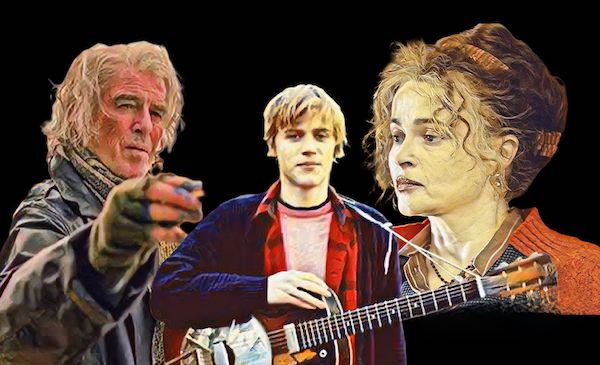
Flynn’s raw, whispery voice feels like it comes from beyond time, as if Ireland itself — and the hearts of Nicholas and Isabel — were singing. The song doesn’t just play over the closing credits: it encapsulates everything the film has tried to say about faith, longing, and the mystery of love.
If you’re in search of something to truly feel — between one blockbuster and the next — this is a story to be experienced, not explained. There are no dinosaurs here. Just miracles. And perhaps, those are even harder to believe — and all the more precious when they happen.
Descubra mais sobre
Assine para receber nossas notícias mais recentes por e-mail.
 miscelana.com