
If you don’t want any spoilers, stop reading now. Or… skip the second paragraph.
In Season 3 of The Gilded Age, a new setting promises to shake up the show’s social and sexual dynamics — a place that carries the historical weight of the spaces where elite men sought pleasure under the guise of respectability. If the setting is indeed inspired by the infamous Soubrette Row, it will mark the beginning of a more direct exploration of high-end prostitution, the theater as an erotic showcase, and the unspoken male codes of Gilded Age society.

We don’t yet know if this applies to Larry, but many wealthy men of the time sought experiences that broke free from the social rigidity of Fifth Avenue balls — all under the tacit silence of fellow patrons or wives who pretended not to know about their husbands’ outings to “gentlemen’s clubs.” And our beloved hero is about to visit one such venue, accompanied by Jack Trotter. There, he runs into Maud Beaton — which helps Oscar in his plans, but also signals that the show may finally step into darker, yet historically grounded territory, where many women of the era lived between the stage and the bedroom, between glamour and marginalization.
If Maud Beaton is found in this kind of place, she’s no longer just a “figure from the past” — she becomes a living embodiment of the women who survived on image, charm, and sexual ambiguity. And this revives the uncomfortable question: what made one woman “respectable” and another “fallen”? And who gets to decide?
This encounter could also be a mirror for Jack, a man of modest origins trying to navigate elite circles. His exposure to New York’s golden underworld might force him to confront the limits of his own ambition — and the compromises it demands.
If The Gilded Age really goes there, it’ll be the first time the series directly confronts the double standards of Victorian America, where men could desire and exploit, but women paid the price of freedom with their reputations, futures, and bodies. And as always, the most fascinating part is the hidden history of New York.
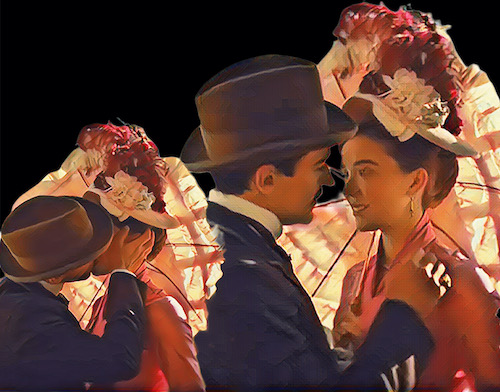
Brothels, Soubrette Row, and the Hidden Side of the Gilded Age — Now in The Gilded Age
On the surface, the Gilded Age — roughly 1870 to 1900 in the U.S. — was an era of wealth, grandeur, and opulence. But beneath the golden polish (hence the name), it was a time of social inequality, moral contradictions, and hidden exploitation. One of those contradictions was society’s ambiguous tolerance of prostitution, especially in major cities like New York.
Prostitution wasn’t just present — it was endemic, sophisticated, and often disguised as artistic entertainment. While Victorian morals dominated public discourse and the elite loudly condemned “urban vice,” those same respectable men frequented the city’s most lavish brothels, sponsored actresses and chorus girls, and kept mistresses in apartments paid for with railroad, banking, and steel fortunes.
Luxury Brothels: Between Velvet and Hypocrisy
Far from the gritty image of street-level sex work, the luxury brothels of the Gilded Age were lavish mansions. These houses were decorated with tapestries, live pianists, imported wines, and women adorned in French gowns and diamonds. Run by discreet but powerful madams, they welcomed bankers, politicians, and heirs in search of refinement — and pleasure.
Technically illegal, prostitution thrived thanks to selective enforcement and corrupt police. It was a parallel world where women were judged in public but desired in private — and where the lines between actress, mistress, and courtesan were intentionally blurred.

Soubrette Row: Where Theater Met the Bordello
Out of this world emerged Soubrette Row, a shadowy zone between theater, vaudeville, and sex work. Named after the cheeky, flirtatious maid character common in comic operas, the term soon came to represent the women who played those roles — onstage and off.
Clustered around Broadway between 23rd and 42nd Street, Soubrette Row became the epicenter of a semi-secret market of “artistic prostitution.” The chorus girls and dancers working there weren’t formally sex workers, but many entered financially dependent relationships with wealthy men who bought them dresses, jewels, and apartments. The theater was the storefront. The real performance happened across the city.
Some of these women gained almost mythical status, like Lillian Russell, who maneuvered her way from stardom to public admiration and relationships with men like Diamond Jim Brady — the classic Gilded Age magnate who saw female entertainers as part of his extravagant collection of pleasures.
Scandals, Silences, and Inconvenient Truths
Gilded Age society lived with these arrangements like one lives with cracks in a marble wall: pretending not to see, but fully aware they’re there. Some stories broke through — like the scandal of architect Stanford White, murdered in a jealous rage over Evelyn Nesbit, a former chorus girl caught up in that very same circuit.
But for the most part, these worlds remained in the shadows. The “light” theater was both a showcase for art and a cover for power dynamics. Beautiful, charismatic women were seen as discreet trophies — and just as easily discarded.
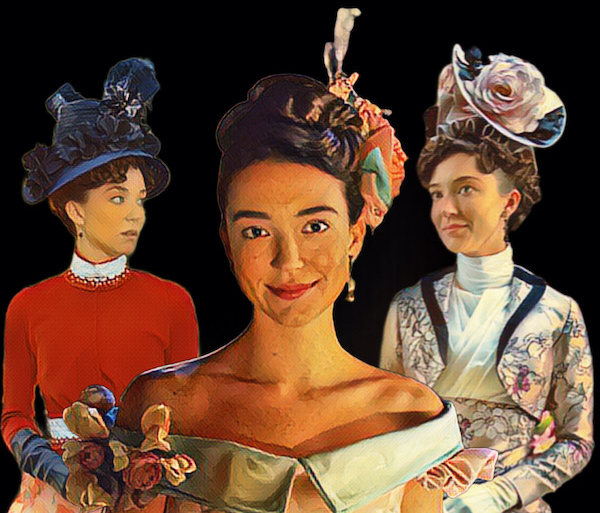
And Now The Gilded Age Opens the Door to That World
Against that backdrop, Season 3 of The Gilded Age begins to peel back a new layer. We already know that Larry Russell, an heir and aspiring architect trying to succeed on his own merit, will take Jack Trotter, a socially vulnerable and ambitious young man, to a venue of entertainment where they’ll unexpectedly cross paths with Maud Beaton.
This encounter is no coincidence — it reflects the ambiguity of the place they’ve entered.
Maud’s return in this context is telling. If she’s connected to that venue — whether as an artist, escort, or something more ambiguous — the show is, for the first time, stepping squarely into its own version of Soubrette Row: private clubs, tea houses with dancers, dressing rooms that double as private salons. Places where a woman’s value depends entirely on how men choose to see her. Where freedom and downfall are two sides of the same coin.
Larry, by bringing Jack there, isn’t just introducing him to a new world — he’s also testing the limits of his own masculinity and moral compass. Jack, in turn, mirrors every young man who’s tried to rise in life by navigating the cynicism of the wealthy. And Maud Beaton? She’s no longer just a relic from the past. She’s a symbol of female survival in a system built to consume them with elegance. That said, Marian will feel deeply unsettled when she finds out.

A Gilded Age Truth: Glitter, Guilt, and Power
Prostitution during the Gilded Age was, paradoxically, visible and invisible, condemned and consumed, repressed and glamorized. Soubrette Row symbolizes that contradiction — a place where women sold beauty, presence, desire, and often their bodies in exchange for the faint hope of security or social ascent.
Now that The Gilded Age is starting to reveal this part of American history, the golden façade begins to crack — and through those fractures, emerge the smiling, cynical, or tragic faces of the women who were always there, just waiting for someone to really see them.
Descubra mais sobre
Assine para receber nossas notícias mais recentes por e-mail.
 miscelana.com