
Billy Joel was never exactly an easy artist to love—or to defend. For those who grew up listening to rawer rock or who were used to dismissing radio pop as watered-down product, he could come off as that overly skilled uncle at the piano who made sure everyone knew he could play anything. And yet here we are: with a five-hour HBO documentary that—against all odds (including his own hesitation)—manages not only to remind us why Billy Joel was huge, but also why, despite so many missteps, he’s still worth paying attention to.
And So It Goes is, above all, a deep and unvarnished dive into the legacy of a guy who—by choice—stopped writing pop songs in the ’90s. Since then, he’s sustained his relevance onstage and in people’s emotional memory. What’s most interesting is that the documentary does this without taking easy routes. Instead of turning Joel into an untouchable legend or a victim of music critics, directors Susan Lacy and Jessica Levin set out to explore how pain, mistakes, and bad decisions shaped the music—not the other way around.
The tone is surprisingly candid. The singer, famous for returning millions of dollars to HarperCollins because he didn’t want to publish his memoir, agreed to sit down for ten interviews and gave the filmmakers access to almost his entire catalogue—not just as background music, but as narrative structure. Music, as he’s often said, was always the best way to tell his story. And the film honors that.

But what’s most revealing is often what’s not explicitly said. Joel talks about his struggles with alcohol, but sparingly. The ones who open up more are his ex-wives—all four of them—who appear to construct a multifaceted portrait of the man behind the songs. Especially Elizabeth Weber, the ex-wife and former manager who broke 40 years of silence to reflect on a relationship filled with both power and tension. Hearing her talk about “Stiletto” or “Just the Way You Are”—with a mix of affection, irony, and bitterness—is worth more than a thousand academic essays.
Another success of the documentary is its willingness to explore Joel’s later work—the less celebrated albums and “minor” songs—like “Vienna,” which became a Gen Z anthem on TikTok and here gains new depth as a reflection on his absent father. Yes, the film wants to reach the diehard fans. But it also makes an effort to engage those who always turned up their noses at Billy Joel. And it does so not by apologizing or countering critics, but by showing—through testimonies from Bruce Springsteen, Paul McCartney, Pink, and even Nas—that peer respect was never the issue.
Nas’s presence, by the way, is one of the film’s most beautiful surprises. He entered the conversation because of a sample used in “Disciple” but stayed for the emotional connection to “New York State of Mind,” a favorite of his father’s. That bridge between generations and genres says a lot about what Joel represents beyond the Top 40 charts of the ’70s and ’80s.
The film also doesn’t shy away from uncomfortable truths: financial ruin due to mismanagement, failed marriages, depression, pre-fame suicide attempts, his Jewish heritage, and even the bold political gesture of wearing a yellow Star of David onstage after the Charlottesville neo-Nazi rally. None of this is treated as scandal—but as part of the complex texture of a life filled with cracks and minor chords.
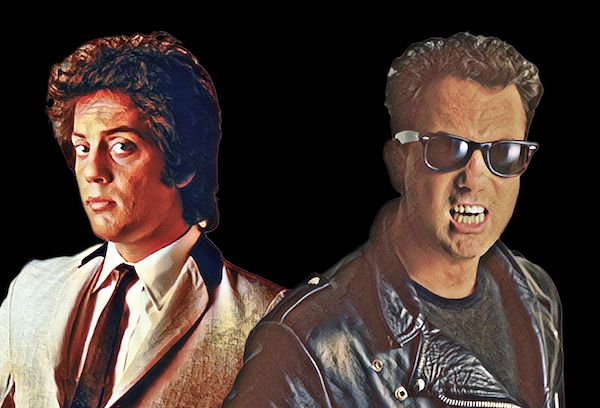
If something is frustrating, it’s that the documentary avoids some of the more recent developments—like the 2023 single or the 2025 diagnosis of Normal Pressure Hydrocephalus. But maybe that’s in line with Joel himself, an artist who lives between the stage and the past, never particularly eager to prove he still has something new to say.
In the end, Billy Joel: And So It Goes works the way a great music documentary should: it doesn’t try to rewrite history—it tries to rehear it. And maybe, for many of us, this is the first time we’re listening with the right ears—the kind that accepts it’s possible to make popular, sentimental music that still has layers.
Billy Joel may never have been a rock hero. But he was, for decades, a chronicler of the American soul. And as the song that gives the film its name reminds us: he messed up, he loved, he lost—and he kept going. And so it goes.
Descubra mais sobre
Assine para receber nossas notícias mais recentes por e-mail.
 miscelana.com