
In The Gilded Age, Marian Brook’s relationship with Larry Russell becomes one of the series’ most emotionally charged storylines. What begins as a hopeful romance soon turns into a test of trust, past wounds, and the harsh realities of marriage in 19th-century New York, leaving fans wondering whether love alone can survive the pressures surrounding them.
From her debut, Marian has represented more than a young woman trying to find her place in a new city. She embodies the struggle to remain true to oneself in a world where convention, reputation, and family alliances often stifle individual desire.
Her journey from vulnerable orphan to passionate and decisive woman is one of the series’ most subtle — and painful — character arcs. In Season 3 especially, Marian must confront not only her feelings for Larry but the deeper traumas that make trust difficult.
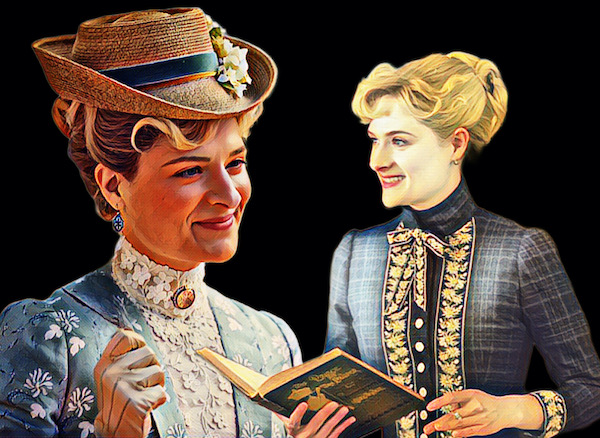
If Marian had been created by Edith Wharton or Henry James, her fate might seem ominous. Julian Fellowes may favor hopeful resolutions, but his characters rarely reach them without suffering first. Marian’s engagement to Larry Russell appears to promise happiness, yet obstacles emerge almost immediately.
Bertha Russell’s opposition is formidable, but she may not even need to intervene directly. The forces pulling Marian and Larry apart are already at work within the relationship itself.
The Innocence of Arrival and the First Major Fall
When Marian arrives in New York, she carries both curiosity and naïveté. Newly orphaned and penniless, she must depend on the kindness of aunts she barely knows. Her introduction to high society feels abrupt, as though she has been placed on a chessboard without understanding the rules.

Yet Marian is never passive. She questions the constraints imposed on women, seeks meaningful work, and quietly resists Aunt Agnes’s authority. This gentleness, however, also leaves her vulnerable, particularly in matters of love.
Her relationship with Tom Raikes ends in betrayal when he abandons her for a more advantageous marriage. The experience leaves lasting scars. Marian learns that excessive trust can expose a woman to ruin and that society rarely grants second chances.
Season Two: Between Self-Protection and Hope
In Season 2, Marian attempts to rebuild. She becomes more cautious but refuses to surrender entirely to convention. Teaching painting — an activity considered improper for her social position — reflects her desire for independence.
At the same time, she nearly accepts the courtship of Dashiell Montgomery, a kind man she does not love. The prospect of a safe but emotionally empty marriage looms, and Marian almost yields to it.


It is during this period that Larry Russell reenters her life in a new way. Long a friend and confidant, he now represents something deeper: affection grounded in mutual respect and genuine understanding. Their first kiss signals the possibility of a love that might heal rather than harm.
The Rise of Love and the Return of Doubt
Season 3 finally brings their relationship into the open. Their engagement is tender and hopeful, marking Marian’s willingness to trust again. Yet almost immediately, doubt intrudes.
On the very day of the engagement, Larry announces a month-long trip to Arizona following a bachelor celebration with friends. He claims it took place at a hotel, but in reality it occurred at a brothel, a deception that soon comes to light. His encounter with Maud Beaton, known for defrauding Marian’s cousin Oscar, further complicates matters.
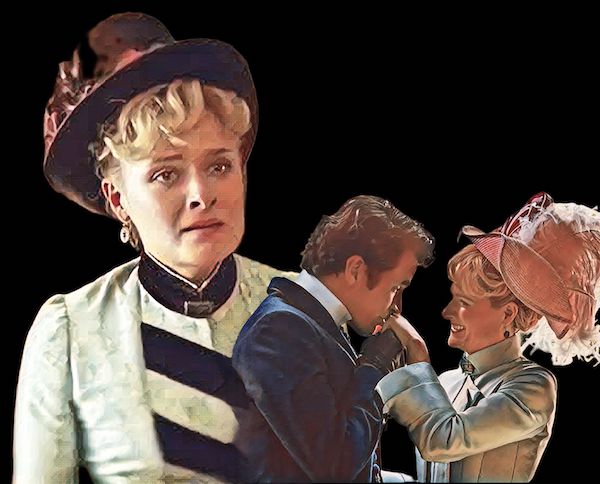
For Marian, this omission is devastating. Objectively, Larry has not been unfaithful, but to someone with her history, secrecy itself feels like betrayal. She also learns that he had a past affair with a widow in Newport, something he never fully disclosed.
The emotional impact is profound. Marian’s reaction reveals a side of her rarely seen: insecure, wounded, and fearful of repeating past mistakes. Her anguish is captured in stark lines:
“All the men in my life have failed me.”
“It turns out I don’t know Larry as well as I thought.”
“Lies and secrets are no foundation for marriage — look at my situation.”
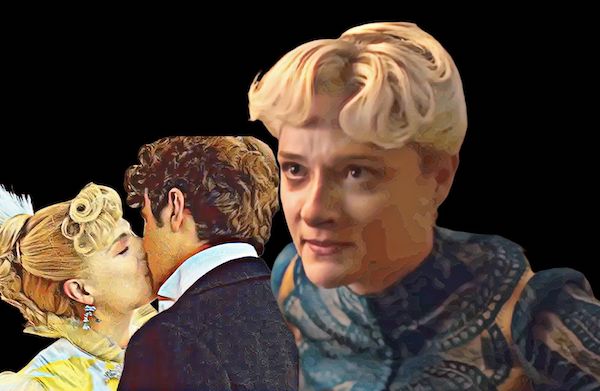
These words do not come from possessiveness but from accumulated trauma. Marian is trying to protect herself from another devastating loss.
Crisis and Possible Separation
Episode synopses suggest escalating tension. Larry returns from Arizona with promising professional news but troubling personal developments. In the finale, Marian is described as struggling to move forward, a phrase that strongly implies a rupture in the relationship.
“Marian struggles to move on.”
Such an outcome would be consistent with Marian’s evolution. Loving Larry does not mean sacrificing her emotional safety. Walking away may be her way of reclaiming control after repeated disappointments.
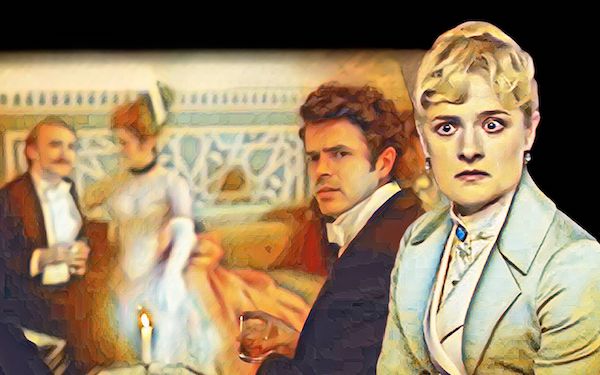
She Is Not Cold — She Is Awake
Marian’s emotional complexity is what makes her compelling. She is neither a tragic victim nor a flamboyant rebel, but a woman negotiating love, fear, and dignity in a society that punishes female vulnerability.
She does not demand perfection from Larry, only honesty. She refuses to romanticize silence or overlook warning signs. What she seeks is transparency, a love that does not leave her exposed.
Louisa Jacobson has noted that Season 3 explores Marian’s psychological triggers and resilience. Even in distress, Marian remains compassionate toward others, supporting friends and family despite her own turmoil. This capacity for empathy distinguishes her from the more calculating figures around her.
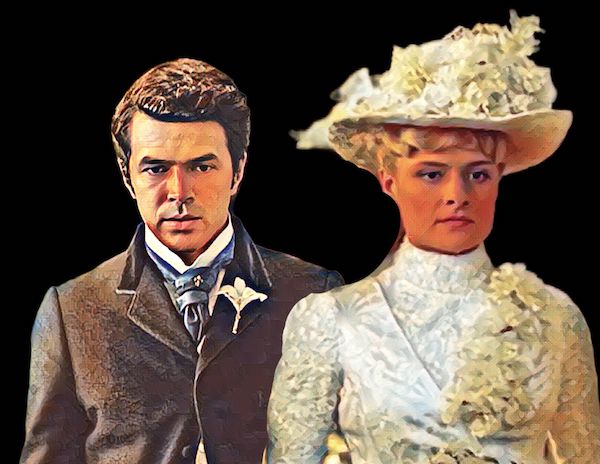
Conclusion: Love as a Choice, Not a Destiny
Marian may end Season 3 alone. She may forgive Larry, or she may not. What matters most is that the decision is hers.
“My mind is made up” is more than a dramatic line; it is a declaration of autonomy. For a woman in 1884, choosing herself over social expectation is profoundly radical.
Marian is not broken.
She is awake.
And if that awakening requires solitude, she will face it with dignity — though one still hopes it might eventually lead her back to Larry’s side.
Descubra mais sobre
Assine para receber nossas notícias mais recentes por e-mail.
 miscelana.com