
Nothing signals status with such elegance (and intention) as a tiara. More than mere ornament, it’s a silent social code, a rite of passage — and often, a tool of exclusion. In aristocratic circles, a tiara isn’t just jewelry: it’s a declaration of belonging. And those who don’t understand its language risk committing faux pas of grand proportions.
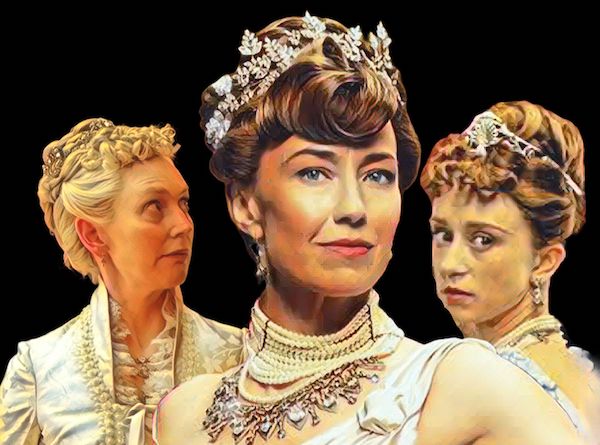
In Season 3 of The Gilded Age, we witness a masterclass in this — and a harsh lesson for Gladys Russell, now a duchess. At a formal dinner, Lady Sarah, the duke’s sister, says with chilling sweetness: “If I am wearing a tiara, you may wear yours too.” At first, it sounds inclusive, even if delivered with the biting tone we saw in the episode.. But the subtext is unmistakable: it’s not permission — it’s a reprimand. And the most delicious detail? Lady Sarah is dead wrong.
For someone who prides herself on propriety, she seems to have forgotten that only married women or brides on their wedding day are supposed to wear tiaras. This rule, still followed by the British royal family, dates back to Classical Antiquity, where the diadem symbolized the transition from maidenhood to matrimony. The custom crystallized during the Victorian era and remains a quiet but firm expectation in aristocratic society.

So Lady Sarah, unmarried as far as we know, in donning a tiara, not only violated the very etiquette she claims to uphold — she also inadvertently granted Gladys the social license to shine brighter. What was intended as a power move ultimately revealed insecurity. And let’s not forget: the moment her brother married, Lady Sarah’s social rank was downgraded. She may still act as lady of the house, but if she were as versed in etiquette as she believes, she’d also know that food should never be served from the right — even Americans know that.
Gladys hesitated — and that hesitation cost her. By not wearing her tiara at the start of the evening, she signaled uncertainty. But Lady Sarah’s false generosity only exposed her own shaky standing in the hierarchy. And once Bertha Russell enters the picture, Sarah can brace herself for the second act of this drama: if she’s already lost her symbolic power, she may soon lose her literal place in the house — and be discreetly escorted to the Dower House.
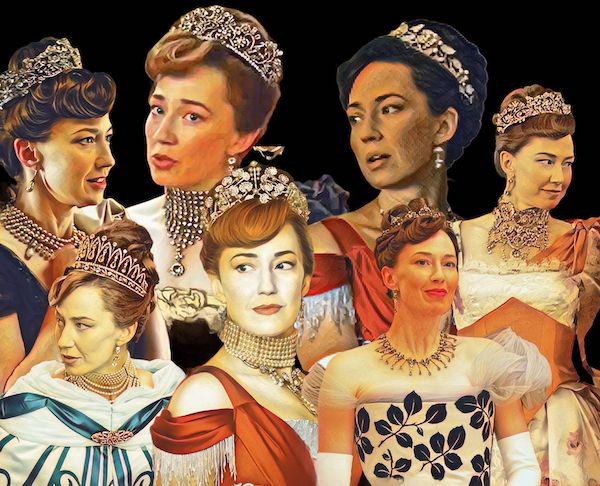
If you’d like to avoid Lady Sarah’s mistake, here’s a crash course in proper tiara etiquette:
- Who wears it: married women of the aristocracy or royalty; brides on their wedding day.
- When to wear it: white tie events, state banquets, royal weddings, formal debutante balls.
- Where to place it: thumb on your chin, index finger between brows. Slide the hand upward. The base of the tiara should rest where your finger lands. More than 1.5 inches from the hairline? People will talk.
- Hair matters: avoid washing your hair on the same day. Day-old, conditioner-free hair offers grip. Avoid center parts and limp waves — diamonds don’t distract from negligence.
- Match your face shape: round faces suit angular tiaras; long faces benefit from curved designs.
- Velvet base: should match your hair color. Inherited from a brunette and you’re blonde? Adjust it.
- Veil protocol: never attach the veil to the tiara — it will drag it backwards.
- Securing it: if dancing is expected, fine thread elastic can be sewn into the chignon.

Even among commoners, tiaras retain their allure — but in aristocracy, rules are non-negotiable. Every gem carries weight, every setting has its protocol, and every mistake is noted.
In the end, a tiara is not just to adorn — it must belong. And when worn out of place or by someone already dethroned, it becomes a glittering reminder of lost status. Lady Sarah would do well to remember that.
Descubra mais sobre
Assine para receber nossas notícias mais recentes por e-mail.
 miscelana.com