
As published on CLAUDIA
I’m a huge fan of Ted Lasso and, naturally, I’m thrilled about its return in 2026. Filming has already begun, which means we’ll likely be reunited with Ted early in the year. My initial theory was that Ted would return as head coach of the U.S. men’s national team, especially with the 2026 World Cup happening in the United States. But others caught the more accurate clue in the final scene with Rebecca Welton and Keeley Jones — the show’s key female characters — in which they team up to invest in the English women’s league. That’s right, there’s now an AFC Richmond with women players.
With the first image already released, television’s most charismatic coach is officially back. After three seasons leading AFC Richmond, Ted returned to Kansas to be near his son. We still don’t know how, but Ted Lasso will return to England on a new mission: to help a second-division women’s football team win promotion to the top tier. The announcement also sparked a broader debate — about the current state of women’s football and how pop culture can influence its popularity and value.
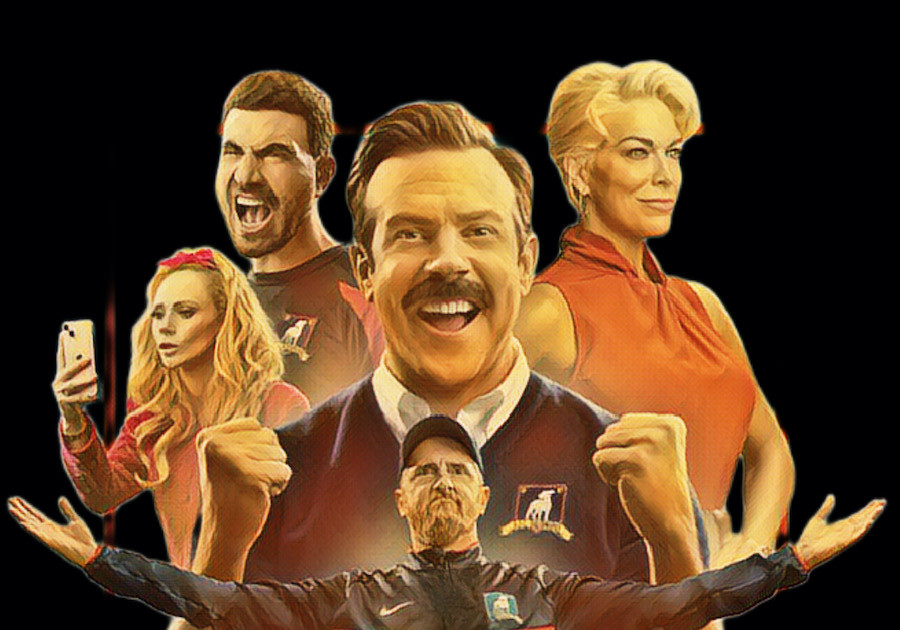
The decision to shift the series’ focus is meaningful. In its original phase, Ted Lasso won audiences by subverting the typical sports narrative. Instead of a winning coach, we got someone who knew nothing about the sport — an American from college football who brought empathy, listening, patience, and humor, rather than tactics. The show’s success wasn’t rooted in victories on the pitch, but in character growth, emotional bonds, and the courage to address topics like anxiety, divorce, toxic masculinity, and depression.
Now, in 2025, Ted returns to a new landscape — one that reflects a real moment of transition and growth for women’s football across the globe. If the conflict in the first season was about sports and cultural clashes, this time the tension may come from visibility versus invisibility, recognition versus resistance. After all, even though women’s football is more present in media and stadiums than ever before, structural inequality with the men’s game remains glaring — both in Europe and in Brazil.
The European scenario: visible progress, persistent inequality
Over the past three years, women’s football in Europe has experienced a real boom. Following the success of Euro 2022, which England won in front of over 87,000 fans at Wembley, UEFA and national federations accelerated their investment and professionalization plans. In 2024, the English Women’s Super League (WSL) signed a multimillion-pound broadcast deal with the BBC and Sky Sports, increasing the number of televised matches and the visibility of women athletes.
Clubs like Chelsea, Arsenal, Manchester United, and especially FC Barcelona Femení have transformed their women’s teams into global powerhouses. Barça won back-to-back Champions League titles in 2023 and 2024, broke attendance and viewership records, and became a model for management, marketing, and talent development. The club’s major matches attract over 50,000 fans and are watched live by millions.
But success is layered. In smaller leagues or countries with less footballing tradition — like Hungary, Slovakia, or even Italy — professionalism is still taking baby steps. Salaries are low, contracts are short, and many players have to juggle training with side jobs. UEFA estimates that only 25% of Europe’s women footballers earn enough to live solely from the sport.

And in Brazil?
In Brazil, progress is also evident — though even more uneven. In 2025, it will have been 10 years since the Brazilian Football Confederation (CBF), under pressure from CONMEBOL, made it mandatory for clubs to field professional women’s teams in order to compete in continental tournaments. Since then, the top-tier league — Brasileirão Feminino A1 — has gained stability, stronger sponsorship, regular broadcasts, and growing crowds at key matches.
Clubs like Corinthians, Ferroviária, Palmeiras, and Flamengo are leading in infrastructure, investment, and titles. Still, the gap between men’s and women’s football is massive. As of 2024, more than 70% of players in the top division earn less than two minimum wages and struggle to access training centers, logistics, and medical support comparable to their male counterparts.
There is good news, though: since 2022, the CBF has equalized daily allowances and prize bonuses for the men’s and women’s national teams. With new coaching leadership, the women’s team is rebuilding its identity after the retirement of Marta — a global icon. New stars like Ary Borges, Geyse, Adriana, and Kerolin are making names for themselves in European clubs and helping position Brazil as a consistent talent pool.
Parallel efforts — like school tournaments, college leagues, and initiatives to train more women coaches — are also on the rise. It’s still too early to talk about true equality, but the wheel is turning — and faster than before.

The role of Ted Lasso
In this context, the decision by Ted Lasso’s creators to explore women’s football feels almost inevitable. The show has always been about transformation — of characters, teams, and values. Bringing that lens to women’s sports isn’t just timely — it’s necessary. There’s rich ground to create new characters, new stories, and maybe even influence the broader cultural narrative.
If Ted managed to win over a skeptical men’s team with kindness and optimism, what will he find coaching women who have had to fight for every inch of space and respect? The challenge now is different — it’s not about teaching tactics but about recognizing stories. It’s not a “man saves women” tale, but a chance for a coach to learn, listen, and — as always — maybe inspire.
Culturally, Ted Lasso can help shift the tone of the conversation. It can bring emotion to stories that have long gone unseen. It can prompt new questions: Why do we still treat women’s football as “alternative”? Why don’t we cheer for them with the same passion?
In the end, this new season of Ted Lasso may not be about wins or promotions. It may be about something bigger: creating a world where football — no matter who plays it — is treated with equal respect, investment, and love. And where everyone — men and women — can simply believe.
Descubra mais sobre
Assine para receber nossas notícias mais recentes por e-mail.
 miscelana.com