
There’s something deeply human — almost irresistible — about the fantasy of swapping bodies with another person. Maybe it’s curiosity, maybe it’s a kind of escapism, or perhaps a profound search for empathy. The desire to live someone else’s life, to see the world through eyes that aren’t our own, has accompanied humanity for centuries. Long before cinema even existed, myths and folktales already played with this idea: Greek gods would transform into humans to experience mortal life; Buddhist stories spoke of souls switching bodies as a path to spiritual growth; and even Victorian literature flirted with identity swaps as a form of social critique — like in The Prince and the Pauper by Mark Twain.
But it was in the cinema that this fantasy truly found its perfect stage. The idea of two people — usually very different — suddenly waking up in each other’s bodies and being forced to deal with one another’s routines, pains, and secrets became a subgenre of its own. It all started in 1940 with Turnabout, where a married couple magically switches bodies and sees their relationship turned upside down (In Brazil, we had a similar film with Gloria Pires and Tony Ramos, If I Were You). The formula returned in the 1970s with the Disney classic Freaky Friday, in which a mother and daughter wake up in each other’s bodies and are forced to truly understand the pressures of adolescence and motherhood. The film was such a hit that it was remade in 1995, again in 2003, and now a new version is on the way — starring the same actresses.
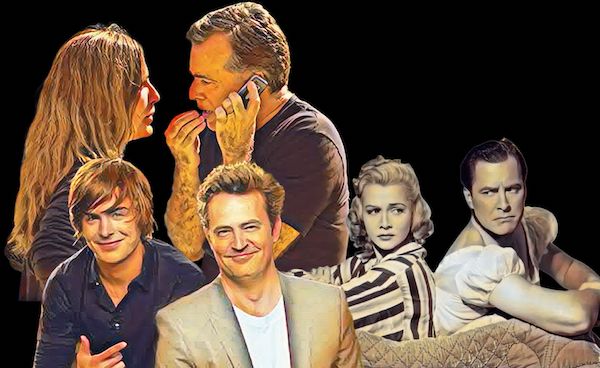
The subgenre reached its peak in the 1980s. Hollywood fell in love with magical swaps: father and son in Vice Versa, teenagers, and seniors in 18 Again!, and even kids turning into adults overnight, like in Big with Tom Hanks. The concept expanded into other variations — swapping ages, genders, and social classes. Most often framed as comedy, these stories also carried a hint of reflection: what do we learn when we see ourselves in the body of someone who lives a completely different life?
Over time, the concept gained new layers. Films like The Hot Chick, where a popular teenage girl switches bodies with an adult man (cue obvious comedic shock), or The Change-Up, where two friends — one an exhausted father and the other a reckless bachelor — end up living each other’s lives. Even horror took a stab at the genre with Freaky, where a teen girl switches bodies with a serial killer. And we can’t leave out Your Name (Kimi no Na wa), the stunning Japanese anime that reimagined the concept with sensitivity, spirituality, and emotion — arguably the most poetic version of body-swapping ever seen on screen.
Given all this interest, it’s no surprise that a new Freaky Friday is coming, once again bringing together Lindsay Lohan and Jamie Lee Curtis in the roles that became iconic in 2003. Few expected that the film — itself a remake — to become so beloved that more than two decades later, it would get a highly anticipated sequel. The story of the controlling mom and the rebellious daughter who swap bodies amid the chaos of adolescence and adult life was already familiar: it was a remake of the original 1976 film starring Jodie Foster and Barbara Harris. The idea of exploring generational conflict through a magical body swap had been adapted several times by Disney, but it was the version with Jamie Lee Curtis and Lindsay Lohan that became a cultural phenomenon.

It seems like ages ago, but in 2003, Lindsay Lohan was still one of Hollywood’s top teen stars, while Jamie Lee Curtis was proving her versatility as an actress — long before her Oscar win for Best Supporting Actress. The 2003 version of Freaky Friday balanced physical comedy, heartfelt family drama, and a pop soundtrack that stuck in a generation’s memory (who doesn’t remember “Ultimate”, performed by Anna’s band?). The film was praised by both critics and audiences, earning over $160 million worldwide. The chemistry between the leads and the charm of their performances turned the movie into a modern family-comedy classic. Jamie Lee Curtis even received a Golden Globe nomination for her role.
For years, fans begged for a sequel, and the idea began gaining serious momentum in 2022 when Jamie Lee Curtis, while promoting Everything Everywhere All At Once, publicly expressed her desire to return as Tess Coleman. Lindsay Lohan also showed interest — just as she was making a cautious return to acting after a long hiatus. Sensing the perfect opportunity, Disney greenlit the sequel in 2023. Since then, production has moved quickly.
Now, in 2025, Freaky Friday 2 is complete, bringing back Tess and Anna — now older, with new responsibilities and challenges. The story picks up years later: Tess is nearing retirement, while Anna, now an adult, may be married or even raising a teenager of her own. The body swap happens again — but this time with an added generational twist, possibly involving a third character (the granddaughter?). The new comedy is expected to explore modern motherhood, digital vs. analog generations, and the timeless tension between control and independence.
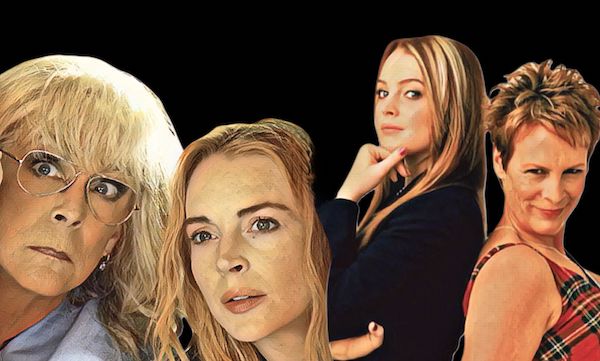
The film is directed by Nisha Ganatra (Late Night) and written by Elyse Hollander. Disney promises a movie that honors the spirit of the early 2000s version while updating it with today’s themes and humor. All signs point to Freaky Friday 2 as both a love letter to longtime fans and a way to introduce this magical story to a new generation. And with Jamie Lee Curtis and Lindsay Lohan back together — still with that irresistible comedic timing — the nostalgia is bound to be delightful.
And what about body swaps in general? Today, there are already over 40 films with that premise. The number only grows if we include TV shows, animated episodes, soap operas, and Asian dramas. Because the truth is, this fantasy never gets old. It can be funny, tragic, romantic, or even terrifying — but it always starts from the same question: who would we become if we lived in someone else’s skin? And would we still recognize ourselves?
Descubra mais sobre
Assine para receber nossas notícias mais recentes por e-mail.
 miscelana.com