
In life, we fall in love, love, break up, and start over again. It’s part of the game. Many women today question whether we’ve been conditioned to dream of a nonexistent “happy ending” or if it’s actually possible. Of course, this question is often asked in solitude, but the fact remains: this complex message about the (im)possibility of being happy alongside someone is embedded in every story we consume on TV, on streaming platforms, in literature, theater, film—and in life. But there’s a catch. Have you noticed how, in fiction, no one seems to know what to do with a couple that works?
In any medium, it’s as if writers and creators panic at the possibility of showing two people in love simply living and facing life together. As if love—when mutual and balanced—ceased to be interesting. And so comes the cliché: betrayal, sudden breakups, forced misunderstandings, painful separations, and maybe a reconciliation in the final episode or on the last page. A tiring pattern that reveals an enormous creative limitation and, frankly, a devaluation of love built over time.

This trend isn’t even new. There’s a term for it: “the will-they-won’t-they syndrome,” coined because of the 1980s show Moonlighting (A Gata e o Rato in Brazil), starring Cybill Shepherd and Bruce Willis. Audiences went wild for Maddie and David, but when they finally got together, ratings dropped. The couple worked as tension, as promise—not as reality. The lesson was burned into the minds of producers and screenwriters: if the main couple gets together before the end, interest fades. But is that actually true, or just a dogma repeated to exhaustion?
Let’s talk data. A 2020 study from USC Annenberg on romantic representation on TV found that 78% of central couples in American drama series experience “traumatic” separations before the finale—and fewer than half end up together. Another study by Nielsen shows that the expectation of a “happy ending” is frustrated in about 60% of shows with central couples lasting more than three seasons. These statistics suggest that the drama of interrupted love has become the rule, not the exception. And that’s eroding viewer empathy, which now distrusts any couple that seems to be doing well.
Let’s look at examples. Friends had audiences rooting for Ross and Rachel for ten seasons, only to deliver endless breakups, dubious betrayals (“we were on a break!”), and rushed reconciliations. They only end up together in the last minutes of the final episode. Same with The Office, where Jim and Pam were almost dragged into this spiral in the final season when the writers teased a gratuitous marital crisis—thankfully reversed. In Sex and the City, Carrie and Big were the epitome of dysfunction: a relationship marked by miscommunication, abandonment, and endless back-and-forth. Now, And Just Like That repeats the same recipe by “ruining” Aidan (okay, neither Big nor Aidan are examples of healthy romance—that’s not the point; I use them as examples because they were also formulaic). It’s as if Carrie is doomed never to experience a full, stable love—one that challenges her, sure, but doesn’t need to destroy everything to feel real.
That’s why I celebrate, with almost childlike enthusiasm, the one couple that defies it all: Harry and Charlotte. Since their first appearance in the original Sex and the City, they’ve shown it’s possible to have conflicts, insecurities, and mutual adaptation—without giving up on each other or discarding the relationship over a poorly resolved crisis. Harry wasn’t Charlotte’s “type,” and she had to work through that. He, in turn, knew how to be supportive, firm when needed, and helped build a home. They went through adoption, motherhood, menopause, financial disputes—and they’re still together, a safe haven for each other. They are the exception that proves the rule—and should be the model.


My frustration this week stems from my favorite current show. In The Gilded Age, we get another example of the same old cycle. Marian and Larry were a couple the audience wanted from season one. Their relationship grew sweetly, with just the right amount of tension, and they finally got engaged. But a single conflict—a misunderstanding with no malicious intent—was enough for Marian to break it off impulsively, almost theatrically, as if preserving her narrative of pride mattered more than facing the complexity of the moment. There’s no conversation, no listening. The result? The couple breaks up without even trying. And in the 19th century, let’s be clear, Marian wouldn’t have had that much autonomy to willingly end an engagement. That says more about modern screenwriters than about the historical period.
A note here about The Gilded Age: Marian, as a woman of that era, would have accepted Larry’s lie bitterly—only now, in the 21st century, do we expect otherwise. It’s an anachronism made possible by writers who believe they can’t give the audience what it wants right away. A predictable narrative sadism: now we’ll watch them apart (if there are more seasons) until they finally get a happy ending. The formula kills suspense. If it’s already known, why keep using it?
The truth is, fiction is addicted to trauma-driven drama. As if romantic tension only exists with separation. But what about the tension of staying together? Of facing daily life, fears, and dreams? That’s no less interesting—just more subtle. Look at Friday Night Lights, with Tami and Eric Taylor—one of TV’s rare couples who love, argue, make mistakes, forgive, and keep going. Or Parks and Recreation, with Leslie and Ben, who manage to be funny, romantic, and solid at once.
The same applies in literature. I’m openly in love with Jane Austen, the queen of crafting separation between her main couples until the final page. How many times do Elizabeth and Darcy almost lose each other to pride and prejudice? In Jane Eyre, the couple can only be together after a literal tragedy. Even Bridgerton, in its TV adaptation, stretches the suffering of its central couples to the limit, as if love only matters if it comes with pain.
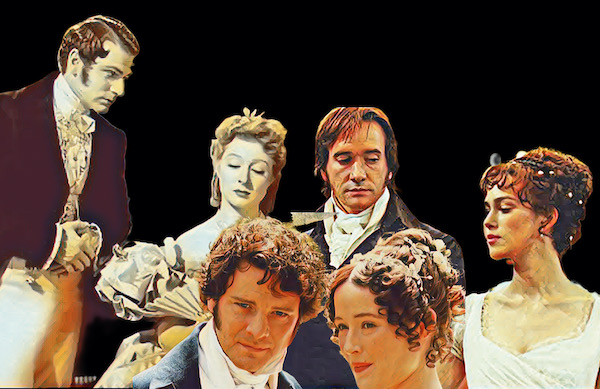
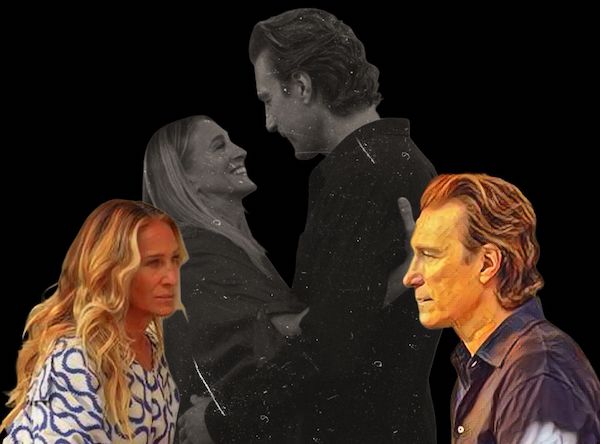
The original move now is to flip the script. I want to see couples who stay together, who fight and make up, who grow. I want more Harrys and Charlottes, more Taylors, more Bens and Leslies. Real life is hard enough—seeing a truly happy couple in fiction could be exactly the relief, example, and affection we need.
And it doesn’t stop there: this narrative limitation isn’t exclusive to TV. The same pattern shows up in film. How many rom-coms end with a kiss or a love declaration, but never show the aftermath? That’s when they’re not bickering for two hours just to make up in the rain at the very end. In La La Land, for example, Mia and Sebastian are perfect for each other—but don’t end up together because their dreams come first. It might be realistic, but it also reinforces the idea that love must be sacrificed for personal growth. In Closer, Blue Valentine, Marriage Story—love unravels clinically, as if destruction is more compelling than building.
Even in animations—supposedly a space for hope—the pattern persists. In Encanto, the main character doesn’t even have a romantic interest. In Frozen, after the heartbreak with Hans, Elsa simply… gives up on romantic love. Sure, it’s good to expand representations of love, but why is romance, when it appears, so feared or disposable?
Literature paved the way for this. In most classic novels, the couple suffers, separates, faces endless obstacles—and when they finally reunite, the story ends. As if living the love were the real problem. Pride and Prejudice ends with the wedding. Jane Eyre only reunites with Mr. Rochester after he’s lost everything. Even in Dom Casmurro, we have a narrator obsessed with a love he himself destroyed—and Capitu’s supposed betrayal becomes more important than what they actually lived. Stable, mature, lived love? Forget it.
And that’s why couples like Harry and Charlotte are so rare and precious. They’re not perfect because they never make mistakes—they’re perfect because they make mistakes and stay together. Because they choose each other again, even after tough seasons. In And Just Like That, for all the series’ excesses and missteps, Harry remains the only man whose presence brings comfort, not anxiety. He doesn’t represent conflict, but support. And that should be seen as a dramatic achievement—not as boring. (I hope they don’t kill him off just to give Charlotte another “starting over” arc.)
When I think about The Gilded Age, I feel like we lost something special with Marian and Larry. He, more restrained and modern, offers her a real possibility of partnership—and she, at the first sign of frustration, gives up. Worse: she gives up alone, without listening, fighting, or trying to understand. Is that truly in character? Or just narrative convenience, the tired trick of separating so there’s something to fix later? And what if there is no next season? What do we do with the affection built and then thrown away?
I’m not saying every happy couple needs to live in bliss. Interesting couples argue, disagree, and face the world. But they can—and should—stay together, because that too is drama. The tension of coexistence, the decision to keep going even without guarantees, is far richer than another betrayal or hasty breakup.
Maybe the writers are afraid of boring us. But we’re tired of never seeing love that blooms and endures. We don’t want perfection—we want recognition. We want to see in fiction what is sometimes so hard in life: a love that doesn’t give up.
And you know what? That would make a great season finale.
Descubra mais sobre
Assine para receber nossas notícias mais recentes por e-mail.
 miscelana.com