
Adam Sandler may have played dozens of characters over the past three decades, but none represents his comedic spirit, public persona, and even his business strategy as fully as Happy Gilmore. The 1996 comedy about a failed hockey player who finds redemption on a golf course became an instant classic, launched Sandler as a dominant force in American comedy, and even lent its name to his production company, Happy Madison. Nearly 30 years later, the character’s return in Happy Gilmore 2 not only reignited fans’ nostalgia — it also delivered the biggest U.S. film debut in Netflix history. More than a streaming hit, the sequel proved that Happy remains the emotional core of Sandler’s personal mythology.
The original film hit theaters at a time when Sandler, fresh off Saturday Night Live, was still considered a rising star. Co-written by Sandler and Tim Herlihy, the story subverted the elitist elegance of golf by injecting a protagonist who was angry, undisciplined, and completely out of place. Happy didn’t even want to play golf — he wanted to play hockey — but ended up joining a golf tournament to stop the foreclosure of his grandmother’s house. He yelled, punched, cursed — but he also tried, learned, and won over audiences with his almost childlike emotional sincerity.
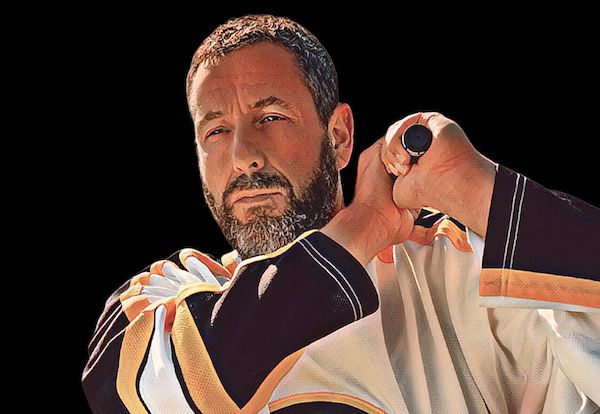
The character emerged on the heels of Sandler’s first movie hit, Billy Madison. Both followed a similar formula: an emotionally immature protagonist, veering between grotesque and lovable, who deep down just wants to protect the people he loves. But Happy Gilmore marked a leap forward, landing squarely on the comedic catharsis of bottled-up rage. It ditched the “nice guy” archetype and gave us a character who messed up constantly, yet never lost the audience’s empathy.
The film grossed around $40 million at the box office and, more importantly, built a cult following. Shooter McGavin, played by Christopher McDonald, became a beloved comedic villain. The random fight scene with Bob Barker became one of the most unlikely and memorable moments in American comedy. And Sandler, now clearly owning his unique comedic voice, rode the momentum to create Happy Madison Productions — a company that would go on to shape the popular comedy of the 2000s.
So when rumors of a sequel began circulating in 2023 — sparked by viral videos of Sandler and McDonald reprising their characters — the idea felt less like a marketing ploy and more like an inevitable reunion. And that’s exactly what it was: Happy Gilmore 2, released on Netflix in July 2025, quickly became a phenomenon. In just three days, it racked up 46.7 million views, based on the platform’s metric of total hours watched divided by film length. It became Netflix’s biggest U.S. film debut of all time, surpassing even big-budget originals — and marked the most successful release of Sandler’s career, including his acclaimed dramatic work.
In the sequel, Happy Gilmore is retired and broken, lost in alcoholism after a traumatic incident on the golf course. The plot kicks into gear when he’s forced to return to the sport to cover the exorbitant tuition for his daughter’s ballet school — in Paris, naturally. If in the original film he played golf for his grandmother, now the reason is his daughter — a clear reflection of Sandler’s real-life evolution as the father of two teenagers and husband to Jackie Sandler, who also appears in the cast.
The film doesn’t hold back on big names: Christopher McDonald is back as the ever-delusional and egotistical Shooter McGavin, now more narcissistic than ever. The supporting cast includes Benny Safdie, Bad Bunny, Travis Kelce, and a parade of pop-culture cameos: Taylor Swift, Ben Stiller, Rory McIlroy, Scottie Scheffler, Sean Evans (of Hot Ones), and Guy Fieri from Food Network all make appearances. Sandler’s real-life daughters, Sadie and Sunny, also appear, adding that personal-universe feel that so often defines his projects — part fiction, part autobiography.
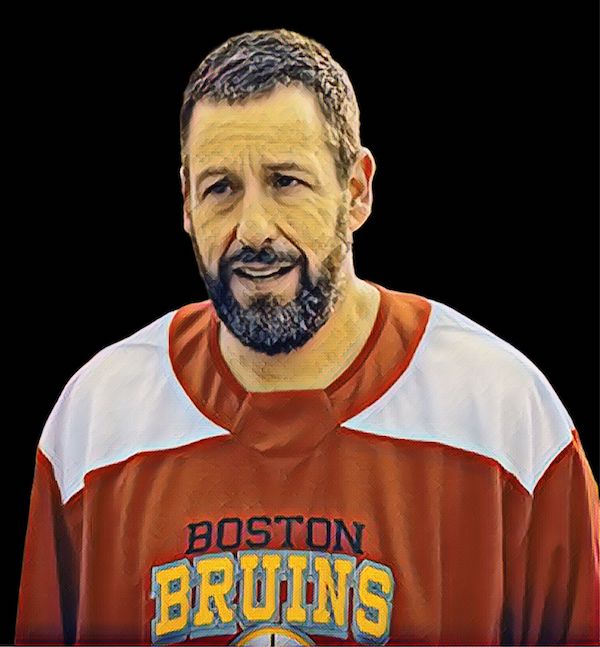
The impact was so strong that even the original 1996 film rode the wave. Back in Netflix’s catalog, it shot up to No. 3 on the global Top 10, with 11.4 million views in a single week — its second straight week on the list. The sequel not only brought in new viewers but also reignited interest in a classic that has aged surprisingly well, with no need for contrived nostalgia. The humor still lands, the rhythm holds, and somehow, Happy still feels fresh.
Happy Gilmore 2 could have easily been shallow fan service. But it wasn’t. It updated the character for a new stage in life — more bitter, more skeptical, but still with that explosive comic energy — and reaffirmed what we already knew: this is the character around which Adam Sandler’s entire career revolves. He can do serious drama, win indie awards, and be underrated by “serious” critics. But Happy is where he breathes. And it’s through Happy that he wins us over again.
In the end, it doesn’t matter if you like golf, know the rules, or would never voluntarily watch a tournament. In my case, it doesn’t even matter if you don’t typically laugh at Sandler’s brand of comedy — if Happy Gilmore is on the course, you’re watching. Because, as the film reminds us, sometimes the most unlikely hero is the one who deserves a second shot the most.
Descubra mais sobre
Assine para receber nossas notícias mais recentes por e-mail.
 miscelana.com