
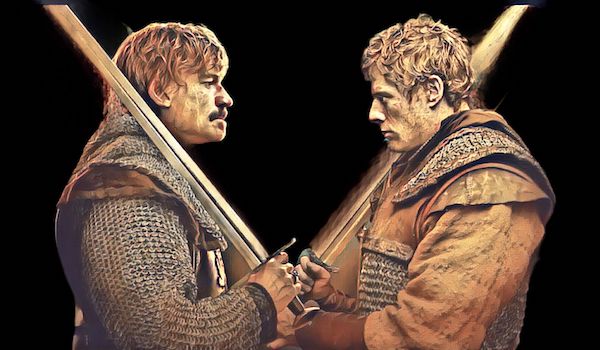
We’re living in a time when historical dramas have returned to center stage in pop culture, and few productions arrive with the weight and ambition of King & Conqueror, the BBC’s new historical epic. Starring James Norton as Harold of Wessex and Nikolaj Coster-Waldau as William of Normandy, the series dives deep into the conflict that culminated in the Battle of Hastings in 1066. But it goes far beyond the battlefield: it unveils decades of intrigue, broken alliances, and two family dynasties entwined by blood, ambition, and a stormy sea, waging a war for a throne that, initially, neither of the protagonists even desired.
The BBC itself teased audiences with the promise of a gripping and inevitable story: “Harold of Wessex and William of Normandy were two men destined to meet at the Battle of Hastings in 1066; two allies with no intention of claiming the British throne, who found themselves ensnared—by circumstance and personal obsession—in a war for the crown.”

With this electrifying premise, King & Conqueror expands the scope of historical storytelling on television. If you’ve followed Vikings and Vikings: Valhalla, the connection is immediate and fascinating. William the Conqueror was a direct descendant of Rollo, the Viking founder of Normandy, portrayed as Ragnar’s brother in the original series. In that sense, King & Conqueror works almost like a historical epilogue to those sagas: what began with barbarian raids ends with the foundation of a new England.
But this new series doesn’t merely recount historical events—it invests heavily in production value and authenticity. The BBC pushed its budget to the limit, filming between March and July 2024 in breathtaking Icelandic locations, including Reykjavik and Heiðmörk, to capture the raw, epic landscapes that mirror the turbulent world of the 11th century. In addition to the two leads, the cast includes names like Eddie Marsan, Juliet Stevenson, Bo Bragason, Luther Ford, and Ingvar Sigurdsson. Later in production, Elander Moore, Indy Lewis, Jason Forces, Ines Asserson, Sveinn Ólafur Gunnarsson, and Léo Legrand joined the ensemble, creating a rich tapestry of characters and perspectives.
Interestingly, King & Conqueror was almost an entirely different show. Actor James Norton—who also appears in House of the Dragon—originally wanted to play William the Conqueror. However, due to contractual obligations with HBO for his role in The Nevers, Norton could only accept a part for a character who would die— and as we all know, Harold meets a dramatic end at Hastings. Thus, he took on the role of the Anglo-Saxon king, while Coster-Waldau—eternally Jaime Lannister from Game of Thrones—inherited the armor of the Norman Conqueror. A casting decision that now seems fated.

And who were these two men?
Harold of Wessex was the most powerful man in England even before being crowned king. The son of the influential Earl Godwin, Harold was experienced, charismatic, and a skilled strategist. Alongside King Edward the Confessor, he effectively ruled the kingdom. When Edward died without an heir, Harold was chosen by the royal council (the Witan) as King of England. But his ascension was immediately challenged—especially by William of Normandy, who claimed the throne had been promised to him by Edward and, according to him, even by Harold himself, who had allegedly sworn an oath of loyalty.
William, Duke of Normandy, was the illegitimate son of Robert I, but from a young age, he demonstrated political and military skill. He consolidated his power and forged powerful alliances, including gaining the Pope’s support for his invasion of England—transforming his attack into an almost sacred mission. William was a direct descendant of the Viking Rollo—adding a symbolic layer to his conquest: he didn’t just perpetuate Norse heritage, he formalized it within the European power structure.


The high point of the series will undoubtedly be the sequence of three battles that define the year 1066. First, the invasion of Harald Hardrada of Norway, who lands in northern England with the support of Harold’s brother, Tostig. Harold of Wessex defeats them both at the Battle of Stamford Bridge, but at the cost of exhaustion. Two weeks later, he must march south, where William has just arrived with his Norman army.
At the Battle of Hastings, on October 14, 1066, Harold led a fierce defense, using the classic Saxon shield wall formation. But William, with well-trained troops and feigned retreat tactics, manages to break the English line. Harold is killed—traditionally by an arrow to the eye—and with him, the Anglo-Saxon dynasty dies. William is crowned king that same Christmas.
William’s conquest had a total impact. He reshaped the aristocracy, replacing the Saxon nobility with loyal Normans. He ordered the Domesday Book, the most comprehensive census ever created at the time. He built Norman castles across the country—including the Tower of London—and shaped the English language with deep influences from Norman French. William wasn’t just a military conqueror; he was the architect of a new England.
The series also promises to give voice to the women orbiting these men. Edith Swan-neck, Harold’s longtime companion, appears as a tragic figure, called upon to identify Harold’s body after Hastings—a moment likely to carry major emotional weight in the plot. On the Norman side, Matilda of Flanders, William’s wife, emerges as a true co-ruler: cultured, shrewd, she governed Normandy in her husband’s absence and played a crucial role in legitimizing his claim. She is credited with commissioning the Bayeux Tapestry, a medieval masterpiece narrating the conquest from the Norman perspective, which in 2025 is on display in England after 900 years in France.
King & Conqueror, then, is more than the story of a clash between two kings. It is the story of two worlds colliding—the end of Anglo-Saxon England, portrayed with humanity and pride, and the birth of a new Norman order, forged through pragmatism, faith, and force. It is also a narrative of destiny and obsession, of men who did not seek the throne—but were consumed by it.
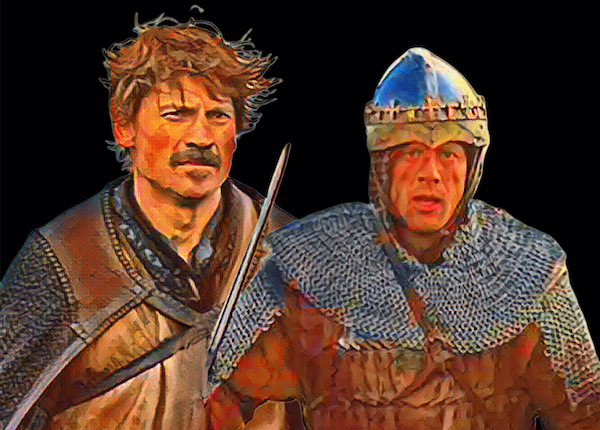
If Vikings showed us how the Norse earned respect through fear, and Vikings: Valhalla revealed the glorious and bitter end of their age, then King & Conqueror shows us what came next: the Viking who became king, and the Englishman who died defending his people.
And it is this moment of final transition—this pivotal turning point—that the BBC series promises to immortalize in grand style.
Descubra mais sobre
Assine para receber nossas notícias mais recentes por e-mail.
 miscelana.com