
The story of lyricist Lorenz Hart, who died in 1943 at age 48 from pneumonia, is irresistibly tragic — ideal for a powerful drama. That’s exactly what Richard Linklater delivers with Blue Moon, reuniting with Ethan Hawke and earning critical acclaim in Berlin, where Andrew Scott took home the Best Supporting Actor award. Yes, there’s already Oscar buzz for Hawke in 2026 — but let’s start at the beginning.
Why tell the story of an alcoholic who died more than 80 years ago? Possibly because, while few remember Hart’s name, his songs have outlived time: “Bewitched”, “The Lady Is a Tramp”, “My Funny Valentine”, “Manhattan”, “Blue Moon” — just to name a few. Hart wrote heartbreak and romantic rejection like no other, earning the title “the poet laureate of masochism” from playwright Jerome Lawrence.
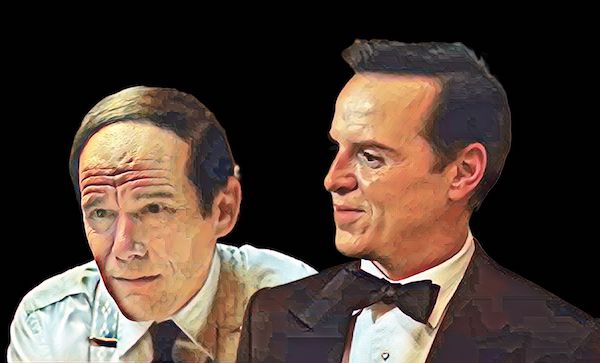
Witty, lyrical, precise, and romantic, Hart wrote for the vulnerable — perhaps reflecting his own turmoil. He wasn’t just a tormented genius, but a man of extremes: immensely talented, yet undisciplined by success. His partnership with composer Richard Rodgers (played in the film by Andrew Scott) brought them fame through 26 Broadway musicals. But while Rodgers went on to cement his legacy with Oscar Hammerstein II, Hart succumbed to alcoholism and solitude.
Blue Moon focuses on one pivotal night: the opening of Oklahoma!, the musical Hart refused to do — marking the duo’s final split. Linklater imagines Hart attending the cast party to congratulate Rodgers, setting the stage for a night of unresolved emotions, bitterness, and reflection. The film also touches, for the first time with candor, on Hart’s closeted sexuality — including his complicated relationship with Elizabeth Weiland (Margaret Qualley).

Structured with long takes and dialogue-heavy scenes, the film recalls the intimacy of a stage play. Linklater keeps the camera close, allowing the performances to breathe. Ethan Hawke, despite being physically unlike Hart (taller, full head of hair), reportedly transforms in the role. Critics have praised his performance as “career-defining,” while Scott’s nuanced turn as Rodgers has already been honored.
Hart’s death was as tragic as his lyrics. After refusing Oklahoma!, he vanished, was found drunk on a snowy Manhattan street, hospitalized, and died within days. Rodgers, devastated, carried on without him. That rift — both creative and personal — is the emotional core of Blue Moon, which doesn’t mythologize Hart, but renders him raw and real.
Hollywood previously tried to tell this story in 1948’s Words and Music, starring Mickey Rooney, but sanitized Hart’s life, erasing his queerness and complexities. Blue Moon is not interested in comfort — it seeks truth. And in doing so, it may finally give Hart his due.
With Hawke (four-time nominee), Scott (a critic’s favorite), and Linklater (five Oscar nods), Blue Moon is already being eyed as a frontrunner for the 2026 awards season. It’s also a reminder that while names may fade, music — and pain turned into poetry — endures.
Because, as Blue Moon itself proves, there’s something eternal in heartbreak transformed into song.
Descubra mais sobre
Assine para receber nossas notícias mais recentes por e-mail.
 miscelana.com