
The choice of Denis Villeneuve as director and Steven Knight as screenwriter for the new James Bond film signals a deep shift—perhaps the boldest since Daniel Craig first took on the role nearly two decades ago. More than just a reboot of an iconic character, Amazon seems determined to rewrite the entire grammar of the franchise. And to do that, it has brought together two talents who share a rare quality in Hollywood: the ability to combine thematic depth with broad popular appeal.
On one side, there’s Villeneuve—the French-Canadian filmmaker behind Arrival, Blade Runner 2049, and Dune. A visual master obsessed with atmosphere, pacing, and immersion, his signature is both cerebral and sensory. His films tend to move slowly—not due to a lack of action, but because of their ambitious scope. Villeneuve’s films: memory, fate, dehumanization, the weight of the past. In the Bond universe, that could mean a more philosophical take on the character—a 007 less impulsive and more existential.

On the other side is Steven Knight, creator of Peaky Blinders, SAS: Rogue Heroes, and screenwriter of intense works like Spencer and Dirty Pretty Things. Although more closely associated with television, Knight is a multifaceted storyteller who moves confidently between intimate drama and sweeping narratives. Even when he writes for large-scale productions, his focus remains on the interiority of characters—trauma, silence, moral codes in conflict. Knight doesn’t just portray the underworld—he humanizes it.
Together, Villeneuve and Knight promise a Bond that may break away from the formulas inherited from previous decades. What was once a playground of espionage and gadgets may now become an exploration of identity, loyalty, and institutional decay. Knight has already shown in Spencer that he can deconstruct British royal rituals with both a critical and poetic touch. Villeneuve, meanwhile, is the ideal director to portray worlds in slow collapse—whether dystopian futures or fragile Western democracies.
More than a new era for Bond, the union of these two creators signals a clear ambition from Amazon: to elevate Bond to a level of cinematic prestige that goes beyond pure entertainment. And in doing so, to compete not just with other blockbusters, but with the great auteur-driven epics.

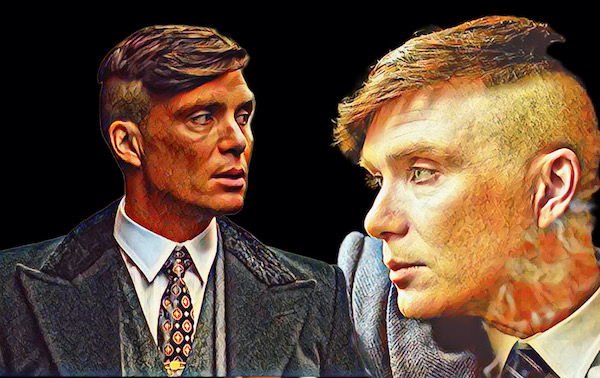
If Knight brings to the project his obsession with characters on the margins, those who challenge oppressive power structures—as we’ve seen with Tommy Shelby or his portrayal of Princess Diana in Spencer—we can likely expect a Bond who is less obedient, more conflicted with his role as a “state agent.” As noted in the article following the announcement, Knight has openly spoken about his interest in characters who resist authority. And when, in Bond’s history, has the protagonist not pushed back against orders? The difference now may be the dramatic weight that this resistance is given.
Moreover, both creators have a strong sense of style and atmosphere. It’s expected that Villeneuve’s visual approach will turn exotic locations into symbolic, almost metaphysical landscapes—desolate, fragmented, charged with meaning. And that Knight will deepen the character’s motivations, perhaps reconnecting the plot with Ian Fleming’s mid-century novels instead of leaning into the more cartoonish tone of the 2000s era.

If previous Bond films often flirted with absurdity and surface-level charm, this next chapter could be something else entirely: more restrained, darker, perhaps even tragic. There is a kind of espionage that works as spectacle—and another that functions as a meditation on power and paranoia. Villeneuve and Knight seem more drawn to the latter.
The big unknown is how much of that daring potential will actually make it to the screen. Amazon, despite its ambition, will have to balance innovation with tradition. The question is whether the studio will allow these two artists to take Bond into the gray zones that so clearly fascinate them. But if they’re given the freedom to create, what’s coming could be more than a reboot—it could be a silent revolution, recasting one of the 20th century’s great icons through the lens of 21st-century anxiety.
Descubra mais sobre
Assine para receber nossas notícias mais recentes por e-mail.
 miscelana.com