
Among the many female characters in The Gilded Age, young Gladys Russell has a particularly curious and dramatic journey. At first glance, she may seem like just another young heiress trapped in the chains of social and familial expectations. But as the story unfolds, it becomes clear that she is much more complex than a simple portrait of youthful rebellion.
Gladys is a young woman whose path unfolds as a deep and often conflicted search for freedom — not just physical or social freedom, but above all, emotional and personal freedom. And the turning point? In the final episodes of Season 3.
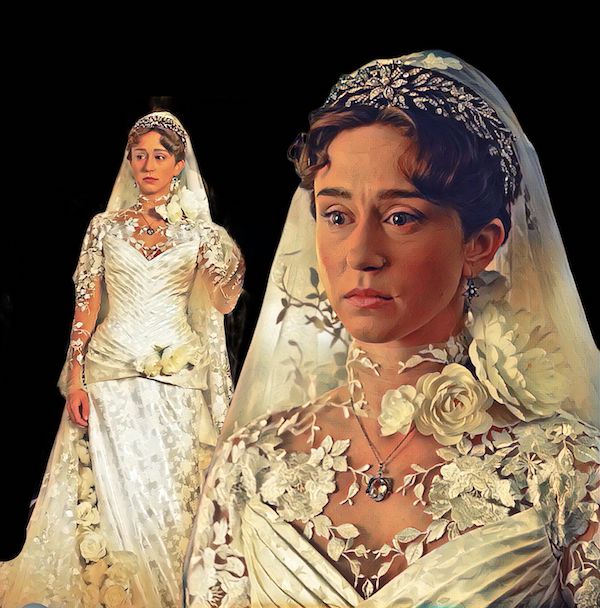
Season One: A Reflection of Inner Conflict
At the beginning, Gladys appears as a young woman under pressure. The daughter of a controlling and overprotective mother, Bertha, she is pushed toward a destiny that doesn’t feel like her own. Treated like a child, she dreams of being introduced to society, of flirting and finding a husband. But Bertha insists that the time hasn’t come.
Even while being controlled, Gladys shows frustration and repeatedly questions why she continues to be infantilized despite being a young adult. Though she speaks in a measured tone, she represents a quiet and growing resistance to Bertha’s authority.
And somehow, even under strict supervision, Gladys begins a discreet relationship with Archie Baldwin — a well-intentioned suitor, but not socially acceptable enough for Bertha. Aware of her mother’s rigidity, she still takes the emotional risk and hides the romance, an unthinkable act for someone in her position.
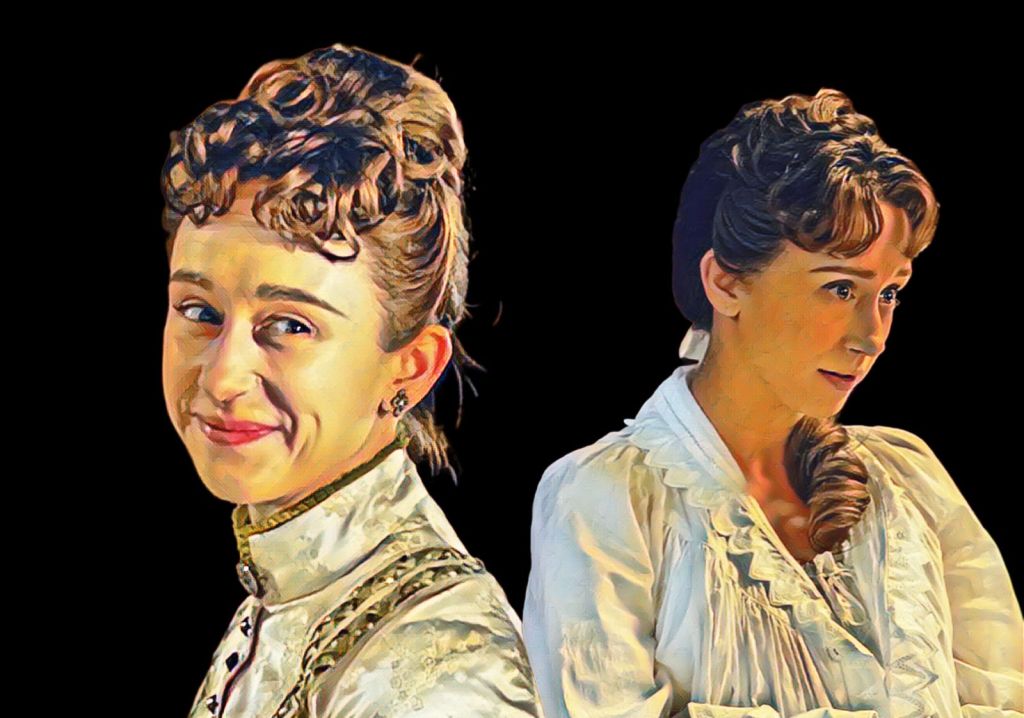
When Bertha finds out and destroys the relationship, Gladys doesn’t completely break down. She expresses indignation, and though she doesn’t confront Bertha explosively, the hurt and disappointment make it clear she’s beginning to see her mother in a new light.
To Bertha’s delight, Gladys becomes best friends with Carrie Astor (and also grows closer to Marian Brook), a relationship that ends up being a card she plays wisely to finally enter the inner circle of Caroline Astor — the formidable Mrs. Astor who dictates the rules of New York society.
And when she is finally “launched” into society, Gladys does not behave like a decorative doll, but with dignity and presence. She knows the event is choreographed by her mother, yet still manages to shine in her own right. Her elegant posture, direct gaze, and restrained smiles all show that she knows who she is — even if she doesn’t yet have full freedom.
But by making it clear that Archie Baldwin wasn’t what she wanted, Bertha opens the door to what will ultimately seal her daughter’s fate: becoming a decorative pawn in the social game of the “dollar princesses” — American heiresses who pursued status through marriages to broke European aristocrats.
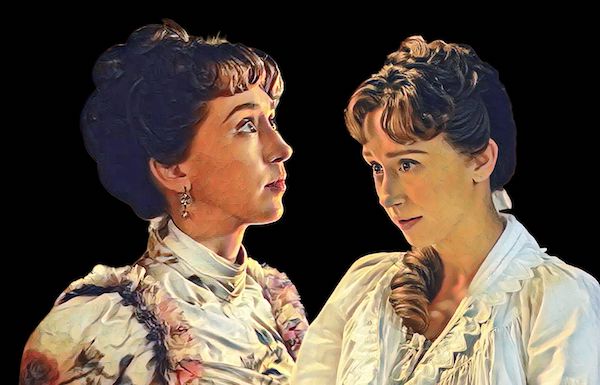
Gladys, of course, does not want to marry without love. Her close relationship with her father, George, and her brother, Larry, encourages her to assert her desires. Behind the scenes, her behavior reveals a nuanced young woman. Gladys shows a personality that blends skepticism, humor, and a certain irreverence — expressed especially in interactions with her friends and, more privately, with herself.
The Desire for Freedom: The Engine of Transformation
As actress Taissa Farmiga points out, Gladys’s deepest yearning is for freedom — especially from her mother’s oppression. That search is neither simple nor linear. It’s a process marked by painful discoveries, compromises, and above all, a growing awareness of the power she can wield over her own destiny, even within a rigid and limiting social structure.
The freedom Gladys seeks isn’t simply about escaping her mother or rejecting an arranged marriage. It’s a desire to construct an identity that transcends the label of “heiress” or “somebody’s wife.” This makes her deeply relatable to the audience, as her inner conflict mirrors that of so many real women — even today — struggling to reconcile external expectations with internal desires.
A Woman Taking the Reins
As the series progresses, Gladys begins to reveal surprising strength. In conversations with her brother Larry, especially in Season 2, she openly acknowledges the freedoms he has that she doesn’t — and doesn’t hesitate to point out the injustice. This demonstrates not only self-awareness, but also a clear critique of the patriarchal system and the double standards that surround her.
Anguished and desperate for freedom, she flirts with the idea of accepting Oscar Van Rhijn’s proposal — a man who wants a marriage of convenience, just as a means for her to escape Bertha’s control. George steps in and convinces her not to act impulsively. He promises to support a love marriage, as long as the man is worthy and she’s truly in love. And soon enough, she falls for someone else.

There are moments when Gladys subtly sets boundaries — with suitors and even her mother. In a key scene, when Bertha discreetly suggests a new pedigreed suitor, Gladys responds with restrained iciness, saying something like, “Perhaps I have other plans.” And that “perhaps” is calculated — not from a lack of conviction, but as a strategy to avoid an outright war with Bertha… at least for now.
In the middle of Season 2, during the “Opera War,” Gladys’s fate takes a frightening turn — without her knowledge — as Bertha once again uses her as if she were property. Without even George’s knowledge, Bertha makes a deal with the Duke of Buckingham, offering Gladys’s hand in marriage in exchange for his acceptance — and access to the girl’s massive dowry.
When Gladys finds out, she tries to rebel — she cries, fights, tries to run away. But nothing works.
George tries to help, without directly confronting Bertha, but in this game, no one is more cunning than her. Eventually, a financial arrangement is sealed between the Russells and the Duke. Gladys finds herself forced to accept that she has no real say. She agrees to the marriage Bertha arranged.


But even though the marriage is imposed, the narrative doesn’t reduce her to a passive victim of the system. On the contrary, Gladys begins to take control of her married life, finding ways to negotiate her role and power within the relationship and the social order.
This shift is emblematic. It reveals a woman who, far from collapsing, transforms her situation into a stage for personal and emotional growth. Gladys may — and likely will — surprise those around her by proving that she’s capable of being much more than the sum of the expectations placed upon her.
The Potential to Shine Under Pressure
The beauty of Gladys’s arc lies in the fact that her transformation doesn’t rely solely on breaking away from the past or running away, but on an inner blossoming. It shows that even when a path seems predetermined by others, the protagonist can find ways to shine — with intelligence, determination, and authenticity.
She has the potential to become a woman who steers her own narrative, who negotiates her freedom and power from the inside out, and who surprises not only her once-oppressive mother, Bertha, but even herself. Her brilliance isn’t necessarily in rebellion or rupture, but in asserting herself within the complex web of relationships and expectations — proving that strength and adaptability can go hand in hand.

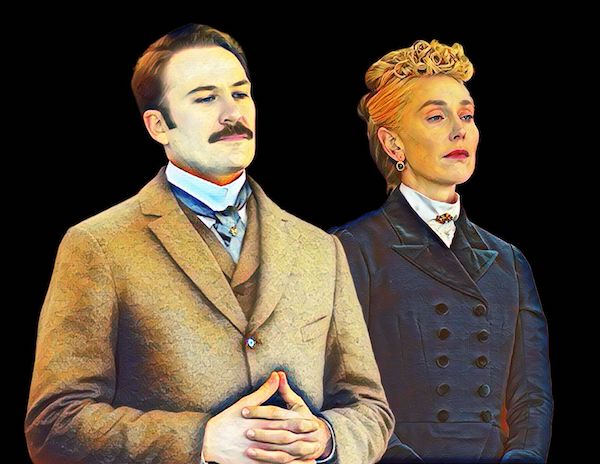
Upon arriving in her new home in England, Gladys comes face to face with another “Bertha” — her sister-in-law, Lady Sarah — who humiliates, pressures, and isolates her. Unhappy, Gladys sends a telegram home asking for help. By then, George — hurt by the way Bertha “sold” their daughter — is no longer aligned with his wife as he once was. Bertha insists she can fix everything.
What’s Next: A Woman Redefining Herself
Bertha’s intervention is, as Taissa Farmiga hinted earlier, a turning point between mother and daughter. In a reversal of all prior seasons, Bertha insists that Gladys knows how and has the strength to stand up to Lady Sarah, reminding her sister-in-law who the real Duchess is. And that’s exactly what Gladys does, setting the stage for the next episode — where she and Hector (the Duke) begin to form at least a friendship.
As the series continues, Gladys’s journey promises to deepen further. What once seemed like a destiny etched in stone may be redefined through the strength of her character. Her relationship with her mother — once only an obstacle — might become fertile ground for mutual growth, as the actress herself suggests, noting that the search for freedom unexpectedly brings mother and daughter closer.

More than just a supporting figure in the backdrop of high society’s intrigues and glamour, Gladys has the potential to become a symbol of female transformation — a character who challenges the limitations of her era by asserting her emotional, social, and even political autonomy within the bounds of her context.
Gladys is not merely a wealthy young woman, submissive to the whims of Victorian society; she is a woman who represents the struggle for identity, freedom, and feminine power in a time when such aspirations were rarely allowed. Her journey — from initial insecurity to firm self-possession in the face of marriage and maternal control — promises to be one of The Gilded Age’s most surprising and inspiring arcs. By taking the reins of a marriage she didn’t choose, Gladys might very well shine — and do it her way, revealing herself as much more than a mere “dollar princess”: a woman ahead of her time.
If the series continues to follow Julian Fellowes’s signature slow-build character development (see also Lady Sybil in Downton Abbey), it’s entirely possible that Gladys is being carefully prepared for a much larger rupture — where she may finally take full control of her own life. Could it be?
Descubra mais sobre
Assine para receber nossas notícias mais recentes por e-mail.
 miscelana.com