
For decades, talk shows held a central place in American popular culture. Networks built their nightly lineups around these productions, which combined comedy, interviews, social commentary, and often politics. It was on those studio couches that stars promoted their movies, musicians launched new work, and audiences discovered the next big pop culture phenomenon. Icons like Johnny Carson, David Letterman, Jay Leno, Oprah Winfrey, and more recently figures such as Jon Stewart, Stephen Colbert, and Jimmy Fallon cemented the genre as one of the pillars of American entertainment. In Brazil, Marília Gabriela and Jô Soares were major references.
However, what was once a synonym for relevance now seems to be facing an existential crisis. Talk shows have been steadily losing space, audience, impact — and now, increasingly, editorial freedom. The recent decision by CBS/Paramount to cancel The Late Show with Stephen Colbert, under political pressure and as part of a broader negotiation involving mogul Donald Trump, has raised alarms: Are we witnessing the end of an era?
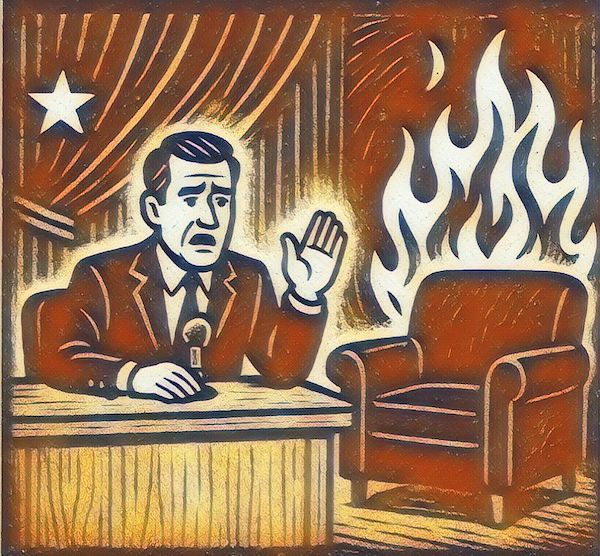
The origins of the format
Talk shows have roots in the early years of television. In the late 1940s and early 1950s, names like Joe Franklin and Steve Allen began experimenting with the format that blended interviews, music, and informal commentary. Allen is often credited as the creator of The Tonight Show, which premiered in 1954 and became the benchmark for all that followed.
But it was Johnny Carson who gave the talk show its definitive face. From 1962 to 1992, The Tonight Show Starring Johnny Carson not only dominated American nights but also set the tone, rhythm, and cultural role of the late-night talk show. Carson was seen as a barometer of America: ironic, elegant, at times biting, but always accessible. His guests ranged from Hollywood stars to U.S. presidents — and his couch was practically a public consecration.
Peak and fragmentation
In the 1990s and 2000s, the genre entered a kind of golden fragmentation. Jay Leno and David Letterman battled for nightly supremacy; Conan O’Brien captivated a younger generation; and Ellen DeGeneres and Oprah Winfrey showed how the format could adapt to daytime and family or emotional entertainment.
At the same time, talk shows began to splinter into subgenres. Political humor found its place with Jon Stewart’s The Daily Show, which turned news into critical satire and inspired an entire generation of hybrid commentators like Stephen Colbert, John Oliver, and Trevor Noah.
This war for relevance and ratings, with each host trying to create the night’s most viral moment, became a constant backstage pressure within the genre. Guests are recycled across competing programs, usually telling the same rehearsed, harmless stories — part of a rigid promotional machine often controlled by studios and agents. As a result, the freshness of interviews gave way to tedious predictability.
Even hosts’ creative autonomy has been increasingly restricted by guidelines of “correct humor,” steering clear of controversies or potentially offensive comments. This, while partly reflecting a legitimate shift in social sensitivity, also limits the sharpness that was once the hallmark of greats like Letterman or even Colbert in his more irreverent days.
This tension between artistic freedom and ideological policing is also reflected in the scarcity of women in the genre. In the third season of the series Hacks, this issue is explored with brilliant irony: comedian Deborah Vance, played by Jean Smart, loses her talk show amidst the ratings war dominated by men, and the perception that what she has to say “doesn’t fit” the current format. The series sharply illustrates how few women have managed to host national network talk shows — and when they have, they faced limitations imposed by expectations around behavior, humor, and style.


The beginning of the decline
But like all cultural cycles, the peak gave way to a slow erosion. The first structural blow came with changes in media consumption habits. With the rise of the internet, social media, and especially YouTube, the traditional talk show model began to feel outdated.
The best moments were increasingly consumed in isolated clips — the famous segments cut and shared the next day — and no longer as full programs. Linear viewership shrank. Even artists began using their own social platforms to make announcements directly, without relying on hosts as intermediaries.
The situation worsened with the COVID-19 pandemic. Productions were halted or hastily adapted to at-home formats, losing much of the genre’s aura and timing. Even after studios resumed operations, ratings never returned to previous levels.
The political turn and the Colbert case
In recent years, the talk show — especially in its late-night incarnation — has become a political battleground. Hosts who took a clear stance against Donald Trump saw their content increasingly associated with progressive activism. Stephen Colbert stood out in this arena, turning The Late Show into a satirical trench against Trumpism. His post-2016 ratings success was remarkable, but also drew attacks and boycotts.
In 2025, amid CBS/Paramount’s restructuring efforts, Donald Trump directly pressured group executives to eliminate critical voices. Stephen Colbert was the first target. The cancellation of The Late Show, though officially blamed on financial cuts, was widely seen as a direct result of political interference.
The day after the announcement, all the major late-night hosts — Jimmy Fallon, Jimmy Kimmel, Seth Meyers, John Oliver, and even Colbert’s former rivals — attended the taping of his show and sat in the audience in a public gesture of support. It was a symbolic moment of unity, but also a collective warning: deep down, they all know they face a similar risk.
The defense wasn’t just out of loyalty to Colbert, but to the very idea that these shows could still offer social critique and hold politicians and the media accountable. But the impasse remains: even with that ideal, the format is wearing thin. The rising conservative wave wants to silence dissenting voices, while younger audiences, disconnected from traditional talk show language, seek humor, commentary, and critique in new spaces — faster, more informal, more fragmented.
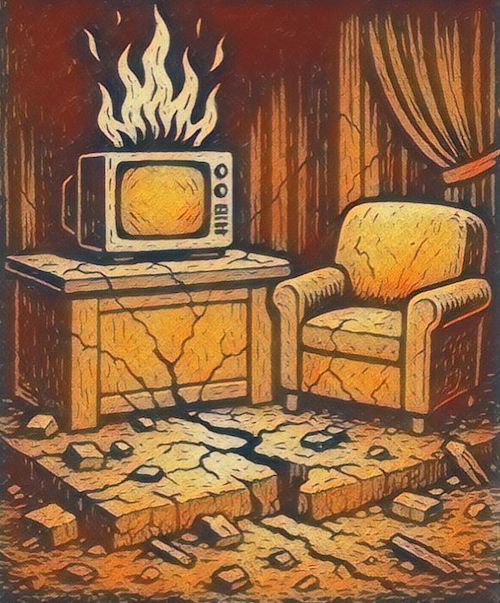
A dying format?
The lingering question is: are talk shows being taken down by external forces — like politics and finances — or are they merely victims of their own obsolescence?
The answer likely lies in a mix of factors. With the dominance of social media, the “exclusive reveal” model lost its value. Celebrities prefer to control their own narratives on their personal accounts. Studios no longer rely on talk shows to promote movies — trailers debut on Instagram or TikTok, and exclusive interviews go to influencers or niche platforms.
Audiences, for their part, no longer have the patience for long interviews, repeated jokes, or predictable segments. Gen Z consumes content in bursts — fragmented, accelerated, hyperconnected. The talk show, with its 1980s and ’90s logic, feels slow, tame, and even artificial in today’s digital cacophony.
The end of an era?
It’s possible the talk show as we know it has reached its end. Not due to lack of talent — many hosts still shine with timing and relevance — but because it no longer fits the spirit of the times. Like the printed newspaper, the CD, or the shopping mall, the talk show may be becoming another artifact of a fading era.
Perhaps the genre’s future lies in reinventing itself on other platforms, with new formats less dependent on TV schedules and more attuned to digital rhythms. Or perhaps the traditional talk show will simply fade away — having fulfilled its role as mirror, filter, and chronicler of American culture for nearly a century.
What seems clear, at least for now, is that the nighttime couch has lost its spotlight. And perhaps the laughter that once united the country around a single host is now scattered across multiple screens, voices, and bubbles — with no one yet able to occupy that symbolic center from which the national conversation was once shaped.
What does the future hold?
The survival of talk shows seems to hinge on two simultaneous battles: resisting political censorship and finding relevance in a constantly shifting digital ecosystem. Is it possible to maintain critical independence without losing audiences? Is there room for boldness without being swallowed by ideological policing or corporate cancellation?
For now, the talk show scene seems trapped between two worlds: the old one, where the couch and monologue set the cultural tone; and the new one, where everything is fragmented into 30-second videos and individual narratives. Maybe the most urgent question isn’t whether talk shows will end — but whether there’s still something only they can offer.
Descubra mais sobre
Assine para receber nossas notícias mais recentes por e-mail.
 miscelana.com