
There’s something deeply fascinating about how, even after more than half a century, Jesus Christ Superstar continues to provoke, move, and reinvent its impact. We’re talking about a musical that, now past its 50th anniversary — 54 years since the original release, to be exact — is still being revisited by new generations, challenging both aesthetic and religious conventions. And that’s precisely what makes the current production starring Cynthia Erivo as Jesus one of the most radical reinterpretations and, at the same time, one of the most faithful to the original spirit of the work.
The musical began as a bold experiment: in 1970, Andrew Lloyd Webber and Tim Rice created a concept album inspired by the last seven days in the life of Jesus. But the narrative center wasn’t exactly the glorified, omnipotent Christ — it was the man. The one who doubts, suffers, spirals into crisis, and is betrayed by a friend. Judas, in this case, is the true emotional axis of the story. That alone would have been enough to cause a scandal. But Jesus Christ Superstar was born to be a scandal — in the best possible sense.
As I recalled in 2020 in my column for CLAUDIA, and again here on Miscelana during the 50th anniversary of the film in 2023, longtime friends Lloyd Webber and Rice found inspiration in the question “Was Judas Iscariot with God on his side?” from Bob Dylan’s song With God on Our Side as the starting point for creating a rock opera that told the Passion of Christ through distorted guitars, pounding drums, and lyrics that felt like intimate, existential, desperate confessions.
A rock opera that told the Passion of Christ through distorted guitars, pounding drums, and lyrics that read like intimate, existential, anguished confessions. The album was released without any stage production because no one believed it could actually work in the theater. But the success was overwhelming (it was the best-selling album in the U.S. in 1971), and the musical premiered on Broadway that same year, followed by a West End run in London and eventually productions around the world. Yes, it was also the year the world was embracing Tommy, the rock opera by The Who.
Since then, Superstar has never stopped being staged. It’s been performed in over forty countries, with countless amateur and professional productions, at least two major filmed versions — the 1973 classic directed by Norman Jewison, starring Ted Neeley and Carl Anderson, and the PBS/TV version from 2000. More recently, in 2018, the NBC live production with John Legend as Jesus and Sara Bareilles as Mary Magdalene brought the musical to a new generation via streaming, proving it still resonates today. But what the new production featuring Cynthia Erivo achieves is more than just an update. It’s a total reimagination.
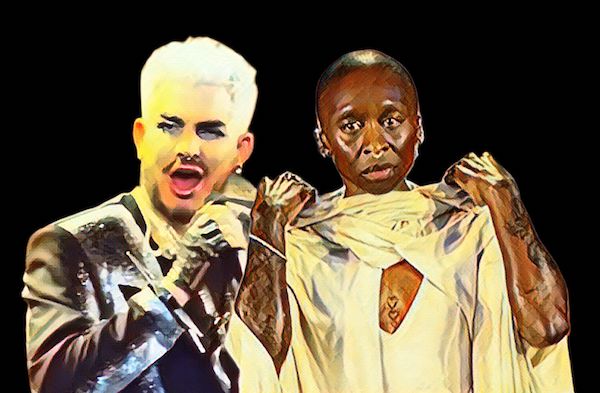
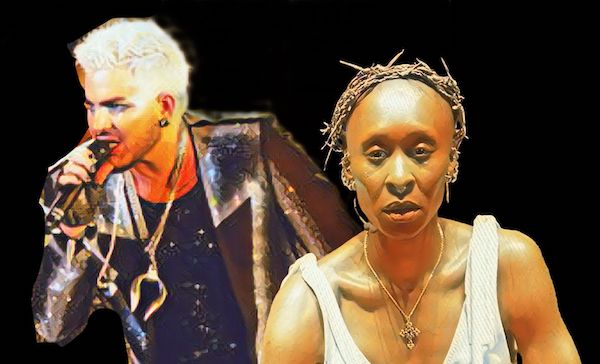
Casting a Black woman in the role of Jesus is not just a symbolic reversal. It’s a direct response to the kind of world Superstar has always tried to reflect: a world in crisis, where power oppresses, faith falters, and leaders are often marginalized, betrayed, or torn apart. Cynthia, who had previously played Judas in a concert version in 2018, now takes on the central role in a production that not only celebrates her vocal performance (and how could it not, with her visceral delivery of “Gethsemane”?) but cements her as one of the great stage performers of our time.
And it’s worth pausing here: “Gethsemane (I Only Want to Say)” is, without exaggeration, one of the most difficult numbers in all of musical theatre. It demands an enormous vocal range, reaching nearly A5, plus breath control, emotional interpretation, and above all, psychological stamina. No wonder many acclaimed singers shy away from the role of Jesus. It’s emotionally brutal. Every time the performer sings “I have to know, I have to know, my Lord…”, they must be all in — and perhaps that’s why Cynthia’s performance has been so praised. She doesn’t sing it. She surrenders. And she turns Jesus’s moment of doubt into a collective catharsis. Ted Neeley himself — who was in the audience — praised her for an unforgettable performance.
Knowing that the true lead role is actually Judas Iscariot, it’s important to highlight the technical brilliance and emotional intensity of Adam Lambert, one of the most extraordinary musical talents of recent decades — so much so that he was chosen to sing with Queen and face all the inevitable comparisons to Freddie Mercury. That’s not for just anyone, right?

But let’s go back to the beginning: Webber and Rice were initially criticized by nearly every religious group. Christian organizations accused the musical of heresy — how dare they portray a Jesus who suffers, doubts, and isn’t entirely divine? Jewish groups protested the stereotyped portrayal of the priests. Even progressive audiences weren’t sure whether the work was a critique, an homage, or a cynical spectacle. But time — as always — sided with the art. Today, not only has the Vatican featured Jesus Christ Superstar’s music in cultural events, but the show is also recognized as one of the pillars marking the transition from classic to modern musical theatre.
A big part of that lies in the lyrics. Judas questions why Jesus let himself become a myth. Mary sings that she doesn’t know how to love a man who’s worshipped as God. Pilate feels powerless in the face of the mob. And Jesus… Jesus is a man at the limits of human understanding. No other musical has ever captured the contradictions of Christianity so humanely — and so painfully. It’s about faith, yes. But more than that, it’s about doubt. About love that wounds. About revolt. About the isolation of leadership.
And that’s why it remains relevant. Every political crisis, every moment where public figures are exalted as saints or torn down by the crowd — Superstar echoes through it all. From the protests of the 1970s to the post-pandemic crisis of faith, to the feminist and racialized reading of 2025, it’s still there — pulsing.

Today, it’s estimated that dozens of Jesus Christ Superstar productions are staged annually — in schools, regional theatres, professional houses — each with its own vision, diverse cast, and interpretation of Jesus’s pain and glory. But in every one, something remains unchanged: the challenge. Singing these songs — especially the solos for Jesus and Judas — is not for everyone. It’s for those willing to open both their throat and their heart. Like Carl Anderson did in 1973, like Brandon Victor Dixon did in 2018, like Cynthia Erivo is doing now.
It’s no coincidence that even with more than fifty years of history, Jesus Christ Superstar still sparks debate, standing ovations, rejection, and tears. Few works are born with that kind of enduring power. And maybe that’s why today, when I watch Cynthia Erivo scream “Why should I die?”, I don’t just see a modern reinterpretation. I see the entire musical renewing itself — once again. Because that’s what it was made to do: to provoke. To deconstruct. To burn.
And it still burns.
Descubra mais sobre
Assine para receber nossas notícias mais recentes por e-mail.
 miscelana.com