
As published on Bravo Magazine
Almost two decades after turning a comedy about the hellish world of fashion into a pop phenomenon and instant classic, The Devil Wears Prada is back. And if social media, the streets of New York, and the frenzy stirred by every behind-the-scenes glimpse are any indication, the film is already a hit before even reaching theaters. The filming of the sequel has turned Manhattan into a public runway, with Meryl Streep, Anne Hathaway, Emily Blunt, and Stanley Tucci parading their iconic characters before a sea of smartphones.
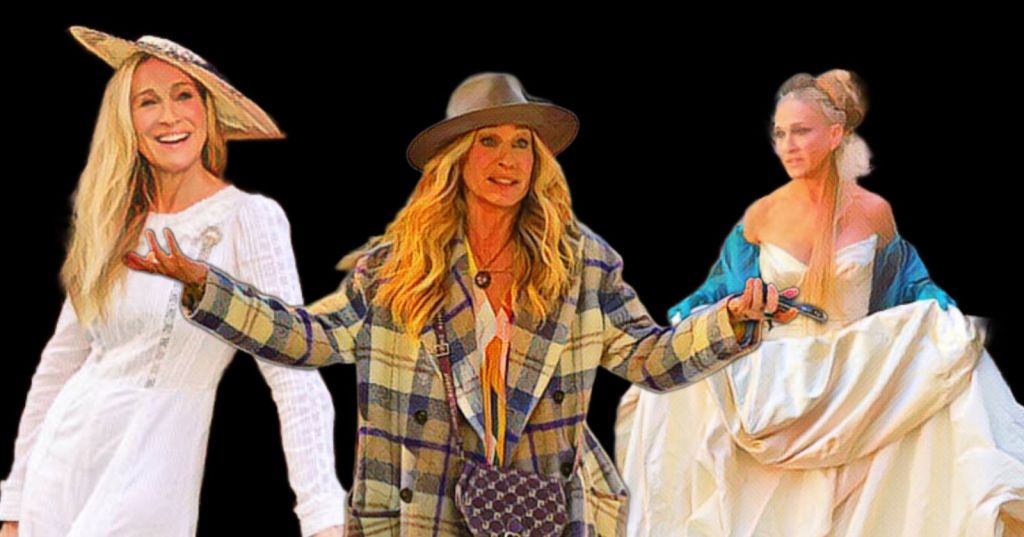
You know what it reminds me of? The glory days of Sex and the City and all the excitement surrounding its return in And Just Like That. The comparison is inevitable, but there are key differences. While Carrie Bradshaw and her friends returned in a more melancholic revival, The Devil Wears Prada 2 seems determined to recapture not just the glamour and sarcasm of the original, but also the energy of an industry (and a city) that has changed radically since 2006. Fashion is different. Journalism is different. But Miranda Priestly is still on top — even if just barely.
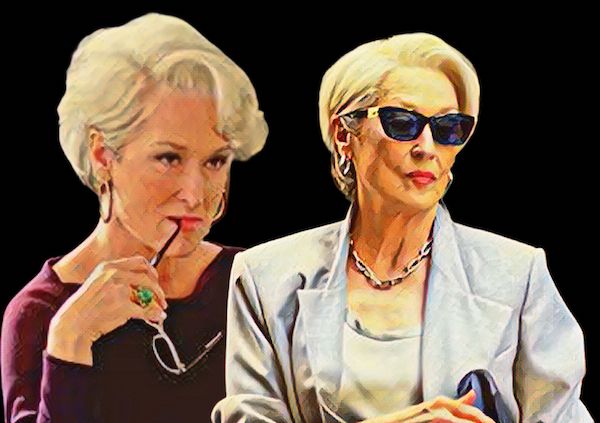
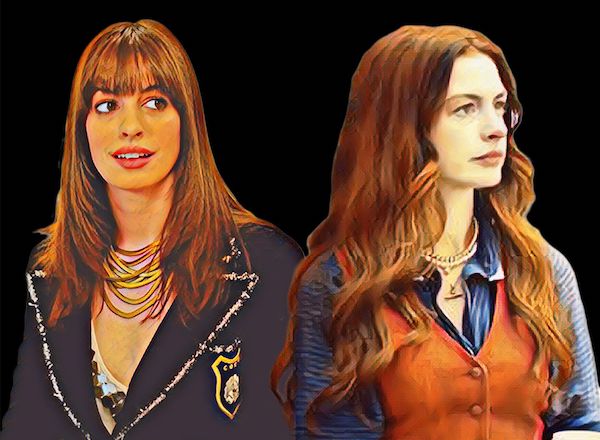
In recent weeks, social media has been flooded with photos and videos from the set. One day, Meryl Streep appears stunning in a scarlet red dress on the steps of the Museum of Natural History, alongside Stanley Tucci. Next, Anne Hathaway is spotted wearing a bucket hat, a Gabriela Hearst dress, and sunglasses, boarding a bus to the Hamptons. Emily Blunt, now with vibrant red hair and dressed in Dior and Gaultier, turns heads even off-camera. Every outfit is dissected by fashion lovers. Every location is immediately identified by keen-eyed fans.
So much access, however, has sparked some backlash: some complain that the spoilers are “ruining” the experience — especially for a film whose strength has always included its visual surprises. “I feel like I’ve already seen the whole movie,” one follower grumbled. Another pleaded, “Please stop posting the looks!”
But let’s be honest: no snapshot can replace the full experience of watching Miranda enter a scene with her icy composure and impeccable style. The challenge of the new film will be not only to recreate the original’s allure but to surprise — a much more complex task in today’s world. The advantage? Behind the scenes, the team knows the material inside out, with the same director and screenwriter returning, and almost the entire original cast on board. There are new faces, of course, such as Kenneth Branagh, Simone Ashley, Lucy Liu, Justin Theroux, BJ Novak, Pauline Chalamet, and Rachel Bloom, among others.
It’s worth remembering that the craze began in 2003, with the publication of Lauren Weisberger’s original novel, inspired by her experience as Anna Wintour’s assistant at Vogue — but it was the film that turned the story into a global phenomenon. The book became a bestseller, but the 2006 film adaptation made it iconic. Nominated for two Oscars (Best Actress for Meryl Streep and Best Costume Design for Patricia Field), the film grossed over $326 million and influenced an entire generation’s way of dressing, working — and even replying to emails. Let’s not forget Gisele Bündchen’s cameo as Emily’s friend. More than just a fashion comedy, the film addressed themes like professional identity, life choices, and the sacrifices women make to carve out their place in the world — all wrapped in Chanel, Valentino, Prada, and one of the sharpest scripts in modern commercial cinema.
In the original, we follow Andy Sachs, a freshly graduated journalist who lands the job that “a million girls would kill for”: second assistant to the powerful and feared editor Miranda Priestly at Runway magazine. Knowing nothing about fashion, Andy dives into a cruel, competitive, and seductive environment — where she must choose between staying true to herself or becoming what the job demands.
According to sources close to the production, the sequel will tackle the decline of the print edition of Runway magazine. Miranda Priestly is reportedly struggling to maintain her relevance in a world ruled by influencers, algorithms, and disposable content. Andy, now successful in a different field, and Emily, with newfound autonomy and interests, cross paths again with their former boss — but under very different circumstances. There are rumors that the new film might adapt elements from the second book, but with its own updated structure, reflecting today’s dilemmas: cancel culture, digital disruption, quality journalism vs. viral content, and what female power means in 2025.

For years, a sequel seemed unlikely. Meryl Streep said more than once that she wasn’t interested. Anne Hathaway also saw no reason to return — unless it was “completely different.” In 2013, Lauren Weisberger released Revenge Wears Prada: The Devil Returns, a sort of literary sequel that follows Andy and Emily ten years later, now business partners at a wedding magazine, trying to keep Miranda Priestly at bay. The book was a bestseller but divided readers. Many missed the original’s comic tone and high-fashion energy, especially since Miranda barely appears in the early chapters.
Everything changed in July 2024, when Walt Disney Studios — now parent company of 20th Century Studios — officially began developing the sequel that’s currently going viral on social media.
If the original is the guilty pleasure of two generations — rewatched compulsively to this day, quoted in memes and leadership seminars about toxic management — the truth is that The Devil Wears Prada never left pop culture. Its impact on fashion is tangible: Andy’s fashion transformation became a blueprint. Miranda’s cerulean blue sweater monologue turned into an academic analysis. And the notion that “a million girls would kill for that job” remains relevant in times of hustle culture and burnout. Can I say something? When I was Head of Production and Programming at Glitz Channel, which covered fashion, pop culture, and luxury on pay TV during fashion weeks, I’d always ask for reports to explain the trends to laypeople as if we were Andy trying to understand “the cerulean blue sweater” — minus Miranda’s passive-aggressiveness. And you know what? It worked. (As a boss, I never wore Prada — not even metaphorically!)
But what’s undeniable is that, much like And Just Like That, the new phase of The Devil Wears Prada rides the nostalgia wave with intent. It’s not just about bringing characters back, but placing them in new, more complex, more mature dilemmas. The world has changed — and so have these characters. What hasn’t changed is the public’s fascination.

Filming is underway in New York, and the release is set for May 1, 2026 — already surrounded by massive expectations. The question is whether it can recapture the same balance of sharpness, humanity, and style that made the original a classic. But if anyone can prove that relevance is a matter of attitude (and shoe choice), that someone who goes by the name Miranda Priestly.
And yes — florals for spring still aren’t groundbreaking. But maybe, this time, what truly is groundbreaking… is the reunion. The Devil is back. And she’s still wearing Prada.
In the end, it’s not just about fashion — though it’s impossible not to swoon over the costumes. It’s about ambition, identity, power dynamics, and, above all, how women navigate their presence and autonomy in hostile environments. The Devil Wears Prada remains a mirror, a satire, and a manifesto. And now, almost 20 years later, we’re still willing to hear it said, with all the world’s elegant sarcasm:
That’s all.
Descubra mais sobre
Assine para receber nossas notícias mais recentes por e-mail.
 miscelana.com