
The second season of Wednesday arrived with high expectations — and for most fans, it delivered a visually stunning, dark, and gothic atmosphere that captivated them in the first season. However, it quickly becomes clear that this time the series aims for a more complex and dense structure, perhaps even too ambitious, which brought a flood of subplots that, although very well executed and terrifying, end up confusing more than helping. This doesn’t take away from the season’s merit, which keeps the essence of the character and narrative alive, but certainly leaves the feeling that the story could be a bit more streamlined to have even more impact.
Jenna Ortega undoubtedly continues to shine in the lead role. Ortega’s Wednesday is the perfect combination of dark humor, wit, and a newly discovered vulnerability that adds depth to the character. It’s fascinating to watch her evolve, exploring new shades of gray in the iconic young Addams, previously so rigid and certain in her determinism. Ortega delivers a performance that keeps viewers glued to the screen, whether in suspenseful scenes, sarcastic interactions, or more emotional moments where the girl faces her internal dilemmas and family relationships.
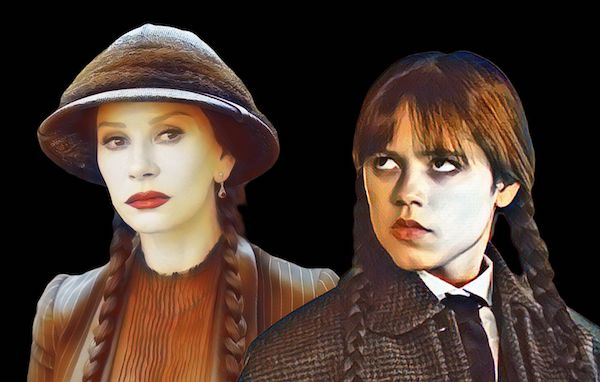
Speaking of family, the interaction between Wednesday and Morticia, played by Catherine Zeta-Jones, is one of the highlights of the season. The chemistry between them is palpable, making each shared scene carry a dramatic and emotional weight that balances the dark tone of the series with a certain lightness and humanity. Zeta-Jones brings an elegant, ironic, and at the same time maternal Morticia, creating a perfect counterpoint to the daughter’s colder, more closed personality. This dynamic makes the series richer and more multifaceted, bringing the audience closer to the complexity of the characters beyond the macabre stereotype.
Another standout element is the soundtrack. It functions as an invisible character guiding the season’s mood, adding even more weight to scenes of mystery and terror without losing subtlety. The music choices and direction are spot on, amplifying the visual impact with sounds that stick in your head and evoke that unique sensation only a great soundtrack can provoke — suspense, tension, and at times, a strange melancholy.

Aesthetically, the series remains impeccable, with photography embracing classic gothic visuals, richly detailed dark settings, and costumes that pay tribute to the Addams family tradition. Tim Burton’s direction, still involved behind the scenes, impresses his characteristic style, balancing the macabre with the comic, the bizarre with the human. All of this together creates an immersive atmosphere that is one of the series’ great trademarks.
Moreover, the second season offers clear homages to classic suspense and horror cinema, especially Alfred Hitchcock’s work. The tense atmosphere and mystery around the killer Scalper evoke Hitchcock’s psychological suspense, with scenes playing with viewer perception and the game between the visible and the hidden. Visual references to classics like Psycho and Rear Window appear in framing choices, exploring voyeurism and paranoia, creating an unsettling mood that elevates the series to a more sophisticated narrative level.
One of the most striking elements in this regard is the birds — mainly crows — which play a symbolic and narrative role throughout the season. This is a direct homage to The Birds (1963), Hitchcock’s iconic film that turned these creatures into symbols of a silent, relentless threat. In the series, crows appear not just as symbols of death and omen, common in gothic imagery, but also actively participate in suspense scenes, with attacks that increase the sense of imminent danger and growing paranoia. This reference reinforces the oppressive and disturbing atmosphere permeating the plot, linking Wednesday to the greater legacy of classic psychological horror.

However, the critiques about the excess of subplots and characters cannot be ignored. The season presents a huge number of new elements — from secret experiments with outcasts, crow-related murders, to the appearance of terrifying characters like the killer Scalper — which, while interesting and well-developed, end up making the narrative somewhat scattered. It’s as if the series tries to embrace too many mysteries at once, which can confuse the viewer and dilute the tension that the first season built with a more focused story.
Additionally, the strategy of dividing the season into two parts, with four episodes released in August and the second part scheduled for September, caused some discomfort among parts of the audience and critics. The feeling that the story was interrupted at the most tense moment, in a slasher-worthy cliffhanger, left many anxious and somewhat frustrated, as the pacing becomes irregular and the resolution is delayed. On the other hand, this division might be a strategy to maintain engagement and increase suspense, but it is a divisive choice.
Another critique is the comparison of the series with other Tim Burton projects or even the first season. While the artistic direction, Ortega’s performance, and the atmosphere are widely praised, some critics point out that the script suffers from a lack of originality in certain moments and that the humor loses some of its previous sparkle. The feeling for some is that the series became a kind of generic reboot, with fewer nuances and more focus on clichés of teen horror — although that doesn’t make it any less fun or engaging.
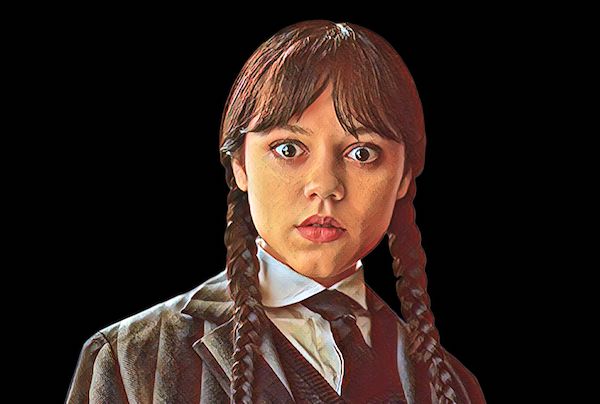
In the cast, it is also worth highlighting the new additions that enrich the series’ universe: Steve Buscemi, Billie Piper, Christopher Lloyd, Thandiwe Newton, Haley Joel Osment (playing the scary Scalper), and Lady Gaga as the enigmatic teacher Rosaline Rotwood. These appearances bring fresh energy and contribute to the plot’s density, expanding the world of Nevermore, the academy where much of the story takes place.
Despite the caveats, the final balance is quite positive. Wednesday reaffirms its place as a global phenomenon, winning a loyal audience that identifies with the protagonist and is enchanted by the mix of dark humor, mystery, and horror. The visual style, soundtrack, Ortega’s acting, and family dynamics are pillars that sustain the series even in the face of narrative flaws.
Ultimately, the feeling after watching the first half of the second season is that Wednesday is a growing work that takes risks and is not afraid to explore new territory, even if that sometimes generates a bit of chaos. It’s a series that embraces its contradictions and manages to keep the viewer hooked, eager for what comes next. And the truth is, with so many intriguing elements left open, no one will want to look away, waiting to find out the fate of our beloved Wednesday.
Descubra mais sobre
Assine para receber nossas notícias mais recentes por e-mail.
 miscelana.com