
Marian Brook’s costumes in The Gilded Age form an intricate visual diary of her character’s emotional journey, social positioning, and personal growth. From the moment she appears on screen, the colors, fabrics, and cuts chosen for her convey far more than a mere nod to historical accuracy; they are deliberate narrative tools that chart her transformation from a somewhat sheltered and idealistic young woman into a more self-aware, confident figure navigating the often treacherous waters of New York society.

In the first season, Marian is frequently seen in shades of yellow — soft, warm, and often pastel-toned. Yellow, in color symbolism, carries a duality. It can represent freshness, joy, and optimism, fitting for a newcomer who is both curious about the world and eager to find her place within it. But it can also signify caution — a subtle reminder that Marian, though open-hearted, is moving carefully through a world with rules she doesn’t yet fully understand. The yellows she wears are rarely bold or golden; instead, they lean toward buttery or pale shades, suggesting innocence rather than flamboyance. The lightness of these colors reflects her early status: a woman without great wealth or solid societal footing, but with a brightness of spirit that draws others to her.


By the second season, a shift becomes apparent. Marian’s wardrobe expands into blues and darker tones, marking a new phase in her story. Blue, especially in the softer sky and powder variations, maintains a sense of calm and approachability — qualities Marian has always embodied — but as the palette deepens into navy and richer hues, it signals a subtle gravitation toward maturity and gravitas. These are the colors of someone who has seen more, learned more, and is beginning to weigh her ideals against the complexities of the world around her. The darker palette also aligns with her growing sense of independence: Marian starts making decisions with greater confidence, stepping out from under the influence of her aunts and asserting her own choices, even when they run counter to societal expectations.


Now, as the third season unfolds, Marian’s colors have grown even more varied and assertive. She is seen in deep greens, romantic pinks, rich purples, and striking reds. This chromatic expansion mirrors an inner transformation: Marian is no longer passively adapting to her surroundings; she is actively defining herself within them. Each color speaks to a facet of her evolving identity.


Green suggests renewal and ambition — not in the aggressive, status-obsessed sense seen among some of her contemporaries, but in a quieter, determined way. Pink retains traces of her romantic spirit, a reminder that even as she becomes more worldly, she hasn’t lost her capacity for tenderness and hope. Purple, historically associated with nobility and sophistication, hints at an increased social confidence, as though Marian is now comfortable being noticed and perhaps even admired. And red — the most striking of the recent additions — introduces an element of passion and daring, a sign that she is ready to take risks, both emotionally and socially.

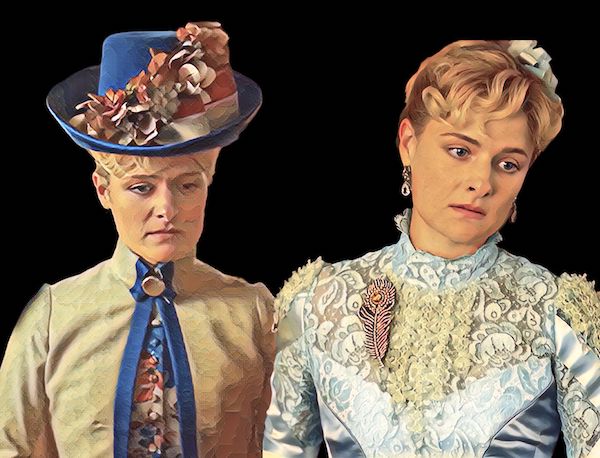
The fabrics themselves also play a role in this evolving language. Early in the series, her materials were often lighter, softer, and more practical — cottons, modest silks, and wools appropriate for a young woman of modest means. Over time, there has been a shift toward richer textures: heavier silks, velvets, and more intricate trimmings. This doesn’t necessarily mean Marian has abandoned her understated style; rather, it shows she has learned to use the visual codes of high society to her advantage without surrendering to their excesses.

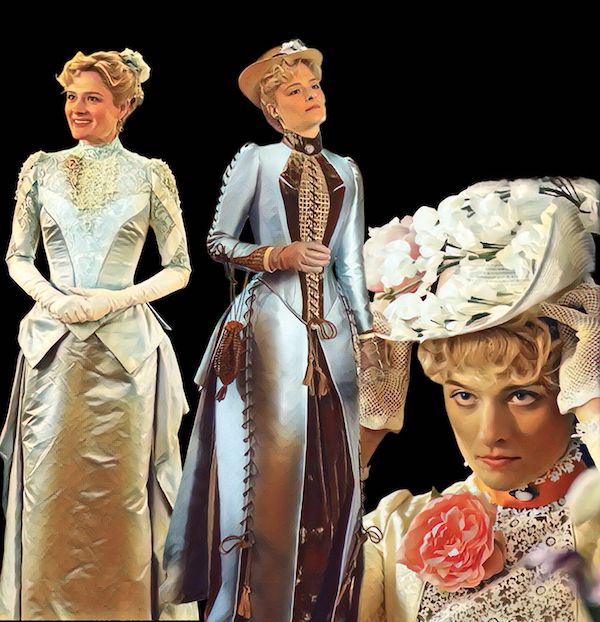
There is a deliberate balance in her costuming — Marian is never dressed to overwhelm, but she is now dressed to be remembered. This mirrors her character arc: she has developed a firmer sense of self without becoming cynical or losing her moral compass. The wardrobe evolution also reflects her growing adaptability; Marian can now navigate between social groups, from the rigid old-money elite to the ambitious nouveau riche, without appearing out of place.
In short, Marian’s changing palette tells a story of self-discovery and adaptability. Yellow to blue to a vibrant spectrum of deep, resonant tones — each phase captures a new layer of her experience. Her clothes are not just beautiful period costumes; they are a living, breathing extension of her personal narrative. Through color, fabric, and cut, Marian’s journey is made visible, reminding us that in The Gilded Age, fashion is never mere decoration — it is one of the series’ most eloquent storytellers.
Descubra mais sobre
Assine para receber nossas notícias mais recentes por e-mail.
 miscelana.com