
Today, August 10, 2025, Sunset Boulevard turns exactly 75 years old. It’s almost impossible to say that sentence without feeling a shiver, because we’re not talking about just a “respectable” classic that has survived the test of time. We’re talking about a film that was born to shock, to wound, and at the same time to fascinate — and that, seven and a half decades later, remains as perfect, as ruthless, and as current as it was on the day it was first shown. It feels almost poetic that this anniversary falls on a Sunday. It makes you want to close the curtains, put on Franz Waxman’s score, and let Gloria Swanson walk into the room, in 35mm or 4K, as if nothing had changed.

When Sunset Boulevard premiered on August 10, 1950, Hollywood had already passed its golden peak and was beginning to face its scars. Television was threatening the monopoly of movie theaters, the studios were no longer such secure empires, and the very idea of a star was shifting. Billy Wilder, with his refined irony, set out to make a film that would not just show this change but dramatize it to the limit. The screenplay, written with Charles Brackett and then-young critic D. M. Marshman Jr., began as a more comedic idea but gradually took the form of a tragedy. And not just any tragedy: a Hollywood tragedy, with the camera turned inward on the very industry, exposing vanities, obsessions, abandonments, and ghosts.
The cast was the final piece of this precision machine. Gloria Swanson, who had shone in silent cinema, was not an obvious choice for a major 1950 production. But it was precisely that past that Wilder wanted to capture. Norma Desmond is not just a character — she’s a living portrait of an era that no longer exists. It’s impossible to look at Swanson in the film and not feel there is something autobiographical in every gesture, every line, every look. William Holden, as Joe Gillis, provides the perfect counterpoint: a pragmatic cynic, already-dead narrator, observing Norma’s spectacle with a mix of interest, pity, and disbelief. And Erich von Stroheim, as Max, is perhaps the most bitter layer of this irony: a legendary, visionary filmmaker now reduced to a devoted butler tasked with keeping alive the illusion of the star he once directed — and really did direct in real life, in the ill-fated Queen Kelly. When Norma shows one of her old films to Joe, what we see on screen is indeed Swanson directed by von Stroheim. This fusion of fiction and reality is one of the reasons Sunset Boulevard is more than cinema: it’s an autopsy of cinema itself.

Behind the scenes, the stories are as numerous as the script’s perfect lines. There’s the famous reaction from Louis B. Mayer, MGM’s mogul, who reportedly called Wilder “that son of a bitch” for “biting the hand that feeds you” and tarnishing the industry’s image. Wilder, with his dry humor, replied in kind and never backed down. And there was also the initial reluctance of some stars who were considered for Norma but didn’t want to be associated with such a desperate, decaying character. The truth is that only someone with Swanson’s courage could have sustained that performance without hiding behind vanity.
Technically, the film is another spectacle. Norma’s mansion, with its corridors full of portraits, sculptures, and heavy curtains, is almost a character in itself — a living mausoleum where time has stopped and everything exists only to reinforce the idea that the star still shines. John F. Seitz’s cinematography is a masterclass in how to use light and shadow to create drama and atmosphere. And Franz Waxman’s music doesn’t just accompany but comments on the action: melodramatic when needed, ironic when exposing the farce, tragic when truth imposes itself.
The reception at the time was a mix of fascination and discomfort. Critics acknowledged the boldness, but some thought the film was too cruel, almost grotesque in its portrayal of Hollywood. But cruelty was the point. Wilder didn’t want a gentle portrait. He wanted the audience to see the bones beneath the glamour. Over time, what was once seen as too bitter became revered. Today, Sunset Boulevard isn’t just remembered as one of the greatest films of all time — it’s studied as the film that best spoke about cinema itself.
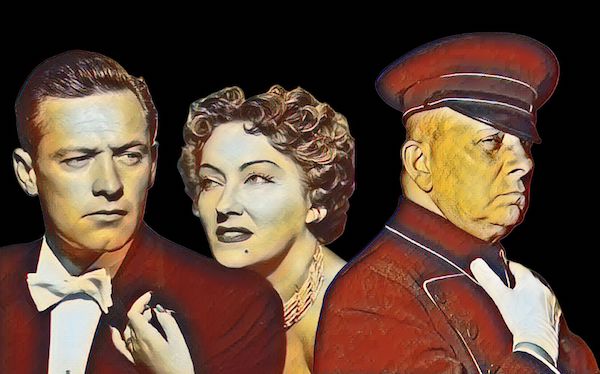
That ability to stay alive is rare. Sunset Boulevard doesn’t rely on period gimmicks or visual trends. Its perfection comes from dramatic construction, from the precision of its dialogue, from the strength of its performances. Norma Desmond remains a universal symbol of obsession with fame, and her final line — “All right, Mr. DeMille, I’m ready for my close-up” — still sends shivers because it’s both glory and ruin. It’s not nostalgia that makes the film endure: it’s the honesty of showing that the glow of the lights always comes with deep shadows.
Seventy-five years later, as the film gets new restored editions, re-releases in theaters, and renewed discussions, it’s impossible not to think about how visionary Wilder was. He didn’t just speak about the end of an era; he spoke about something eternal in human nature: the need to be seen, the difficulty of aging under the spotlight, the cruelty with which the same audience that applauds can also turn away. That’s why today isn’t just an anniversary. It’s proof that Sunset Boulevard is as alive as it was in 1950. And that perhaps no final close-up has ever been so deserved.
Descubra mais sobre
Assine para receber nossas notícias mais recentes por e-mail.
 miscelana.com
1 comentário Adicione o seu