
The boy who refuses to grow up was born from a specific time and man, yet his figure seems to have slipped free from the calendar’s grasp. Peter Pan, created by James Matthew Barrie in the early 20th century, is at once a children’s fantasy, a meditation on the loss of innocence, and a mirror of the author’s own complexities. The story has been told and retold in countless forms, from stage to screen, and continues to inspire and provoke debate — including the question of what it truly means to “never grow up.”
The origin of Peter Pan goes back to Barrie’s close relationship with the Llewelyn Davies family. The Scottish writer met the five Davies brothers in Kensington Gardens, London, in the late 1890s. The intense bond he maintained with them — especially after the early deaths of their parents — planted the seed for the character. Before becoming the boy of Peter and Wendy (1911), Peter Pan first appeared in the play Peter Pan, or The Boy Who Wouldn’t Grow Up, staged in 1904.

The story the world knows — though it has undergone countless variations — follows Peter as he visits the bedroom of Wendy Darling and her brothers, taking them to the magical island of Neverland, where they face pirates led by the fearsome Captain Hook. Among fairies, mermaids, and lost boys, the narrative strikes a balance between adventure and melancholy. The core of the myth lies in the desire to escape the responsibilities of adulthood, but also in the inevitability of time’s passage — something that Peter himself paradoxically refuses to accept.
The strength of Peter Pan lies precisely in its timelessness. Although born in the Edwardian era, the story speaks to every generation. The fear of growing up, nostalgia for childhood, and struggle against forgetting are universal themes. Children see in him a liberating hero; adults, a nearly tragic figure who pays for his freedom with loneliness. This double perspective sustains the character as an enduring archetype.
On the psychological side, scholars have interpreted Peter Pan as a symbol of the syndrome that bears his name — the refusal or inability to mature emotionally. The expression “Peter Pan syndrome” was popularized by psychologist Dan Kiley in the 1980s and is still used to describe adults stuck in adolescent behaviors. Some darker interpretations see in the character an echo of Barrie’s own life, marked by early loss, trauma, and an apparent difficulty in forming romantic relationships with adults.

Peter Pan was an immediate success on stage. The original London production in 1904 captivated audiences and established theatrical conventions — such as the use of wires to simulate flying — that became inseparable from the story. The play was adapted into the novel Peter and Wendy in 1911, cementing the most widely known literary version. Over time, the character expanded into silent cinema, animation, and large-scale films, always retaining the core of his adventure.
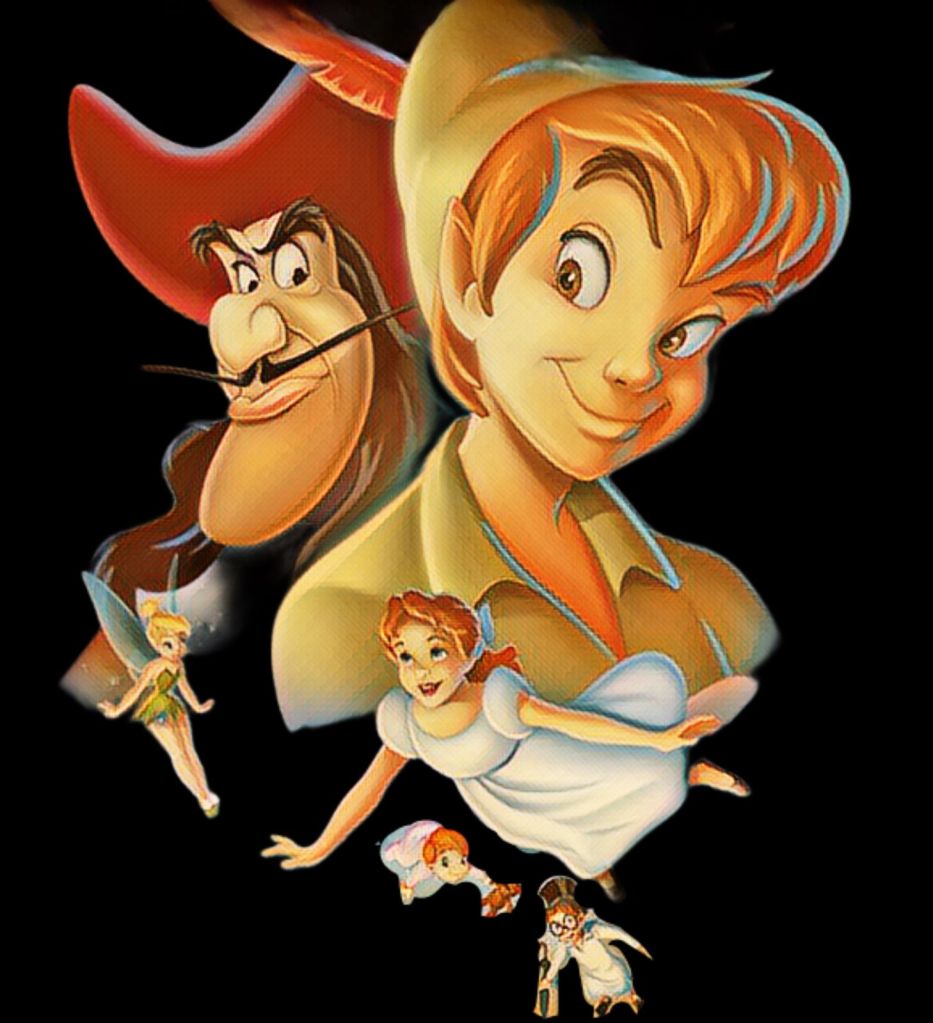
The most enduring popular culture adaptation came in 1953, with the animated classic Peter Pan by Disney. The studio softened some of the darker passages, emphasized humor, and turned the film into an unforgettable musical. This version crystallized Peter’s image for global audiences and influenced every subsequent adaptation. However, it has also been the target of more recent criticism for stereotyped depictions, such as those of Native Americans, sparking discussions on revision and cultural sensitivity.
The shadows in Barrie’s biography continue to fuel debate. Some interpret his relationship with the Davies boys with suspicion, even raising accusations of pedophilia. However, no concrete evidence or material proof has ever substantiated such claims; what exists is the strangeness of an adult spending so much time with children unsupervised. In the Victorian and Edwardian context, Barrie’s closeness to the family — including the fact that he became their legal guardian — was seen differently, though not without contemporary judgments. For some, this controversy would be enough to “cancel” the author; for others, it is impossible to reduce his work and literary legacy to these speculations.
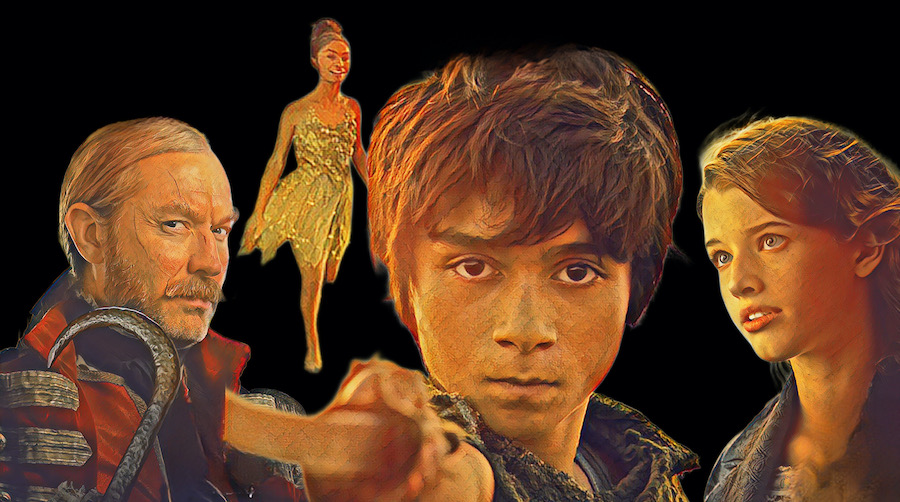
Today, Peter Pan continues to appear in film adaptations such as Hook (1991), Peter Pan (2003), Pan (2015), and the live-action Peter Pan & Wendy (2023). On stage, he remains a constant presence, whether in traditional productions or modern reinterpretations. The character also permeates television and literature — and even genres where one might least expect him. The series Alien: Earth, for example, evokes Peter Pan in dialogue and symbolism, using the concept of “never growing up” to reflect on alien civilizations that avoid biological aging but pay dearly for such stasis. This parallel reinforces how elastic and adaptable the myth is, even to narratives far removed from the original children’s tale.

Finding the book today is easy: editions of Peter and Wendy and Peter Pan are widely available in bookstores, both physical and digital, many in the public domain and free to download from sites such as Project Gutenberg. There are illustrated versions, annotated editions, and retellings for younger readers, proving that the text survives in multiple forms.

In the end, Peter Pan does not belong solely to Barrie or Disney, nor is he confined to the pages or stages where he was born. He lives in the collective imagination as a metaphor for what we lose when we grow up — and also for what we gain. His endurance proves that, even amid controversy, stories capable of speaking to all ages are rarely lost. After all, somewhere there is always a Neverland waiting for us — whether in a century-old play, a childhood film, a sci-fi reference… or the intimate memory of the day we realized we, too, would grow up.
Descubra mais sobre
Assine para receber nossas notícias mais recentes por e-mail.
 miscelana.com