
The exceptionally beautiful and dense series Chief of War has been compared to Game of Thrones and Shōgun—and that’s neither unfair nor an exaggeration. It’s a series designed for Jason Momoa fans (I include myself here) to enjoy his charisma and leadership without disappointment. Because the series is spoken almost entirely in ʻŌlelo Hawaiʻi, the native language of Hawaiʻi, some viewers reject it at first glance. After all, not even Momoa or breathtaking scenery could overcome that initial strangeness—yet, come on, who speaks fluent Japanese to have worshiped Shōgun? What stands out in Chief of War, beyond the production quality and a committed cast, is that YES, it’s a true story. And a fascinating one.
There are historical figures born with an innate vocation for the epic, and others that time and art turn into legend. Kaʻiana-a-Ahuʻula, a noble Hawaiian chief of the late 18th century, is both at once. In real life, he was a high-ranking warrior, a military strategist, and the first Hawaiian leader to cross oceans and see the world beyond the archipelago. In the fiction of Chief of War, he is the thread that weaves together a narrative that is at once a war drama, a political chronicle, and an act of cultural affirmation. His story is worth knowing—but beware, there are spoilers.
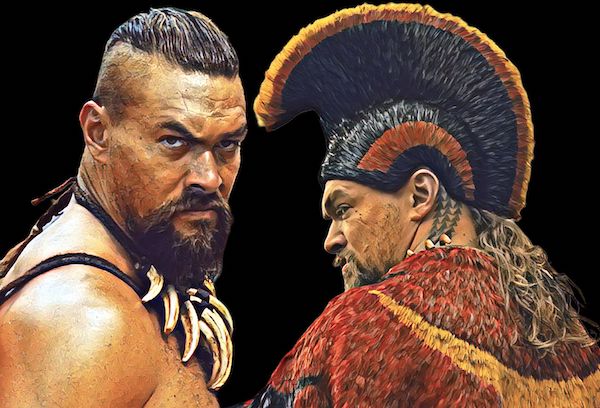
The man behind the legend
Historically, Kaʻiana was born around 1760 into a royal family and quickly rose as a respected warrior. His uniqueness came from an unprecedented experience: traveling to China, the Philippines, Alaska, and North America — an unthinkable feat for Hawaiian nobility at the time. He returned with weapons, techniques, and a worldview that would make him a key figure in the unification wars under Kamehameha I.
He was a loyal ally of the future monarch, fighting in decisive battles like Mokuʻōhai and Kepaniwai. However, politics is fickle: intrigues, power disputes, and, according to some sources, mutual suspicion eventually broke the alliance. Kaʻiana joined rival forces and met his end in 1795 at the Battle of Nuʻuanu, struck by cannon fire — ironically, weapons he had helped introduce to Hawaiʻi.
The Kaʻiana of “Chief of War”
In the Apple TV+ series, Jason Momoa crafts a Kaʻiana who is more introspective and reluctant. He begins away from the conflicts, resisting the call to war, until he is pulled back by alliances, prophecies, and family pressures. The script emphasizes moral, emotional, and spiritual dilemmas, giving greater weight to intimate life and ceremonial tradition than to purely military exploits.
This Kaʻiana is less the relentless commander of the historical record and more the man torn between two worlds: the traditional Hawaiʻi that shaped him and the inevitable outside influence he already knows firsthand. The central tension is not simply “winning or losing the war” — it is “preserving or losing the soul of a people.”
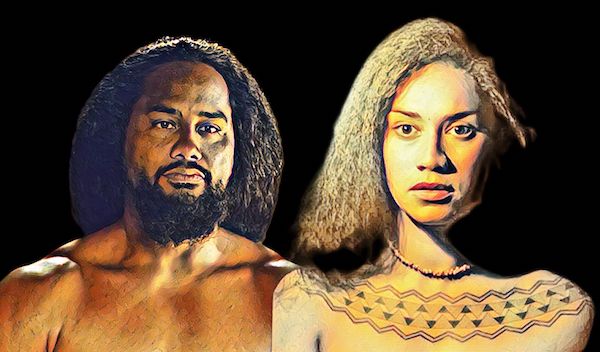
Kaʻiana and the tragic hero archetype
Placing Kaʻiana alongside William Wallace (Braveheart), Ned Stark (Game of Thrones), Maximus (Gladiator), or Toranaga and Blackthorne (Shōgun) is no stretch. All carry the weight of an era, fight for something greater than themselves, and pay dearly for their integrity.
The similarities lie in the sense of duty, the moral code, and the willingness to face forces far greater than they are. The difference is that Kaʻiana is not driven by vengeance or political naïveté: he is moved by a rare awareness for his time, knowing that every victory comes with losses — and that the greatest enemy might be the irreversible cultural transformation ahead.
An epic told from within
Unlike many historical dramas, Chief of War refuses the filter of an outsider’s gaze to “explain” Hawaiʻi to the audience. Everything is told from within, in ʻŌlelo Hawaiʻi, with rituals, costumes, and social codes reproduced in detail. This positions the viewer not as a tourist, but as a guest.
That shift changes the epic’s impact: where Shōgun dazzles with political chess and Braveheart with its cry for freedom, Chief of War moves by being a people narrating their own story. Kaʻiana is not just a military hero — he is a symbol of an identity that survived war, colonization, and cultural erasure.


A manifesto disguised as a drama
Yes, there are grand battles, brutal fights, and breathtaking visuals. But the true heart of Chief of War lies in what it means: Hawaiʻi reclaiming its memory. By making Kaʻiana the protagonist, the series rescues a man who lived on the knife’s edge between tradition and change — and presents him not as a historical footnote, but as the centerpiece of a decisive chapter.
If every epic needs a tragic hero, Chief of War has found its own. And unlike many, this one was never meant to serve as entertainment for others. He was meant to remind us who tells the story — and why.
Descubra mais sobre
Assine para receber nossas notícias mais recentes por e-mail.
 miscelana.com