
Spending years on Reddit — and not just as a spectator, but as an active participant — is like living in a secret bar where everyone talks about everything, but no one says their real name.
It’s a vice, but also a cultural laboratory. In my case, the immersion goes even deeper: in seven years, I’ve accumulated more than 95,500 karma, a number that puts me among the platform’s unofficial elite. To put it in perspective, most users never surpass 10,000. Passing 50,000 already means belonging to a highly active and relevant minority; nearing 100,000 is a sign of consistency and of engaging in discussions that truly resonate.
And when it comes to TV series, few networks have as much power to shape the conversation as this anonymous and noisy corner of the internet.
Reddit was born on June 23, 2005, created by Steve Huffman and Alexis Ohanian, two college roommates at the University of Virginia. In the beginning, it was just a link aggregator, but it quickly evolved into its own ecosystem of communities — the famous subreddits — each dedicated to a specific theme and moderated by volunteer users. Today, there are millions of them, covering everything from quantum physics to cat memes, from international politics to frame-by-frame analysis of Better Call Saul.

Its key difference has always been the combination of anonymity and collective curation. Unlike Facebook or Instagram, where personal identity and your social circle shape what you see, on Reddit, what matters is the content and the community’s engagement. It doesn’t matter if you’re a newcomer or a veteran: a well-thought-out post can earn thousands of upvotes and circulate around the world, while shallow publications vanish without a trace.
Seven years inside this logic changes anyone. You comment, create threads, reply to other users, and suddenly you’re climbing participation rankings, accumulating karma that becomes almost a parallel identity. It might seem trivial, but there’s an addictive satisfaction in seeing an episode analysis gain traction and spark a debate that lasts for days. And there’s something unique: the impossibility of knowing who’s on the other side. In the same thread, I might be talking to a fan who just discovered the series or to a writer who actually works on it.
When it comes to television, this mix of anonymity and obsession creates a near-symbiotic space with the industry. Reddit gives productions a fan base that tracks every detail, crafts theories, hunts down continuity errors, and keeps the conversation alive between episodes and seasons. Showrunners rarely admit it, but they read what’s there — some openly, others quietly — to gauge the audience’s temperature. In some cases, this feedback changes the course of a plot; in others, it helps calibrate expectations and avoid controversies.
And this isn’t just a theory. There are clear examples of when a Reddit discussion not only went viral but, in some way, made it to the screen.
When Reddit interferes — and the result shows up on screen
Game of Thrones – r/freefolk
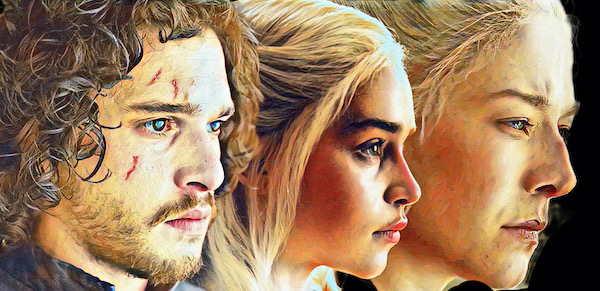
The r/freefolk subreddit is perhaps the most emblematic example of mobilization and impact. The R+L=J theory (Rhaegar Targaryen + Lyanna Stark = Jon Snow), which had circulated for years among book readers, gained definitive traction on Reddit, with timelines, maps, quotes, and connections so elaborate that they shaped the marketing of season six. The reveal was already in the original plan, but HBO smartly used the buzz to craft teasers and trailers that fueled the mystery.
Another case is the legendary “Cleganebowl” — the fight between Sandor and Gregor Clegane. It started as an inside joke and recurring meme on the subreddit from season four onward, and HBO delivered it in season eight with shots and lines that felt like a direct nod to the fandom.
And, of course, the season eight backlash: the sheer volume of memes, posts, and petitions that originated on r/freefolk set the tone for the press, damaged the show’s public image, and, according to executives, influenced how HBO scheduled future releases to avoid long silences that let the narrative slip entirely into the fans’ hands.
House of the Dragon – r/HouseOfTheDragon
The spin-off inherited the scrutiny but also learned from the past. The controversial time jump in season one, which replaced the actresses playing Rhaenyra and Alicent, was the subject of intense discussion months before the premiere. The buzz was so strong that HBO added interviews and featurettes to its promotional material explaining the change — something unlikely to have happened without that early wave of criticism.
Another example: the necklace Daemon gives Rhaenyra in the first episode. The subreddit was filled with threads interpreting the gesture, tying it to political alliances and possible romantic subtext. The impact was such that the necklace became more prominent in posters and the season two aesthetic — almost like an Easter egg designed for this sharp-eyed audience.
And Just Like That – r/sexandthecity
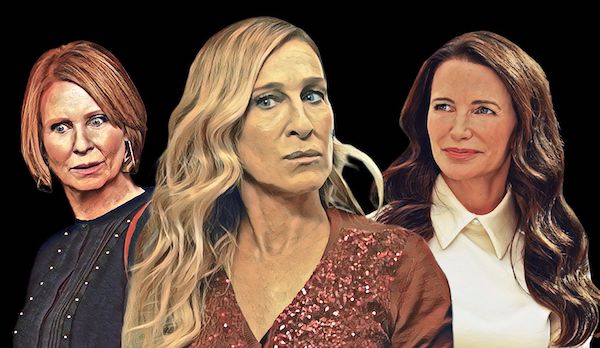
On r/sexandthecity, which serves both the original series and the revival, reactions to plot choices are almost immediate and unforgiving. During season one, threads criticizing the treatment of Steve and Miranda’s storyline gained so much traction that season two made a visible effort to “rehabilitate” Steve, giving him more lines and even an episode focused on him.
Costume design was also in the spotlight: after complaints about combinations considered “outside Carrie’s DNA,” costume designer Molly Rogers mentioned in an interview that she was listening to the fans — and made adjustments to bring back Sex and the City’s signature visual identity.

The Gilded Age – r/TheGildedAgeHBO
Smaller in numbers but powerful in its niche, r/TheGildedAgeHBO is populated by specialists in fashion, architecture, and social history. In season one, several posts pointed out inaccuracies in dresses and hairstyles. In season two, the costume team began including detailed explanations in behind-the-scenes materials about the authenticity of the pieces — a clear response to the type of critique born there.
Another example: the character Gladys Russell. Her lack of prominence in season one was widely discussed on the subreddit, and in the following season, she gained her own arc and a stronger presence — something that, according to interviews, hadn’t been so firmly planned at first.
r/Naath is a curious case: born from Game of Thrones fandom culture, it’s a community that mixes commentary on Westeros with spin-offs and related universes, but with a more relaxed tone than r/freefolk. It’s a space for veteran fans who’ve already survived the opinion wars of the main series and now seek less toxic, though still detailed, discussions.

r/freefolknews, as the name suggests, is a more “informative” channel within the Game of Thrones ecosystem. Its focus isn’t memes or biting commentary, but compiling news, interviews, and sneak peeks. Frequented by users deeply familiar with the universe, it benefits from a natural quality filter: what appears there tends to be relevant, verified, and often ahead of the mainstream press.
And, of course, r/TheGildedAgeHBO — despite being small, it’s a treasure for history lovers. It doesn’t limit itself to discussing Julian Fellowes’ plot, but contextualizes it with real facts from the late 19th century, meticulously examining clothing, architecture, social etiquette, and even literary influences from the era.
Compared to other networks, Reddit is more archive than stage. X/Twitter thrives on immediacy and performance; Instagram and TikTok filter conversation through aesthetics and personal charisma. On Reddit, text and argument carry more weight. It creates a living record, accessible to anyone, showing how perceptions about a series have shifted — or soured — over time.
For creators, this monitoring can be a blessing or a trap. It can save an underrated series, as with The Expanse and Brooklyn Nine-Nine, or it can create suffocating pressure that stifles creative risks. For someone who participates intensely, like me, it’s impossible to come out unscathed: every thread is a mental marathon, every upvote a bit of fuel to keep talking. And it’s precisely this mix of anonymity, collective curation, and obsessive detail that makes Reddit unique.

It’s not just a thermometer for what works in a series — it’s increasingly an invisible part of the writers’ room.
And even those in front of the camera know it. The Gilded Age star Carrie Coon once joked in an interview: “Let’s wait and see if Reddit agrees.” The joke was lighthearted, but it carried weight — the cast not only knows the subreddit exists, but understands that the discussions there have real influence on public perception of the show.
And yes, sometimes we’re debating directly with someone important without realizing it. There are clues to spot these profiles:
- Careful interaction with criticism, avoiding direct confrontations and steering the conversation toward positives or “what’s coming next.”
- Knowledge of behind-the-scenes details before any official release, with technical specifics about writing, directing, or costumes.
- Strategic posting patterns, almost always at key moments, with little involvement in memes or trivial topics.
- A tendency to defend or contextualize creative decisions consistently, using ambiguous language to keep interest alive.
- A mix of technical jargon and fan enthusiasm.
- New accounts or wiped histories before joining discussions about a specific show.

Perhaps this is the most fascinating part of Reddit: you never know who’s on the other side of the screen. It could be a fan who just arrived, a journalist covering the industry, or a writer who, the next day, will use that debate as fuel for the next scene.
And when you spot the signs — that user who only appears at key moments, speaks like a fan but masters insider jargon, defends creative choices with the calm of someone who knows what’s coming — you realize Reddit isn’t just a meeting place for viewers.
It’s an invisible hallway linking those who watch and those who create. A place where, under the disguise of anonymity, passions, critiques, and secrets meet. And even if no one admits it publicly, everyone there — from newcomers to veterans, from fans to showrunners — is listening.
Descubra mais sobre
Assine para receber nossas notícias mais recentes por e-mail.
 miscelana.com