
There are artistic encounters that feel inevitable. Sooner or later, two sensibilities recognize each other and become mirrors. That’s exactly what happened when Florence Welch found in Autumn de Wilde someone capable of translating into images what already existed in her music: intensity, excess, beauty, and a touch of mysticism that never quite resolves itself.
Autumn de Wilde had already made a name for herself as a photographer and director before this collaboration. An American artist, she grew up surrounded by music and became a reference by capturing the essence of Beck, Fiona Apple, and Elliott Smith. Her photography always carried something theatrical — never just documentary, but a gaze that invents scenarios and tells stories. In cinema, she reaffirmed that aesthetic by directing Emma. (2020), a Jane Austen adaptation that unfolded like a painting in motion, elegant and exuberant.

Florence Welch, on the other hand, has always been a body in a state of catharsis. Since her earliest albums, the leader of Florence + The Machine has built her artistic persona as a mixture of pop priestess, tragic muse, and baroque enchantress. She sings as if invoking something greater — and her stage presence turns every performance into a collective ritual.
When these two languages collided in Dance Fever (2022), it was clear the encounter was bigger than the sum of its parts. Autumn didn’t just photograph the album cover: she gave form to the atmosphere Florence was already creating in sound. In the videos for “King,” “Heaven Is Here,” “My Love,” and “Free,” we watch this fusion unfold in real time. Florence appears as a spectral figure, surrounded by symbols, dancers, and imagery that recalls both German Expressionism and Renaissance iconography. In “Free,” Bill Nighy embodies Florence’s anxiety, a cinematic stroke only a director like Autumn could orchestrate.
The collaboration didn’t stop there. In 2025, with the release of “Everybody Scream,” Autumn once again shaped not only the visuals but the very imagination of the project. The continuity gives the impression that Florence + The Machine is now living an audiovisual moment as strong as its musical one — and that happens because there’s mutual trust. Florence hands Autumn her inner world, and Autumn returns it as grand, layered images that are never gratuitous.
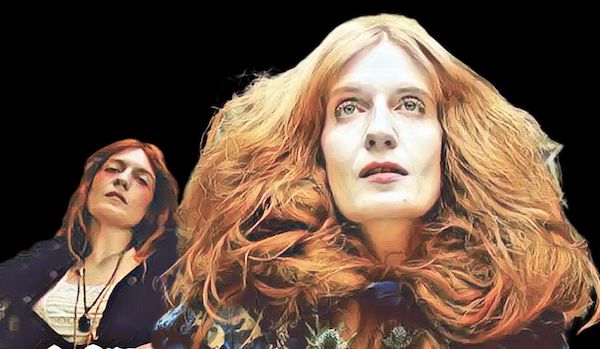
Both share a taste for refined excess. Florence, in her vocals and themes that weave love, death, and transcendence. Autumn, in visuals that always seem larger than life but hold an intimacy beneath their monumental beauty. It’s a partnership that inevitably recalls what Anton Corbijn did with Depeche Mode: more than directing music videos or signing album covers, he helped build an identity, a visual myth inseparable from the band. Florence and Autumn occupy that same space: when we think of Dance Fever or “Everybody Scream,” it’s impossible to separate the sound from the images.
And perhaps that’s the secret of this union’s power. Florence would still have her music, Autumn her artistry, but together they created something rare: a shared universe where voice and image speak the same language. With big doses of Kate Bush, surely.
Descubra mais sobre
Assine para receber nossas notícias mais recentes por e-mail.
 miscelana.com