
Nearly twenty years after the murder of Meredith Kercher in Italy, the story of Amanda Knox still manages to attract cameras, fuel debates, and, of course, inspire new series. It’s not just about revisiting a brutal crime: the case became a mirror of how different societies — and a scandal-hungry press — construct narratives around a young woman at the center of tragedy.
Amanda was an American exchange student in Perugia when her roommate was found dead. In a matter of days, she went from witness to suspect. Police and prosecutors leaned on trivial behaviors — a kiss on the street, what they saw as an inappropriate calmness on camera — to sustain the image of a femme fatale. The press, desperate for a protagonist for its bloody drama, branded her “Foxy Knoxy.” From that moment on, real life became an international media spectacle.

What followed was a series of legal rollercoasters: convicted, acquitted, reconvicted, then acquitted once more. Each decision not only reignited doubts about her innocence but also fueled broader debates on sexism, flawed investigations, and how public opinion is shaped more by images and stereotypes than by evidence. That’s precisely where new series find their strength: the Amanda Knox story is not just about crime — it’s about culture.
The latest production on the case leans heavily into this fertile ground. While it revisits details of the investigation and trial, it also seeks to dismantle the media circus that surrounded Knox, exploring how she was portrayed both as a cold manipulator and as a helpless victim of a broken system. This contrast is irresistible to screenwriters, documentarians, and streaming platforms: the doubt never disappears, and the audience stays hooked.
For those outside Britain, Italy, or the United States, the fascination can seem even stranger: at least five documentaries and three films have already been produced. Depending on the narrative, Amanda is either a calculating murderer who now “profits” from the story (despite spending years in prison) or a victim of prejudice, misogyny, and cultural misunderstandings. That’s exactly what The Twisted Tale of Amanda Knox aims to address.
It is important to remember that the murder of Meredith Kercher is officially solved: DNA evidence tied Rudy Guede, a young man from the Ivory Coast who was with the student that night, to the crime. He was convicted in 2008 and served his sentence until his release in 2021. Yet some still doubt whether Guede acted alone, despite the overwhelming physical evidence — his DNA was found on Meredith’s body, on her clothes, and spread throughout the room. Guede has always claimed he was in the house but in the bathroom when the attack occurred, and that he fled in panic without calling the police.
The court concluded that Guede attempted to sexually assault Meredith, and when she resisted, he attacked her with a knife. She sustained more than forty wounds, with a deep cut to her neck as the fatal blow. The crime scene indicated sexual violence, even though Guede denied it.
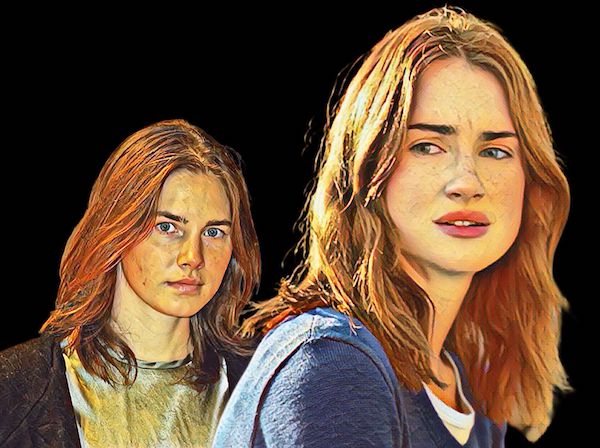
But before Guede was identified, police had already decided Amanda Knox was guilty — not because of evidence, but because she behaved “strangely”: she didn’t cry, she kissed her boyfriend, she wasn’t particularly popular among her peers. Many saw her as sexually promiscuous, and her limited Italian only deepened the misunderstandings.
Knox has always insisted that her innocence and inexperience played against her, especially the psychological and physical pressure during brutal interrogations that eventually forced a false confession. The fact remains: because of contradictory versions and cultural biases, the case never reached a cultural closure. And it is precisely this lack of consensus that keeps the story alive in series, films, and endless debates.
Adding to the controversy, the current series was shot in Perugia itself, in the very city where it all happened. That choice heightens the tension and tragedy of such a violent and strange crime. And Amanda is behind the production: The Twisted Tale of Amanda Knox is, in many ways, her version.
In the first two episodes, even without a linear narrative, it’s worth noting that the script doesn’t necessarily paint Knox in a sympathetic light. Instead, she appears as an unprepared young woman caught in the middle of an unbelievable crime. The fact that she entered the house, took a shower, and only later noticed the blood traces is still one of the details her detractors point to today.
The physical resemblance between Amanda Knox and actress Grace Van Patten adds power to the portrayal, offering a vulnerability that the news images of the time failed to capture. The press leaned into the Italian narrative because her beauty was undeniable, as were her untimely smiles and what seemed like coldness. And since she was initially asked to “help” with the investigation, she quickly shifted from witness to suspect. The brutal interrogation sequence — which even brought Amanda Knox herself to tears when watching — stands out as one of Grace’s strongest performances.
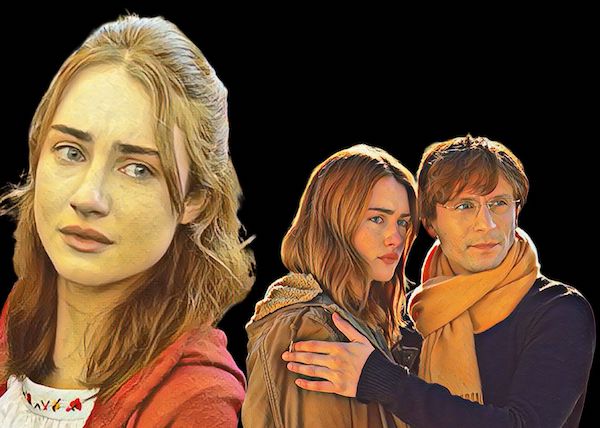
The series will still explore the harsh reality of prison and her fight for freedom — after all, she spent 2007 to 2011 behind bars, despite her innocence. The fascination endures nearly two decades later because Amanda Knox never left the public conversation. She writes, gives interviews, appears on podcasts, and openly challenges how she was judged more for her gender, behavior, and image than for evidence. By retelling her own story, Knox provides even more fuel for the industry to keep exploring her life.
In the end, every series about Amanda Knox is less about discovering “who killed” and more about reflecting on how we judge — in courts and on front pages — who we believe is guilty or innocent. It’s a case that never ends, because it reveals not only a crime but the way society chooses to tell that story. And from what I’ve seen so far, it’s worth watching.
Descubra mais sobre
Assine para receber nossas notícias mais recentes por e-mail.
 miscelana.com