
Sixty years after its premiere, The Collector (1965) remains one of those films that not only stand the test of time but seem to grow denser and more unsettling with each revisit. Directed by William Wyler and starring Terence Stamp and Samantha Eggar, the film was adapted from John Fowles’s debut novel, published in 1963 — and together, book and film shaped one of the most disturbing narratives ever told about obsession, captivity, and power.
The Novel: Literature as a Cage
Fowles wrote The Collector between 1960 and 1962. His literary debut was an immediate sensation. Divided into two parts, the novel first gives voice to Frederick Clegg, a solitary clerk and butterfly collector incapable of forming real human connections. The second part shifts to the diary entries of Miranda Grey, an art student abducted by Clegg and imprisoned in the cellar of a remote Sussex farmhouse.
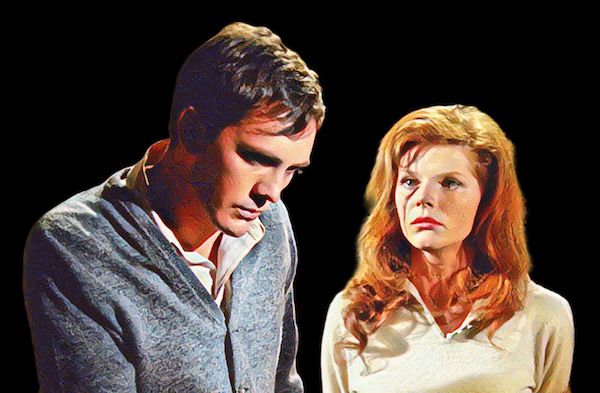
The contrast is brutal: Clegg’s obsessive, stunted worldview versus Miranda’s vitality, self-doubt, and eventual growth under duress. The tragedy lies in the irony — she matures and learns about herself while in captivity, only to die before experiencing any real freedom. Critics quickly pointed out the novel’s layered themes: class struggle (a resentful working-class man against a privileged bourgeois student), absurdist overtones reminiscent of Kafka and Beckett, and even Shakespearean echoes when Miranda compares Clegg to Caliban from The Tempest. Fittingly, he presents himself as “Ferdinand,” the romantic hero of the play — a chilling irony.
The ending is merciless: Miranda dies of pneumonia, and Clegg, rather than breaking down, coldly plans to abduct another woman. Fowles’s novel was hailed as one of the most important psychological thrillers of the 20th century. Critics like Shyamal Bagchee emphasized the paradox of Miranda’s growth in captivity — her existential awakening coinciding with the end of her life. Decades later, The Guardian would label Clegg “one of literature’s most evil characters.”
Wyler’s Film: An Elegant Nightmare
Wyler, a Hollywood giant celebrated for Ben-Hur and Roman Holiday, turned down The Sound of Music to direct The Collector. His choice was radical: instead of an epic filled with crowds, he confined himself to two actors in a claustrophobic space. Filmed in 1964, partly on Los Angeles soundstages and partly in English locations, Wyler’s original cut ran three hours but was trimmed to two at the studio’s insistence.
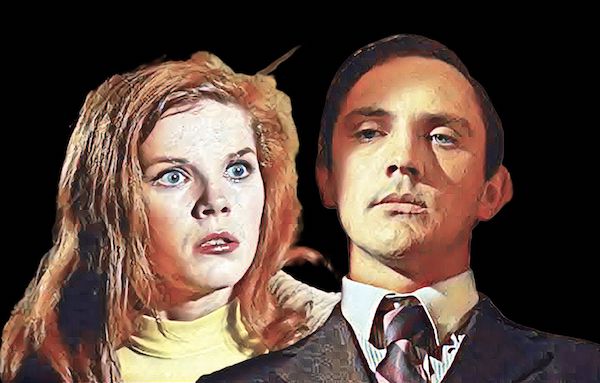
The production was notoriously harsh. Samantha Eggar was nearly fired after struggling under Wyler’s relentless pressure. The director deliberately isolated her on set and even instructed Terence Stamp to ignore her off-camera, heightening her sense of entrapment. Eggar lost more than 14 pounds during the shoot, describing the experience as feeling genuinely trapped. Yet the results were extraordinary: at the 1965 Cannes Film Festival, Eggar and Stamp both won Best Actress and Best Actor — the first time two performers from the same film received both awards. Eggar went on to win a Golden Globe and earn an Oscar nomination, while Wyler received his record 12th — and final — Academy Award nomination for Best Director.
Critical Reception
Upon release, the film drew mixed reviews. Bosley Crowther of The New York Times admired the opening but dismissed the ending as monotonous. Variety, by contrast, praised it as a “solid, suspenseful enactment” directed with “taste and imagination.” Some critics saw it as overly theatrical, almost stage-bound. Yet over time, that claustrophobic, chamber-piece quality became central to its reputation: a minimalist nightmare where the absence of movement amplifies the suffocating atmosphere.
Between Hammer and Hitchcock
The Collector also reflected and diverged from its cinematic context. In the mid-1960s, Hammer Films dominated Britain with Gothic horrors full of vampires, castles, and gore. Wyler went in the opposite direction: he brought horror into the home, stripped of the supernatural. His monster was no vampire or mad scientist — it was the ordinary neighbor, polite, shy, and fatally obsessive. This psychological focus also echoed Hitchcock, especially Psycho (1960), but Wyler’s method was quieter, rooted in long silences and repressed desire rather than shocking violence. Interestingly, actor Anthony Perkins was considered for the role (as well as Dean Stockwell, while for the role of Miranda, actresses Natalie Wood and Sarah Miles were also discussed.

Adaptations and Cultural Echoes
Fowles’s story traveled widely. Stage adaptations appeared throughout the 1970s, with Marianne Faithfull famously playing Miranda in the West End. International cinema borrowed from it too: India’s Moodu Pani (1980) and the Philippines’ Bilanggo sa Dilim (1986) drew inspiration from Fowles’s tale. Stephen King even name-checked The Collector in Misery (1990), acknowledging its influence on captivity horror.
But the novel and film also had darker reverberations. Serial killers cited The Collector as inspiration. Leonard Lake and Charles Ng christened their series of abductions and murders “Operation Miranda.” Christopher Wilder, killed in 1984, had a copy of the book in his possession. Robert Berdella confessed that the 1965 film had shaped his fantasies as a teenager. Few works of fiction have cast such a disturbing shadow into real life.
Fowles’s Other Obsessions
Fowles would return to themes of obsession and imprisonment in The French Lieutenant’s Woman (adapted to film in 1981 with Meryl Streep and Jeremy Irons). There, the prison was social rather than physical: Sarah Woodruff was trapped by Victorian moral codes. If Miranda was locked in a cellar, Sarah was locked in a reputation. In both works, Fowles insisted on the impossibility of possessing or controlling another human being.

The Legacy at Sixty
Today, The Collector is recognized as a pioneer of the captivity subgenre. Its DNA runs through Misery, Sleeping with the Enemy, and Room. Yet Wyler’s film stands apart: it offers no catharsis, no redemption, no escape. Instead, it is as cold and elegant as the butterflies Clegg pins to his boards.
Frederick Clegg remains one of cinema’s most terrifying villains precisely because he does not look like one. He is ordinary, invisible, socially awkward, incapable of love, yet desperate to possess. He mistakes collection for affection, control for intimacy. Sixty years later, his character resonates more than ever in conversations about toxic masculinity and abusive relationships.
Wyler transformed Fowles’s claustrophobic novel into a cinematic nightmare of restraint and precision. The Collector is not a comfortable film — it never was meant to be. But therein lies its enduring power. Six decades on, it reminds us that the most chilling monsters are not supernatural. They are human, every day, and waiting in silence.
Descubra mais sobre
Assine para receber nossas notícias mais recentes por e-mail.
 miscelana.com