
Few characters in House of the Dragon embody ambiguity as profoundly as King Viserys I Targaryen. More conciliator than warrior, more sentimental than strategist, he reigned with the hope of avoiding conflict — yet unwittingly sowed the seeds of the bloodiest civil war in Westerosi history. Much of this collapse stemmed not only from political missteps but from his inability to truly engage with his children.
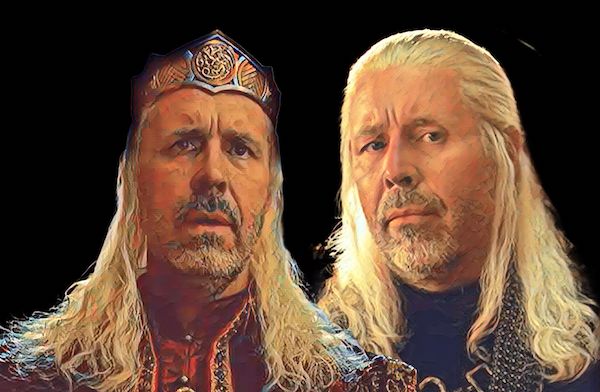
Actor Paddy Considine defended Viserys until the end: he was a good man, with good intentions and a good king, yet he was dragged down by the cruelty and violence of politics and power coming from those closest to him — namely Otto Hightower, the advisor who rationalized that he was serving the institution, but who inserted his own daughter into the process to secure a place within the Targaryen bloodline.
His bond with Rhaenyra and the distance he maintained from the sons he fathered with Alicent Hightower reveal favoritism, emotional gaps, and quiet rejections that left lasting scars. When compared to Fire & Blood, it becomes clear that Viserys was never able to be an equitable father — and this imbalance became one of the sparks that ignited tragedy. Yes, the civil war is “his fault” just as much as it is the fault of those who desired the crown.
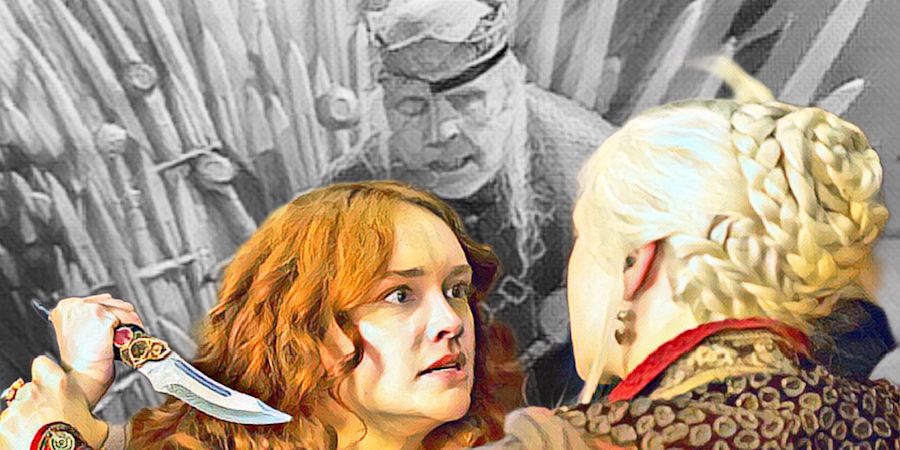
Viserys as a Divided Father and King
Viserys was never a man of intense passions or a firm vision of succession. His most defining trait was indecision. This extended to his parenthood: he loved Rhaenyra, but that love was tangled with regret and guilt. After all, he had dreamed of a male heir, a desire that ultimately cost the life of Aemma, his beloved wife.
In the series — something absent from the books — we see that even though Viserys adored his daughter, his obsession with a male heir made Rhaenyra feel overlooked, invisible, and disposable. The seed of her insecurity regarding her father’s expectations grew even after she was named heir. She knew that the decision was more of a political maneuver, orchestrated by Otto to push Daemon away from the line of succession. It is important to highlight this detail, and I will return to it later: Viserys delayed difficult choices so long that his voice of command lacked firmness, leaving everyone confused about who should truly inherit the Iron Throne.
When his children with Alicent were born, Aegon should have naturally taken precedence. Yet Viserys seemed to have no energy to shift his favoritism away from Rhaenyra — he chose to remain loyal to his first decision, even at the cost of creating resentment among his other children.
The irony of history is that Viserys himself would never have been king if his grandfather had done what he did by naming Rhaenyra his successor. Before him, Rhaenys — as the only daughter of Jaehaerys’s heir — should have been first in line, followed by her children. But Jaehaerys called a Great Council to settle the dispute, and in a patriarchal society, Rhaenys was passed over so that her cousin Viserys could take the crown. For this reason, some argue that Viserys is not to blame for the Targaryen conflict, since he changed the precedent and stuck to it.
The question, however, becomes constitutional: if tradition dictated male primogeniture, then once he had sons with Alicent, it no longer mattered that Rhaenyra had been proclaimed heir before she had brothers. Just as Rhaenys before her, tradition seemed “clear.”

Rhaenyra: The Favorite
From an early age, Viserys treated Rhaenyra as his “apple of the eye.” There is an emotional dimension here: Rhaenyra was the living memory of Aemma, his first wife, the only woman he truly loved. This created a bond that Alicent’s children could never match.
On the other hand, as the series shows, their relationship was not without obstacles. Rhaenyra resented her father’s open yearning for a son, which she understood as rejection. Later — and this diverges from the book — she felt betrayed when he married her best friend, Alicent. Since Alicent gave him the much-desired son, Rhaenyra lived in constant fear that her father would retract his bold decision to make her heir. She knew that he had not chosen her out of conviction, but because she was the only viable option at the time, one that would sideline the ambitious Daemon.
To others, however, Rhaenyra — raised in the heart of the court and always close to her father — seemed to have been entrusted with confidence and authority unprecedented for a Targaryen princess. What traditionalists perceived as Viserys’s insecurity was in fact his certainty that yes, his daughter was the best option to rule Westeros. Even though he never reversed his decision under pressure, many doubted his resolve.

Psychologically, this bond with her father shaped Rhaenyra with strong self-esteem, but also with a dependency on his affection and approval. It was complex for her to impose herself against misogyny while being unsure of her own ability. Her father’s love was not enough to sustain her as queen — at least not for half of Westeros’s great houses. And that is what sparked civil war.
Aegon II: The Ignored Son
Aegon II should have been the long-awaited child, the “dream fulfilled” — yet he never inspired affection in Viserys. By the time Aegon was born, the king was weary, no longer able to muster the same hope and vitality.
Part of the problem was that Viserys did not admire Alicent the way he had Aemma. Thus, Aegon was not the “heir of true love,” but a son born from a political alliance. Psychologically, this created a void in Aegon, which turned into irresponsibility, self-destruction, and resentment. Never feeling recognized, he grew up not taking himself seriously either.
Dragged — quite literally — into the center of the dispute, Aegon II, with his fragile ego inflated by the perceived adoration of the people, embodied the saga’s recurring problem: the misogyny of society. Centuries later, Daenerys would feel threatened when Jon Snow’s identity as Aegon VI was revealed, because Game of Thrones chose another path but circled back to the same core issue: a realm torn apart over the rules of succession.

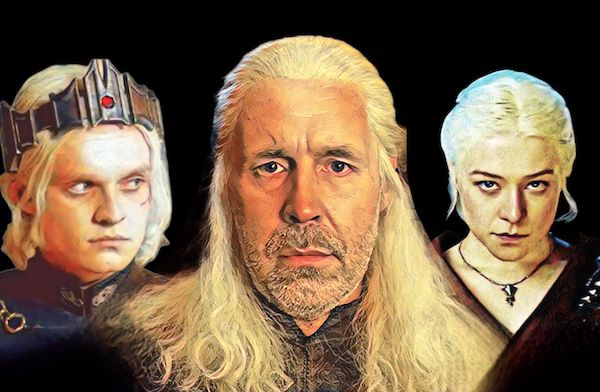
Rhaenyra was officially named heir to the throne, but this happened before Aegon II was born. Thus, it is legitimate to question whether Viserys’s will could outweigh succession laws — just as it was legitimate for Aegon to see himself as the rightful king. Alicent worsened everything by misinterpreting her husband’s final words, but the fact remains: Aegon was crowned before the people, and Rhaenyra had to fight to undo what was already done. The show leans more into the perspective of the Greens (Hightowers) than that of the Blacks (Targaryens), but the impasse remains an extraordinary setup for drama.
Helaena: The Daughter Forgotten by Expectations
In the series, Helaena is portrayed as peculiar, introspective, even prophetic. Viserys, however, never built a meaningful bond with her — unlike the symbolic care he showed Rhaenyra. Helaena grew in her siblings’ shadow, unsupported, which led to isolation, mental fragility, and the tragedies that later defined her life.

Aemond: The Resentful
Viserys never showed much affection for Aemond, but his neglect was less blatant than with Aegon. Aemond grew up as the “son without a dragon,” underestimated, without his father’s love, and pressured by his mother to prove himself. The void left by Viserys fueled an obsession with power — one that bred courage, intellect, and accumulated hatred. Aemond channeled paternal absence into strength and bitterness.

Daeron: The Forgotten
In the book, Daeron Targaryen (the fourth son) is mentioned, but the series has yet to show him. He was raised far from Viserys in Oldtown. This physical distance underlines how little interest the king had in Alicent’s children — they belonged more to the Hightower sphere than to his paternal affections.
Contrast with the Book
In Fire & Blood, Viserys’s partiality is also evident. He never revoked Rhaenyra’s title as heir, even as Aegon grew up. This nurtured the perception that Rhaenyra was always his favorite, while Alicent’s sons never truly had a place in his heart. Yet the book, written as a chronicle, leaves open whether this was genuine love or stubbornness in refusing to admit a mistake. The series, by portraying Viserys as frail yet tender with Rhaenyra until his dying breath, emphasizes the emotional side.

Psychological Impact on the Children
- Rhaenyra: self-esteem bolstered by her father’s love, yet political insecurity from realizing that affection did not translate into collective loyalty.
- Aegon II: a sense of abandonment that became hedonism and self-destruction, but also a fragile need to prove himself when pressured.
- Helaena: isolation, mental fragility, and lack of support, culminating in tragedy.
- Aemond: resentment, anger, and obsession to rise above others, compensating for his father’s neglect.
- Daeron: sidelined and irrelevant to the central narrative, a reflection of paternal distance.
Viserys’s lack of affection for Alicent’s children was not simply about their personalities but about the political and emotional context. He had already invested his emotional legacy in Rhaenyra, tied to Aemma, and had no strength to reinvest in a new generation. This left Alicent’s children starved for recognition, shaping them into tragic, resentful, and emotionally fragile figures — perfect seeds for the Targaryen civil war.
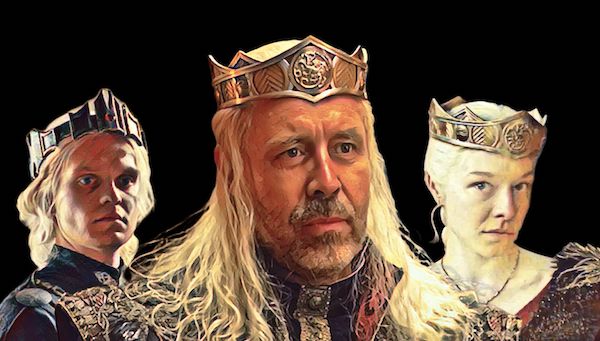
In the end, Viserys’s story is that of a father who never balanced heart and crown. Between Aegon and his sister Rhaenyra, who is the rightful heir in the king’s own words, lay the wound that would never heal. The question many fans still ask — did Viserys like Aegon II — finds its answer in his silence. He did not hate him, but neither did he grant him the affection or recognition he gave Rhaenyra. That void shaped Aegon into insecurity and bitterness, while strengthening in Rhaenyra the conviction that her father’s love legitimized her claim. The result was the inevitable clash between emotional inheritance and political destiny — turning paternal neglect into civil war.
Descubra mais sobre
Assine para receber nossas notícias mais recentes por e-mail.
 miscelana.com