
Few Brazilian telenovelas have had the international impact of A Escrava Isaura (Isaura, The Slave*). First produced by TV Globo in 1976, the adaptation of Bernardo Guimarães’ 1875 abolitionist novel became one of the most exported Brazilian series of all time. Starring Lucélia Santos as Isaura and Rubens de Falco as the villain Leôncio, the novela captivated audiences across more than 80 countries, including China, the Soviet Union, and nations throughout Eastern Europe, Africa, and Latin America. Its mix of melodrama, social critique, and universal themes of freedom and justice transformed Isaura into a cultural icon and Lucélia Santos into a global star.


The phenomenon was extraordinary: in Cuba, electricity rationing was paused during its broadcast; in Russia, the word fazenda (“farm”) was added to the dictionary; and in Bosnia and Croatia, ceasefires were declared so people could watch the show. In China, Lucélia Santos became the first foreign actress to win the prestigious Golden Eagle Award, chosen by over 300 million viewers.
In 2004, Record TV produced its own version, starring Bianca Rinaldi, directed once again by Herval Rossano. This remake expanded the narrative from 100 to 167 episodes and updated the story while maintaining Isaura’s struggle for freedom at its core. It proved a huge success: debuting with solid numbers and climbing steadily, averaging nearly 20 points and occasionally reaching 18–19 in Greater São Paulo. The remake didn’t just perform well; it revitalized Record’s entire dramatic production line and firmly reestablished the network as a competitor to Globo in the telenovela market.
It is also important to recognize that, by today’s cultural standards, the portrayal of Isaura carries a more sensitive dimension. In the original novel, she was described as a white-passing enslaved woman, and both Globo’s 1976 version (with Lucélia Santos) and Record’s 2004 remake (with Bianca Rinaldi) cast white actresses in the role. While this choice reflected the historical context in which the story was conceived — forcing 19th-century Brazilian elites to confront the brutality of slavery through someone who resembled them — it would inevitably raise sharper debates about representation if produced today. Yet despite this sensitivity, the enduring passion for Isaura’s story remains alive: her struggle for freedom, love, and dignity continues to resonate across cultures and generations.
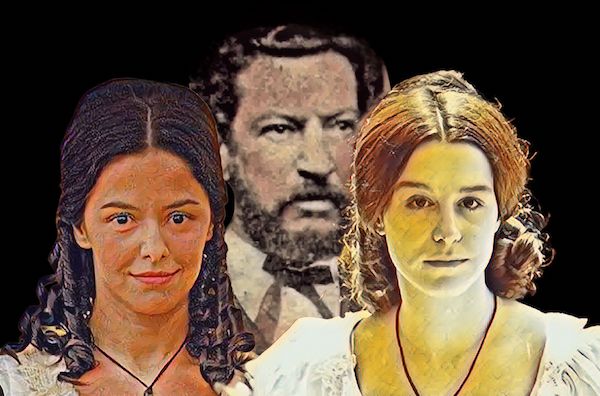
Now, in September 2025, Record TV is preparing to re-air a remastered version of the 2004 adaptation, enhanced with upgraded sound and AI-polished visuals. Scheduled to begin on September 1 at 3:30 PM, replacing O Rico e Lázaro in the afternoon lineup, this reprise also commemorates the 150th anniversary of Guimarães’ original novel.
Looking across these three milestones — the Globo original that became a worldwide cultural sensation, the Record remake that redefined the network’s identity in the 2000s, and the 2025 remastered re-airing — it’s clear that Isaura’s cry for freedom still resonates. Nearly 150 years after her creation, the character continues to move audiences, proving that her story of resistance and dignity transcends generations, nations, and eras.
*Translated from the original title of 1875
Descubra mais sobre
Assine para receber nossas notícias mais recentes por e-mail.
 miscelana.com