
Ever since Charles, Oliver, and Mabel joined forces to record a true crime podcast, the Arconia and its surroundings have become a stage for mysteries, murders, and shocking revelations. Over the course of four seasons, the trio hasn’t just solved homicide cases — they’ve also exposed parallel plots of smuggling, sabotage, forged identities, and even staged disappearances.
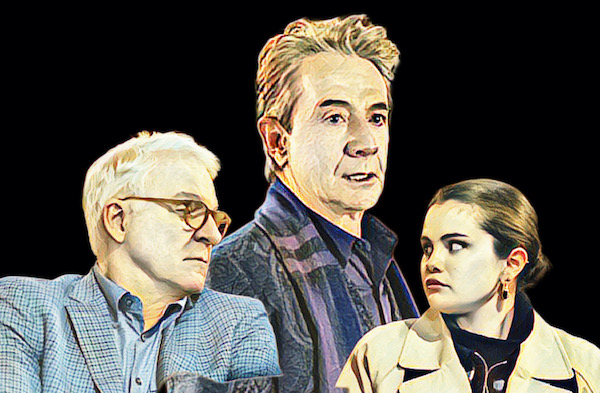
The first season established the perfect formula: eccentric neighbors, a building full of secrets, and a murder that seemed unsolvable. The victim was Tim Kono, a reclusive resident of the Arconia. At first, everything pointed to suicide, but Charles, Oliver, and Mabel quickly realized the story didn’t add up. After a parade of suspects — including Sting, hilariously interrogated in a brilliant cameo — the truth came out: the killer was Jan Bellows, the bassoonist and Tim’s secret lover. Her motive was simple and painfully human: jealousy. Unable to accept being abandoned, Jan poisoned Tim and staged the scene as a suicide. As if that weren’t enough, the podcasters also uncovered a parallel scheme of jewelry smuggling and money laundering involving Teddy and Theo Dimas, proving that the biggest mystery wasn’t the only crime unfolding inside the Arconia.
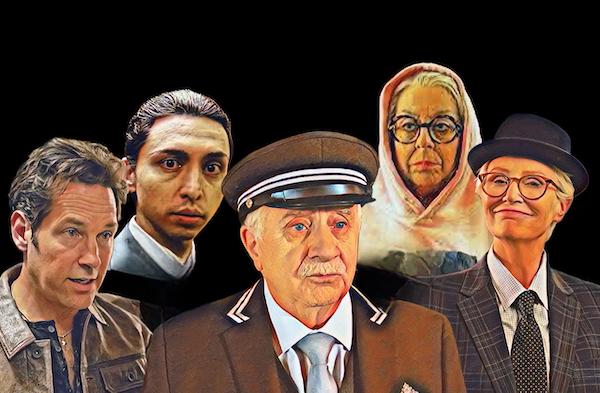
In the second season, the case became even more surprising. The victim was none other than Bunny Folger, the building’s tough and feared board president. Her brutal death initially looked like revenge against her difficult personality, but the mystery turned out to be much more complex. The trio discovered that the true culprit was Poppy White, Cinda Canning’s seemingly timid assistant. Except “Poppy” didn’t exist: she was really Becky Butler, a woman who had staged her own disappearance years earlier to escape a miserable life. Killing Bunny was Poppy’s way of manufacturing a headline-making case of true crime that would finally put her in the spotlight. This season made it clear how the obsession with fame and narrative can be just as dangerous as any weapon.
The third season took the mystery out of the Arconia and into the theater, without losing its essence. The victim this time was Ben Glenroy, a temperamental movie star leading the play Death Rattle. In the very first episode, he collapsed dead onstage — but the circumstances were far more complex. The initial poisoning was the work of Donna, the play’s producer, who wanted to protect the production from disaster. But the actual killing came later: Clifford, Donna’s son, panicked that Ben might ruin his mother’s dream, and in a confrontation, pushed him to his death. Along the way, the podcasters unearthed backstage secrets, hidden affairs, and theatrical sabotage in a plot that doubled as both a murder mystery and a love letter to the fragility of live performance.

And then came season four, which took Charles, Oliver, and Mabel all the way to Hollywood for the film adaptation of their podcast. But murders didn’t stay behind in New York. Early on, the victim was Sazz Pataki, Charles’s inseparable stunt double. Sazz wasn’t just his onstage shadow; she had also written an original version of the script that inspired the movie. The killer turned out to be Marshall P. Pope — a fake name invented by the true culprit, Rex Bailey, a failed stuntman who had stolen Sazz’s script, sold it, and built a fraudulent career as a screenwriter. When Sazz discovered the truth and threatened to expose him, Rex killed her. But he didn’t stop there: he also murdered Glen Stubbins, Ben Glenroy’s double and Sazz’s friend, to keep from being recognized and unmasked. The climax was pure Only Murders: just as Rex confronted the trio, none other than Jan Bellows — the killer from season one — returned, shooting him through Charles’s window and closing the circle in a way no one saw coming. But the real hook came at Oliver and Loretta’s wedding in the Arconia’s grand lobby: Lester, the beloved doorman, was found dead in the garden fountain, setting the stage for season five.
What stands out across all these stories is that the killers aren’t distant strangers or cold-blooded serial murderers. They are always people close to the victims, driven by very human emotions: jealousy, fear, ambition, or obsession with art and fame. And alongside the central murders, the trio has also uncovered other crimes — forged disappearances, smuggling, sabotage — that add even more texture to the story. Only Murders in the Building has never been just about “who killed who,” but about how the need to tell stories and the hunger for recognition can become the very triggers for crime.
Descubra mais sobre
Assine para receber nossas notícias mais recentes por e-mail.
 miscelana.com