
Chief of War tells the saga of Kaʻiana (Jason Momoa), a Hawaiian war chief torn between peace and duty in a world on the brink of transformation. The series blends real historical conflicts over the unification of Hawai‘i with mythology, prophecy, and indigenous rituals. Visually stunning, it stands out as a unique production — a genuine tribute to Hawaiian culture that broadens our understanding of a pivotal chapter in Pacific history. And yes, it’s perfect for fans of Shōgun and Game of Thrones.
The journey begins as a Hawaiian epic steeped in both violence and spirituality. In episode 1, Kaʻiana is forced to return to Maui and fight alongside Kahekili (Temuera Morrison), despite disagreeing with his brutality. His decision is driven both by the duty to avenge the desecration of his father’s grave and the chance to minimize bloodshed by planning the battle himself. Right from the start, the show establishes its core themes: the struggle between fate and free will, honor and survival.
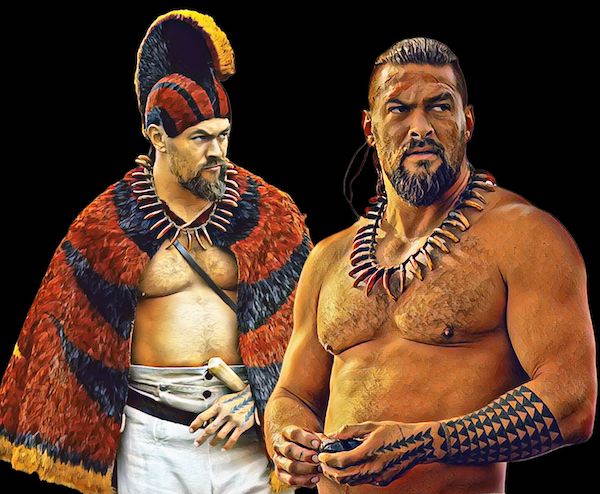
Episode 2 shatters any illusion of loyalty. Kaʻiana flees with his family and a few allies, hunted down as a fugitive. It is here that he meets Kaʻahumanu (Luciane Buchanan), Kahekili’s niece, who carries a dark prophecy: she will “break the world.” Between ambushes and encounters with stranded Europeans, Kaʻiana is torn from his homeland and thrust into exile, separated from his family and exposed to the wider world. This displacement becomes a turning point: the hero who began as a local warrior becomes a foreigner both at home and abroad — a stigma that will ultimately pave the way for betrayal.
In episode 3, the narrative leaps forward a year. Kaʻiana is now a hunter in Alaska and a traveler in Southeast Asia, discovering the sandalwood trade and the machinery of colonization. He realizes that Hawai‘i’s survival will depend not just on brute force but on weapons and strategy. Meanwhile, Kaʻahumanu is given in marriage to Kamehameha (Kaina Makua). The marriage is not just political but prophetic: Moku believes she is destined to stand beside the man who will unify the islands. Kamehameha himself is introduced as a different kind of leader — a warrior, yes, but also a farmer and strategist, able to think not just about battles but about hunger and the future.
In episode 4, Kaʻiana comes face-to-face with the most brutal side of the outside world. In Zamboanga, he witnesses the horrors of the slave trade and, in a visceral sequence, frees all the captives, including his friend Tony. This cathartic act positions him not just as a warrior but as an avenger against systems of oppression. Back in Hawai‘i, King Kalaniʻōpuʻu dies. The throne passes to Keoua (Cliff Curtis), but the war god is bestowed upon Kamehameha. This division seals both men’s destinies and sets the stage for inevitable conflict. It is Kaʻahumanu who gives her husband the confidence to embrace leadership, even when the gods seem silent.
Finally, episode 5 brings Kaʻiana back to the islands. His reunion with his family is marked by silence, heavy with joy and pain — his wife Kupuohi, believing him dead, had grown close to his brother Namake, creating a painful triangle that lingers in the background. Yet the episode is also about reconciliation: Kaʻiana reconnects with Vai, who faces her own family past, and with Kaʻahumanu, now Kamehameha’s wife. The contrast between Kamehameha’s near-biblical lessons (using taro as a metaphor for life and the future) and Kaʻiana’s pragmatism (bringing guns and foreign knowledge) crystallizes in one symbolic sequence: the volcanic sled race. What could have been a rivalry ends in recognition — a handshake and embrace worthy of an action epic. Kaʻiana, skeptical of prophecy, finally sees in Kamehameha a leader perhaps worth following.

Up to episode 5, Chief of War builds an arc where each character embodies a piece of the prophecy: Kaʻiana, the exiled warrior who returns transformed; Kaʻahumanu, the woman destined to “break the world,” guiding men with her whispered visions; and Kamehameha, the chief who would rather plant taro than fight, yet whom destiny keeps pushing toward the crown.
The spoiler:
Don’t get too attached to Kaʻiana. History tells us that he and Kamehameha end up on opposite sides. Depending on the account, Kaʻiana is branded the traitor, and that betrayal culminates in his death at the Battle of Nuʻuanu — a part of the story that is faithful to historical records.
By episode 5, the two finally stand face to face. The sled race is symbolic: a test of strength, courage, and fate. Instead of becoming enemies, Kaʻiana and Kamehameha recognize one another — two powerful men, but of opposite natures. Their embrace in the ocean seals a temporary alliance, but also makes it clear that it cannot last. Kaʻiana still distrusts prophecy and fears following another self-proclaimed “chosen one.” Kamehameha, meanwhile, sees in Kaʻiana a useful ally, but always one on the margins — forever marked by his service to Kahekili and by his time among foreigners.
So far, Chief of War constructs a narrative tripod that sets the stage for inevitable betrayal: Kaʻiana will not accept being overshadowed, Kamehameha will not tolerate an internal threat, and the prophecy can only be fulfilled through the rise of a single king.
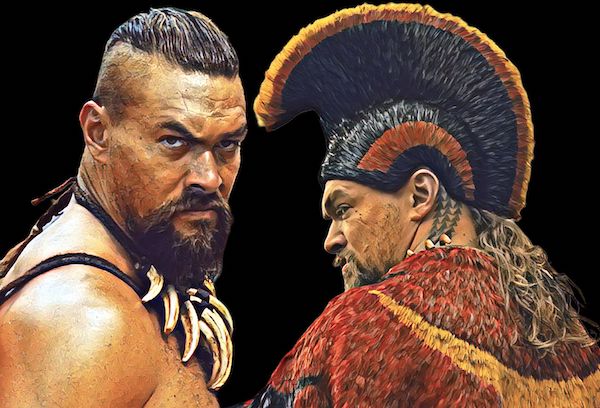
In other words, the Chief of War is weaving a tragedy foretold. The friendship and alliance between Kaʻiana and Kamehameha are only a brief pause before the final clash, because only one of them can truly become the unifier of the islands.
The series’ beauty lies in this balance of grandeur, mysticism, and humanity — reminding us that the unification of Hawai‘i was not just about weapons, but about choices, alliances, and betrayals still to come.
Descubra mais sobre
Assine para receber nossas notícias mais recentes por e-mail.
 miscelana.com