
Historical series always walk a fine line: faithful enough to keep the weight of facts, but free enough to create narratives that captivate modern audiences. In that balance, two recent productions stand on opposite ends. Netflix, with Vikings: Valhalla, leans into myth and the adventurous spirit of the last Norse heroes. The BBC (in Brazil, most likely aired on HBO MAX), with King and Conqueror, plunges into the political web that culminated in the Battle of Hastings in 1066 — a moment that literally reshaped English history.
And if there is a thread linking these two shows, it lies in two central figures: Emma of Normandy and Godwin of Wessex. More than background players, they are the root of the succession crisis explored in King and Conqueror, but one that viewers already glimpse in Valhalla. Understanding their rivalry is key to understanding how the English throne became the ultimate prize contested by Vikings, Saxons, and Normans alike.
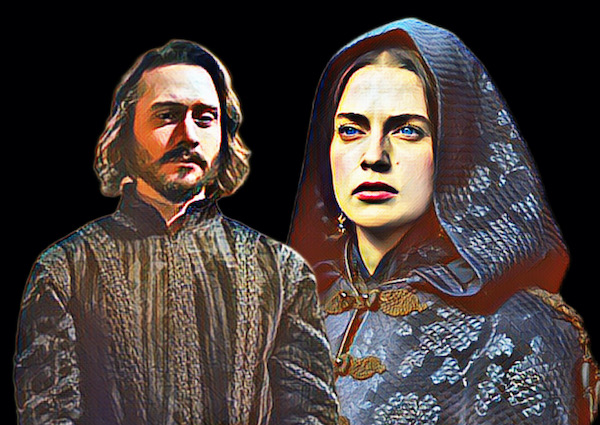
Emma of Normandy: England’s queen mother
Historically, Emma of Normandy (985–1052) is one of the most powerful and fascinating women of the Middle Ages. Sister to the Duke of Normandy (from the same lineage that would later produce William the Conqueror), Emma first married Æthelred II of England, with whom she had children — including Edward, later known as Edward the Confessor. After Æthelred’s death, Emma remarried: her new husband was Cnut the Great, the Danish king who conquered England in 1016.

This second marriage sealed the transition from Anglo-Saxon to Viking rule. Emma, therefore, became queen twice over, mother of two different sets of royal heirs, and a pivotal player in dynastic politics. In practice, her entire life was about securing power for her sons — whether Anglo-Saxon or Danish. And therein lay the problem: through Emma, claims to the English throne stretched across Denmark, Normandy, and Saxon England.
In King and Conqueror, Emma is played by Juliet Stevenson in what the Financial Times called “full villain mode.” The series portrays her as manipulative, calculating, and ruthless, constantly pulling strings around her son Edward. Critics have noted the performance’s theatrical excess, but it fits her historical reputation: a survivor of two political marriages who wielded her children as pieces on Europe’s chessboard of power.
In Vikings: Valhalla, however, Emma (played by Laura Berlin) is written with a different nuance. Here, she appears at the height of her influence, caught between stepchildren and her own children as she maneuvers to keep the realm intact. Rather than a caricature, Valhalla’s Emma is pragmatic — the embodiment of an aristocrat who outsmarts violence with political foresight.

Godwin of Wessex: the outsider who became England’s powerbroker
If Emma embodied an aristocratic legacy, Godwin of Wessex (1001–1053) was a story of improbable ascent. Born the son of a minor thegn, Godwin won the favor of Cnut and quickly rose to become Earl of Wessex, the most powerful earldom in England. Through military talent and sheer political instinct, he became second only to the king in authority. And to consolidate his position, he married Cnut’s sister — which meant his lineage also entered the line of succession, and here lies the seed of the entire conflict at the heart of the series King and Conqueror.
When Cnut died in 1035, the succession struggle began. Emma sought to secure the throne for her sons, but Godwin had his own ambitions: ensuring his family’s prominence at court. The result was decades of maneuvering. Emma’s sons (including Edward the Confessor) and Cnut’s sons (like Harthacnut) took turns on the throne, but Godwin was always there — shifting loyalties, manipulating alliances, and ensuring Wessex never lost its grip.

That ambiguity is mirrored in King and Conqueror. James Norton plays Harold Godwinson, Godwin’s son, who inherits not only his father’s power but also his political instincts. The show paints Harold as heroic, physically strong, the action man who smashes doors and lifts wagons. Yet behind that vigor is Godwin’s legacy: the ambition to seize opportunities and turn kinship ties into crowns.
In Valhalla, Godwin himself is depicted more explicitly as a schemer. His ambition, his willingness to betray allies, and his desire to embed his family into the throne’s bloodline mark him as Emma’s natural rival. Where she embodied dynastic strategy, he represented the opportunistic rise of new men. They were bound to clash — and their children would inherit that fight.

The succession knot: sons versus stepsons
At the heart of the chaos fueling both Valhalla and King and Conqueror is the dynastic knot created by Emma’s two marriages. From her first marriage to Æthelred came Edward the Confessor. From her second marriage to Cnut came Harthacnut and others. Both sets of sons had legitimate claims to England’s crown.
Godwin, meanwhile, was busy securing his family’s position. His daughter Edith married Edward the Confessor, making Godwin not only the king’s chief ally but also his father-in-law. Through marriages and patronage, the Godwinsons became inseparable from the English throne.
This tangle meant that when Edward died without heirs in 1066, a perfect storm erupted. Harold Godwinson was crowned king, Harald Hardrada (the last great Viking of Valhalla) invaded from Norway, and William of Normandy (Emma’s kinsman) claimed the crown across the Channel. The rivalry between Emma and Godwin may have ended with their deaths, but their choices and alliances had set the stage for the most decisive year in English medieval history.

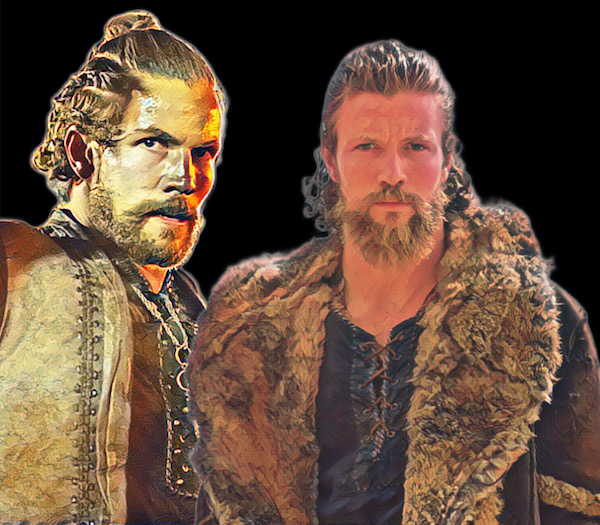

Reflections between the two shows
Watch closely and you’ll see how Vikings: Valhalla and King and Conqueror mirror and complement each other:
- Emma appears in both — pragmatic in Valhalla, manipulative in K&C — but always the pivotal strategist behind the throne.
- Godwin is shown in Valhalla as the political operator, and in K&C through Harold, his son, who bears the weight of turning influence into kingship.
- The succession disputes, the rival heirs, and the marriage politics span both series, giving a fuller picture of the dynastic chaos.
Where Valhalla dramatizes the twilight of Viking power and their last heroic gamble for England, King and Conqueror focuses on the English and Norman aftermath: the internal fractures that made conquest possible. Together, they chart the death of one era and the birth of another.
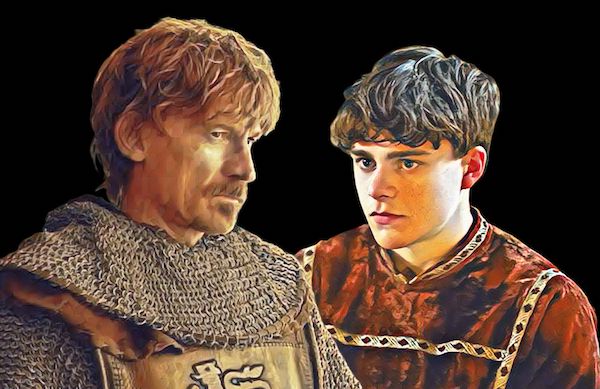
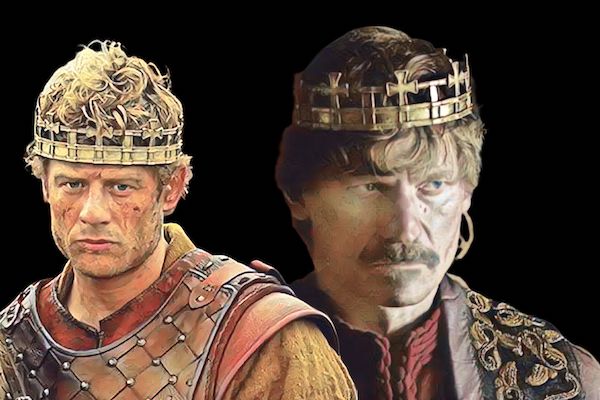
One saga, two screens
To watch Vikings: Valhalla and King and Conqueror back-to-back is to follow not two separate stories but successive chapters of the same epic. Emma of Normandy and Godwin of Wessex — rivals in life and in legend — are the keys to understanding why England became the bloodiest prize of the 11th century.
Netflix gives us the myth, the voyages, the Viking heroes. The BBC delivers the politics, the betrayals, the dynastic chess game. Taken together, they create a grander narrative: the saga of the Viking sunset and the Norman dawn, stitched together by two figures whose shadow still lingers over English history.
Descubra mais sobre
Assine para receber nossas notícias mais recentes por e-mail.
 miscelana.com