
“A dream is a wish your heart makes when you’re fast asleep.”
This phrase, sweet and seemingly innocent, could easily be attributed to Sigmund Freud, whose monumental work, The Interpretation of Dreams, was published in 1899. In reality, though, it was born in 1950, in the voice of a Disney princess: Cinderella.
The irony is striking. Freud conceived of dreams as the disguised fulfillment of repressed desires—often conflicted, obscure, even disturbing. Disney, however, offered the sugar-coated version of the same principle: dreams reveal what is purest in the heart, and even more, they function as engines of hope. It is psychoanalysis filtered through the postwar optimism and the American myth that all you need is a dream to make it real.
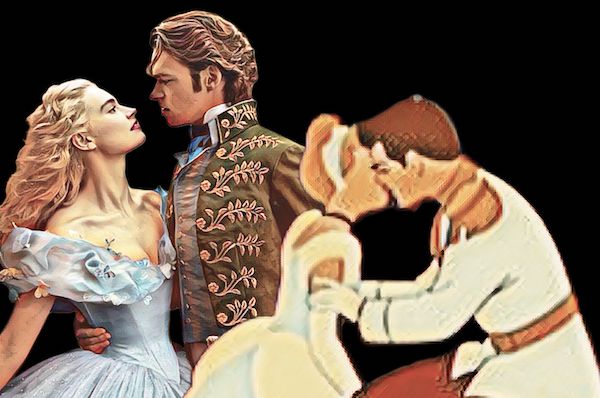
Freud in the enchanted castle
What stands out is that, in the same song, Cinderella sings: “In dreams, you will lose your heartache / Whatever you wish for, you keep.” Viewed through Freud’s lens, this line directly echoes the idea that dreams allow us to symbolically fulfill what waking life denies. The unsatisfied desire finds space in sleep to manifest, even if disguised. Disney softens this notion: there is no repression here, only a promise of relief—the pain vanishes, and the wish is preserved.
Thus, the studio does not cite Freud, but it operates within a cultural landscape already permeated by psychoanalysis. In the 1940s and 1950s, the United States was living through the popularization of Freudian therapy, which left the consulting rooms and infiltrated cinema, literature, and music. The average audience already associated dreams with intimate revelations, with keys to the “true self.” Cinderella’s song reflects precisely that imagination.
Songs as mirrors of the unconscious
Disney—and later pop culture in general—appropriated this Freudian heritage in subtle ways, transforming the unconscious into optimistic poetry. We can trace this echo in several songs:
- “When You Wish Upon a Star” (Pinocchio, 1940): almost an inaugural version of Disney psychoanalysis, promising that the deepest wishes can shape destiny. Freud would say these are infantile desires dressed in fantasy.
- “Somewhere Over the Rainbow” (The Wizard of Oz, 1939): not Disney, but steeped in the same cultural atmosphere. Judy Garland sings of projecting an ideal place, an oneiric escape embodying the yearning for transcendence—pure unconscious in melody.
- “Once Upon a Dream” (Sleeping Beauty, 1959): the dreamt encounter before it takes place in reality is almost a textbook Freudian case of desire anticipated, realized in the dream before materializing in life.
- Even in more contemporary songs, like “Sweet Dreams (Are Made of This)” by Eurythmics (1983), the echo remains: dreams as an ambiguous terrain, where desires, frustrations, and fantasies intertwine.
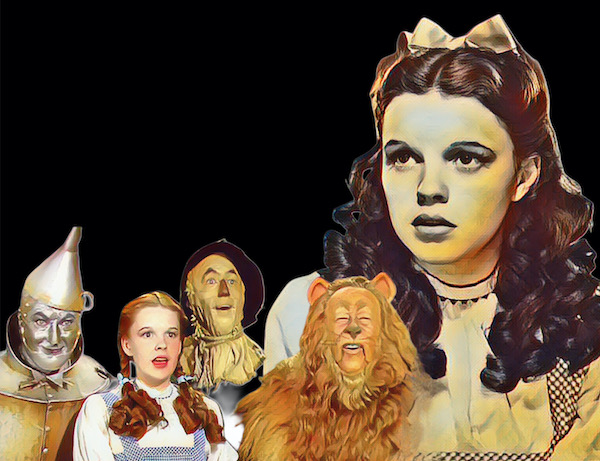

Freud gone pop and Disney’s promise
Freud saw dreams as coded messages, disguises of the unconscious. Disney, by contrast, turned this logic into an optimistic pedagogy: repression doesn’t matter; what matters is the dream that insists on being reborn. It is a cultural reinterpretation that makes the complex accessible, even childish, but no less powerful.
When Cinderella sings that the heart reveals its wish during sleep, she is not far from Freud, who wrote decades earlier that dreams are the royal road to the unconscious. She simply trades tragedy for comfort, analysis for hope.
In the end, perhaps this is the greatest irony: Freud transformed dreams into clinical material; Disney transformed them into popular faith. One concept, two translations, which still today nourish both therapy rooms and box offices.
Beyond music: Freud in cinema and literature
This dialogue is not confined to songs. Cinema itself, from the 1940s onward, was deeply influenced by dream language. Films like Spellbound (1945), by Alfred Hitchcock—with its famous dream sequence designed by Salvador Dalí—openly flirted with psychoanalysis, translating unconscious symbols into surrealist images.
More recently, films like Inception (2010) elevated the theme, turning dreams into literal architecture, where each level of dreaming reveals deeper layers of the psyche—something Freud would have instantly recognized as a metaphor for the unconscious.
In literature, the echo is no smaller. From Kafka, who translated the absurdity of dreams into suffocating realities, to contemporary authors like Haruki Murakami, dreams appear as bridges between desire and impossibility. The literary surrealism of the twentieth century emerged almost as an aesthetic translation of Freudian theses.
The collective imaginary of desire
What unites all these examples—from Cinderella to Inception—is the idea that dreaming is never neutral. It is always the confession of a desire, whether repressed or celebrated. And if Freud unveiled this process in the clinic, Disney re-enchanted it for the masses, turning it into music, image, and hope.
Thus, whenever we hear “A dream is a wish your heart makes,” we are not merely listening to a children’s song. We are hearing the pop appropriation of one of modernity’s most radical ideas: that dreams reveal who we are and what we most want, even when we cannot admit it.
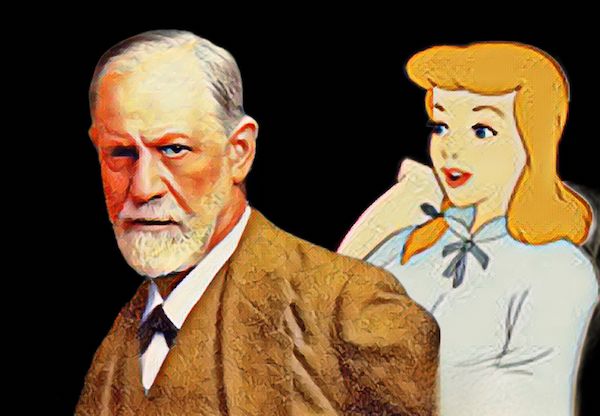
Dreams as a shared legacy
At their core, Freud and Disney—each in their own way—pointed to the same truth: dreams are intimate compasses. One deciphered them as riddles of the unconscious, full of masks and conflicts; the other translated them into melodies and images that invite us to believe. From the Viennese couch to the enchanted castle, from clinical analysis to refrains that echo through generations, dreams remain the raw material with which humanity fabricates meaning. Perhaps that is why, when we close our eyes, it hardly matters whether we are in Freud’s consulting room or in front of the silver screen: in both places, we still hear the promise that, as long as we dream, there will always be paths for the heart.
Descubra mais sobre
Assine para receber nossas notícias mais recentes por e-mail.
 miscelana.com