
There’s something symbolic about this summer in the northern hemisphere. While the world seems to move in cycles of crisis, nostalgia, and reinvention, British music has chosen to revisit the 1990s with full force. And not in a timid way: Oasis, Blur, and Gorillaz — the three most iconic vertices of English pop culture of that decade — have resurfaced in stories that intertwine rivalry, reconciliation, and reinvention.
The headline event was, of course, the Oasis reunion. Liam and Noel Gallagher, after years of public insults, fraternal accusations, and the almost universal belief that they would never again share the same stage, returned for a stadium tour that became an instant phenomenon. Tickets sold out in minutes, secondary market prices soared, and crowds sang in unison — it all felt like a collective catharsis, a ritual of reconciliation not just between the brothers, but between an entire generation and its own youth. More than music, it’s the experience of revisiting a time when Britpop seemed to rule the world and the Gallaghers embodied the cheeky arrogance of a Britain still confident in itself.
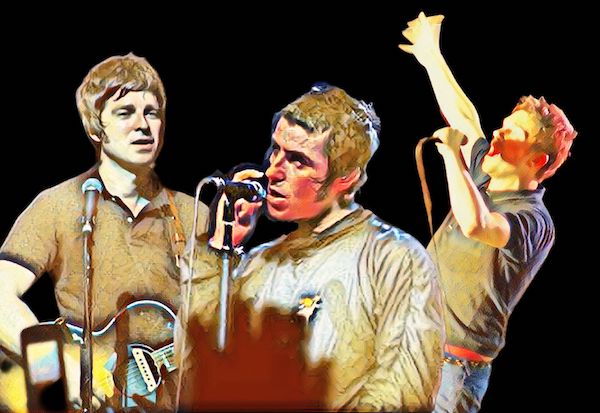
But to speak of Oasis inevitably calls up the memory of their youthful rivals, Blur. The so-called Battle of Britpop, staged in 1995, was perhaps the last great media-fueled duel in music, when records and newspapers sold with equal intensity. Blur were seen as sophisticated, urban, and intellectual, while Oasis presented themselves as direct, working-class heirs to the Beatles. It was a clash that divided families, schools, and magazines, and today it feels almost innocent compared to the scale of online rivalries. Three decades later, the war has become a memory, and Damon Albarn has no qualms about admitting that “Oasis won the battle — they won everything.” What once was provocation is now recognition.
And yet, Blur has not disappeared. In 2025, they released The Ballad of Darren, their first album in a decade, proving that the band continues to engage with its time, even if without the adolescent energy of former provocations. There is no tour scheduled this summer, but the simple act of releasing a record reinforces how Britpop is not only frozen in the museums of nostalgia: it still breathes, albeit in more melancholy tones.
Meanwhile, Damon Albarn, ever restless, refuses to be just a memory. If Oasis revived glory and Blur offered a new chapter, it was through Gorillaz that Albarn cemented his permanence as an artist of the present. The project that began in 2000 as a curiosity — a cartoon band to escape the pressures of Blur — became a global reinvention machine. And in 2025, celebrating 25 years of existence, Gorillaz proved that it doesn’t rely on nostalgia to remain relevant.
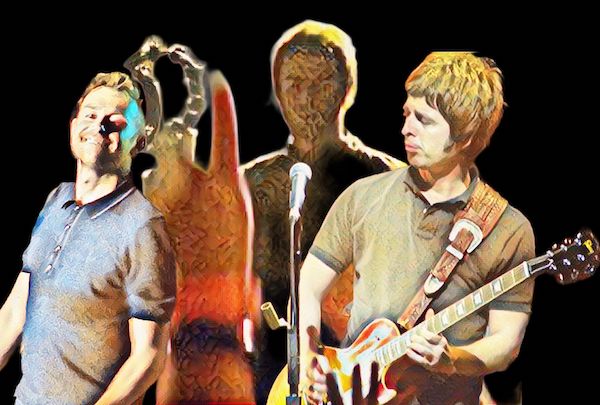
At the Copper Box Arena in London, Albarn, dressed like a pop vicar, led a liturgical celebration of Demon Days (2005), perhaps the project’s creative peak. With a gospel choir, string quartet, Jamie Hewlett’s hallucinatory visuals, and appearances by veterans like De La Soul, the show was no mere repetition: it was reinvention. Feel Good Inc. burst with laughter and beats, O Green World built into a frenzy, and the choir chanting “To the sun” beneath the projected stained glass transformed the arena into a profane temple. It was as if the audience were attending a pop mass, with Albarn as eccentric priest. Alongside the show, the immersive House of Kong exhibition expanded this celebration in images, sounds, and memory.
The irony is that Gorillaz, born as an escape for a Damon Albarn weary of Britpop wars, has now outlived and outgrown them in global reach. While Oasis and Blur return as majestic ghosts of an era, Gorillaz remains a living body — in constant mutation, in dialogue with new generations (you only need to notice the number of children at the shows).

And the Gallaghers, are they friends with Damon today? Not exactly. The rivalry has turned into myth, late-night joke material, and fodder for documentaries. Today, there is respect — distant, perhaps cold, but respect nonetheless. Noel has already collaborated with Albarn; Liam has lowered the tone of his provocations. What was once ammunition has become anecdote, and no one seems to have the patience for tabloid wars anymore.
This summer, then, is not only about music. It is about memory, and about pop culture’s power to recycle itself. Fans who now take their children to Oasis or Gorillaz concerts aren’t just watching bands; they’re participating in a transgenerational ritual, where youth and present converge in the same chorus. Britpop, born out of the fierce dispute between Manchester and London, between arrogance and irony, now reemerges as a celebration of a past that, in some way, still helps us understand the present.
Descubra mais sobre
Assine para receber nossas notícias mais recentes por e-mail.
 miscelana.com