
As published in Bravo Magazine
After a dazzling run through Brazil’s film festivals — winning the Redentor Award for Best Documentary at the Rio Festival, the Audience Award at the São Paulo Film Festival, the Popular Jury Award for Best Film at Tiradentes, and, more recently, the Grande Otelo for Best Documentary Feature — 3 Obás of Xangô hits theaters on September 4, distributed by Gullane+.
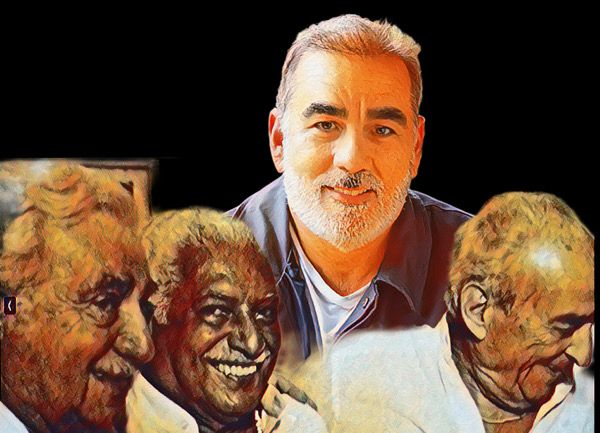
Directed by Sérgio Machado, the film begins with the friendship of Jorge Amado, Dorival Caymmi, and Carybé, three artists who became not only symbols of Bahia but also guardians of its spirituality and cultural identity. Elevated to the title of Obás of Xangô, bestowed by Mãe Senhora at Ilê Axé Opô Afonjá, they transformed literature, music, and the visual arts into a mirror of Afro-Brazilian religiosity, female power, and the ever-present sea.
Narrated by Lázaro Ramos and built from rare footage, unpublished archives, and testimonies from names such as Gilberto Gil, Muniz Sodré, Dori Caymmi, Itamar Vieira Jr., Paloma Amado, and Mãe Stella de Oxóssi, the documentary is also a personal gesture from the director, who grew up in a candomblé environment and revisits his own emotional memories there.
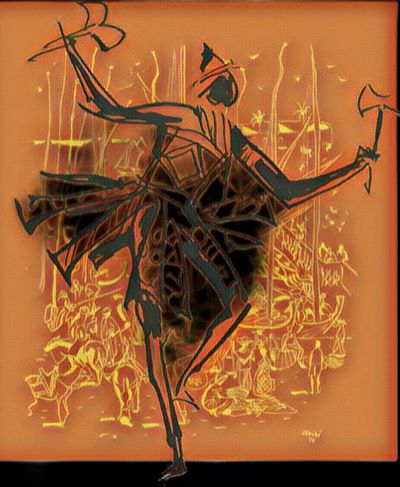
With a script by Machado, Gabriel Meyohas, Joselia Aguiar, and André Finotti, and coproduced by Coqueirão Pictures, Janela do Mundo, Globo Filmes, and GloboNews, 3 Obás of Xangô reaffirms the power of Brazilian cinema in celebrating its roots. For Sérgio Machado — who has been assistant director on Central Station, screenwriter of Behind the Sun and Madame Satã, and director of works such as Lower City, The Violin Teacher, and A Luta do Século — this may be his most intimate film: “a mirror of affections and of a Bahia invented by friendship and generosity,” as he defines it.
While passing through Rio de Janeiro to work on his next projects, Sérgio Machado sat down with Revista Bravo to talk about the great emotion of making a documentary that addresses so many universal themes and is so deeply Bahian at the same time.
BRAVO – I was very moved by the documentary, I must begin by saying that.
Sérgio Machado – If you can see it in a theater, it’s curious, because this is a film that works very well collectively. At the screenings, people laughed and cried a lot, and that surprised me. It’s an experience that gains strength when shared, because it speaks of friendship. In Rio and São Paulo, the emotional impact was very strong. Perhaps because, in this world hardened by pressure, individualism, and competition, the film reminds us of something Jorge Amado always said: that without love, life is not worth living — but friendship and affection are.
BRAVO – Their friendship is beautiful, but what also struck me was the relationship with their wives, marked by tenderness and complicity.
Sérgio Machado – That reflects who they were. Jorge, for example, was deeply generous, and that generosity is at the root of both his work and his life. I make films, in a way, because I was sponsored by Jorge. He helped everyone, opened doors. That’s how they were in life, and I’m a witness to it.
BRAVO – How did the idea for the project arise?
Sérgio Machado – It’s perhaps the most personal film I’ve ever made. My mother was a practitioner of candomblé; I grew up surrounded by that universe. But the initial idea wasn’t mine. It came from producer Diogo Dahl, based on a proposal by screenwriter Gabriel Meyohas, who imagined a film about the letters exchanged between them. Diogo thought of me because of my connection to the three. I accepted, but wanted to approach it from my point of view. I investigated what was common between them and me, and came to their connection with candomblé, the fact that they were Obás of Xangô. In addition, they all saw themselves as documentarians: Caymmi, Carybé, and Jorge always said they only brought to art what they saw in the streets. The sea, the feminine, and candomblé are central axes in all their work. Bahia is a land of matriarchy, and that fascinated me. Muniz Sodré recalls in the film that perhaps nowhere else in the world is the feminine as respected as in candomblé. I grew up in an environment of strong women, and I’ve always been interested in that perspective.
BRAVO – Did you face challenges during the process?
Sérgio Machado – A great gift was receiving previously unseen material from João Moreira Salles, reels and reels of film. But there were difficulties: we rarely found records of the three together. It was always the two talking about the absent third. Only after years did we find a very brief image of the three together.
BRAVO – Dori Caymmi’s testimony about his father asking Iemanjá to “return” his son made me laugh. There’s a lot of humor there.
Sérgio Machado – Humor is central to Bahia. Teasing one another, sometimes even with sexual undertones, is a way of expressing intimacy and affection. Lázaro Ramos often says that Bahia is stewed in the sauce of candomblé. This mix of feminine worship, religiosity, and humor shapes social life.
BRAVO – The title refers to the position of Obá of Xangô. What is its importance?
Sérgio Machado – It’s a fundamental institution. Jorge, Caymmi, and Carybé didn’t invent Bahia — it was invented by the mães-de-santo, like Mãe Aninha and Mãe Senhora, alongside intellectuals like Martiniano do Bonfim. The Obás are ministers of Xangô, summoned to protect and spread candomblé and Afro-Brazilian culture. Mãe Senhora invited Jorge, Caymmi, Carybé, Camafeu de Oxóssi… Today, figures like Gilberto Gil and Muniz Sodré are also Obás. I myself have been invited, though I haven’t begun the process yet.
BRAVO – The documentary also addresses religious prejudice.
Sérgio Machado – Very much so. Despite winning the top awards — Rio, São Paulo, Tiradentes, and the Grande Otelo — we faced difficulties negotiating TV screenings due to prejudice against candomblé. Religious intolerance has been on the rise again, with terreiros attacked across Brazil. It’s sad, but necessary to confront.
BRAVO – How did Lázaro Ramos become involved as the narrator?
Sérgio Machado – We’ve been friends since college. We worked together on Lower City 20 years ago. I invited him to give a testimony, then asked him to read a letter. It was beautiful, I included it in the film, then he recorded other passages. He’s like a brother.
BRAVO – Is it more challenging to make documentaries or fiction?
Sérgio Machado – I try to alternate. Fiction features take longer and are financially demanding. Documentaries allow me to keep filming and telling stories. My fiction films have a documentary element, and my documentaries are heavily scripted, with dramaturgy and character arcs. I live in that intersection.
BRAVO – Is there any work by Jorge Amado you still dream of adapting?
Sérgio Machado – I adapted Shepherds of the Night, but my dream is Tocaia Grande. I see it as a western of outcasts, a humanist epic. It would be a major production, but it’s what excites me most.
BRAVO – If you had to define 3 Obás of Xangô in a few words?
Sérgio Machado – Friendship, tolerance, and the feminine. Bahia is a land of powerful women, and that fascinates me. I’ve always admired that strength.
BRAVO – The film has already won major awards. Do you see an international career ahead?
Sérgio Machado – Yes. It participated in three festivals and won all three, in addition to the Grande Otelo for Best Documentary. Now we’re beginning to think about its international journey. It’s a very personal film that stitches together my life, my relationship with Jorge Amado, and with my mother.
BRAVO – And how has it been to present Jorge, Caymmi, and Carybé to new generations?
Sérgio Machado – Many young people know little about them, but the affection that unites them is universal. Jorge used to say: “Friendship is better than hatred. Without love, life is not worth living.” That phrase, as Walter Salles said after seeing the cut, feels urgent. I think that’s what resonates with everyone.
BRAVO – And what comes next?
Sérgio Machado – I have two projects well underway: a feature film about the life of Chico Mendes and a suspenseful film inspired by a short story by Stefan Zweig, starring Marcélia Cartaxo. In addition, a documentary about four women friends who crossed Asia and Africa in a VW Kombi in the 1970s, during the wars in Afghanistan and Iran. One of them is producer Sara Silveira, and another is photographer Arlete Soares, who documented everything. It’s going to make a great film.
Descubra mais sobre
Assine para receber nossas notícias mais recentes por e-mail.
 miscelana.com