
The official poster for Wuthering Heights, directed by Emerald Fennell, arrives drenched in symbols and provocation. Margot Robbie and Jacob Elordi appear locked in a pose straight out of a steamy romance novel cover, as Catherine and Heathcliff, framed by the tagline “Come undone.” Billboards echo the same energy, showing close-ups of hands intertwined with the phrase “Drive me mad.” The promotional message is clear: this is the gothic love story for Valentine’s Day 2026. Yet that is precisely where the contradiction—and the risk—lies.

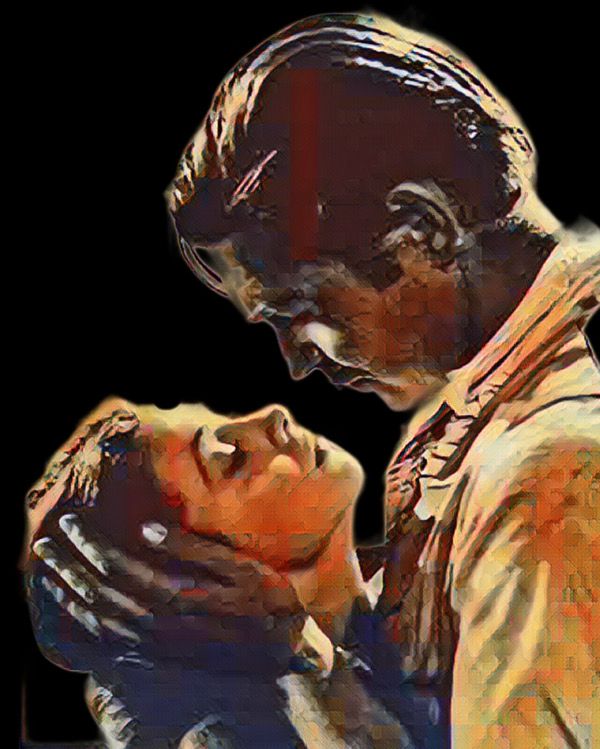
Visually, the poster unmistakably recalls the iconography of Gone With the Wind, with its famous embrace between Scarlett O’Hara and Rhett Butler. By evoking one of Hollywood’s most enduring symbols of doomed romance, Fennell’s adaptation positions Catherine and Heathcliff in the same lineage of destructive passion. But unlike the lush melodrama of Victor Fleming’s classic, Brontë’s story has always been something darker—less about tragic love and more about obsession that corrodes, cruelty that lingers, and destruction that feels inevitable.
As I’ve argued before, it feels misguided to present Wuthering Heights as a straightforward love story. Emily Brontë’s novel is not a celebration of love but an exploration of its darkest forms: destructive, narcissistic, cruel, and toxic. The relationship between Heathcliff and Catherine is one of obsession and ruin, a far cry from the notion of an “ideal romance” that the release date suggests. To align such a corrosive story with a holiday meant for chocolates and roses may seem paradoxical—though perhaps it is exactly this paradox that Fennell intends to exploit.

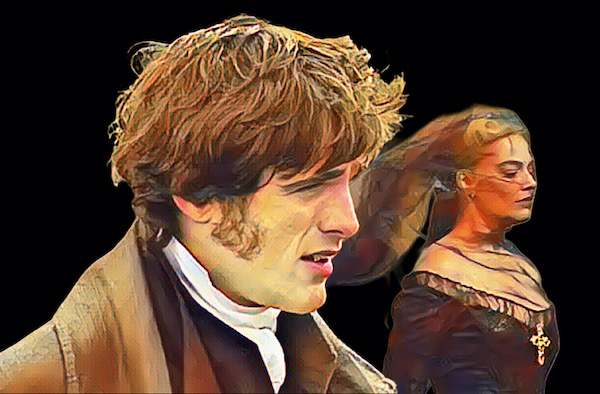
The controversies surrounding the production only heighten its charged atmosphere. Casting Jacob Elordi as Heathcliff drew criticism, since Brontë’s text hints at him being a non-white outsider. The age gap between the actors and their literary counterparts has also raised eyebrows. And the early test screenings reportedly revealed a film that is hypersexualized, cold, and aggressively provocative—in line with Fennell’s penchant for discomfort, already evident in Promising Young Woman and Saltburn.
What emerges, then, is not a romance tailored for comfort but one that dares to unsettle. Wuthering Heights has never been about soothing love; it has always been about passion as catastrophe, about obsession that scars. If Fennell fully embraces that abyss, her film may stand not simply as another literary adaptation, but as a manifesto on the impossibility of taming human desire.
Descubra mais sobre
Assine para receber nossas notícias mais recentes por e-mail.
 miscelana.com