
As published in CLAUDIA
In 2021, Selena Gomez joined Only Murders in the Building as a calculated risk that today feels almost obvious. A young actress with a Disney background stepping into the frame alongside two comedy legends, Steve Martin and Martin Short—both well into their seventies. At first, the contrast was striking: Mabel, with her millennial aura of disenchantment, quietness, and a touch of cynicism, seemed out of place next to Oliver and Charles’s sharp humor. Yet it was precisely this difference that gave the series one of its greatest strengths. Selena not only managed to keep up but turned her youth into a counterpoint, a mirror, and even a provocation for her veteran colleagues.
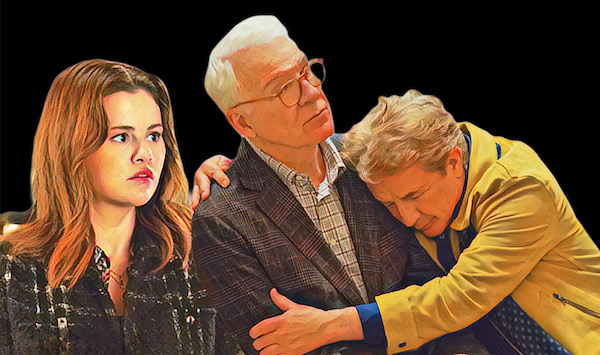
As the seasons went on, it became clear that her presence wasn’t just strategic to attract a younger audience—though it certainly did. Selena opened the series to fans who might never have considered watching a crime comedy starring Saturday Night Live legends. OMITB constantly plays with this dynamic: the generational gaps, the differences in references and tone. If Martin and Short bring decades of improv, comic timing, and classic irony, Selena embodies the perspective of someone shaped by a world of social media, overstimulation, and skepticism. It’s as if the series invites younger viewers to walk in through Mabel’s door, only to discover that these “uncles” also have much to offer.
Over time, both the character and Selena herself became looser. Mabel grew beyond the mysterious young woman wrapped in secrets, revealing layers of vulnerability, loneliness, and a sharpness that could only belong to her. The scripts made clever use of Selena’s silence and dry irony—qualities that at first seemed like limitations—to create a magnetic persona capable of holding the screen even opposite giants. And this became even more evident as the series welcomed increasingly monumental guest stars: names like Meryl Streep, Paul Rudd, and even Sting, who could easily overshadow a newcomer. Yet Selena remained steady, discreet but firm, proving she was no sidekick, but an essential part of the trio.

Her influence also extends into fashion. Mabel’s wardrobe quickly became a touchstone: oversized coats, vibrant knits, bold colors that echo the character’s enigmatic but stylish persona. Fans started to replicate these looks, and Selena, fully aware of it, cemented herself as a fashion icon both inside and outside the show. It’s no coincidence that Mabel has become not just an amateur sleuth but also a muse of contemporary television style.
With the arrival of the fifth season, the narrative is beginning to hint at closure. There’s a sense that Only Murders in the Building has completed its creative arc: from the freshness of the first season to the maturity of the later ones, where character relationships became as central as the mysteries. What to expect now? Perhaps a final season that brings full closure, one in which Mabel stands not just as the young woman who timidly entered Oliver and Charles’s world, but as their full partner—an equal—capable of symbolically inheriting their legacy.
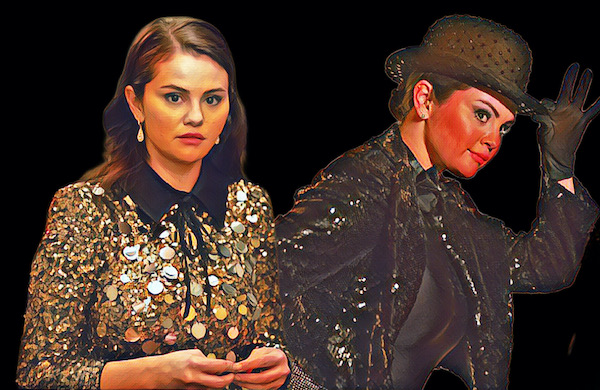


Whatever comes, Selena Gomez has already achieved something rare: moving seamlessly between the respect of industry veterans and the devotion of a younger fanbase, balancing generations, tones, and styles. Only Murders in the Building may be nearing its end, but her time on the series proves we are witnessing an actress who found her maturity at just the right moment—surrounded by legends, without ever ceasing to be, and to affirm herself as Selena.
Descubra mais sobre
Assine para receber nossas notícias mais recentes por e-mail.
 miscelana.com