
As Published in CLAUDIA
Many details of William Shakespeare’s personal life remain a mystery and pure speculation. Within this context, there is no greater suspense than the question of who Agnes Hathaway really was, his wife. Ignored for centuries in most biographies of the playwright, she and their children lived in the shadow of Shakespeare’s incomparable work — but that may change in 2025.

The buzz surrounding Hamnet, Maggie O’Farrell’s novel now adapted for the screen and already tipped as a likely Oscar frontrunner in 2026, has also sparked historical curiosity. After all, the film revolves around Shakespeare’s family, and its protagonist is none other than Agnes — more frequently referred to as “Anne Hathaway.” That’s right, namesake of the Hollywood actress (or rather, the other way around). In fact, in documents from the time she appears as “Agnes Hathaway,” which has led many scholars to argue that “Anne,” sanctified by tradition, should give way to the more accurate “Agnes.” What might seem like a minor detail has gained importance in recent years, as academics and writers like O’Farrell have sought to restore the presence of this woman, nearly erased from history. In the film, therefore, she is Agnes.
Born in 1556 in Shottery, just a few kilometers from Stratford-upon-Avon, Agnes came from a respectable family of farmers. Her fate became entwined with that of a young William Shakespeare when he was only 18 and she was 26. Their marriage in 1582 was hurried — Agnes was already pregnant, and the Church granted a special license so that the wedding could take place despite the groom’s age. Soon after, their first daughter, Susanna, was born. In 1585, the twins Hamnet and Judith followed.

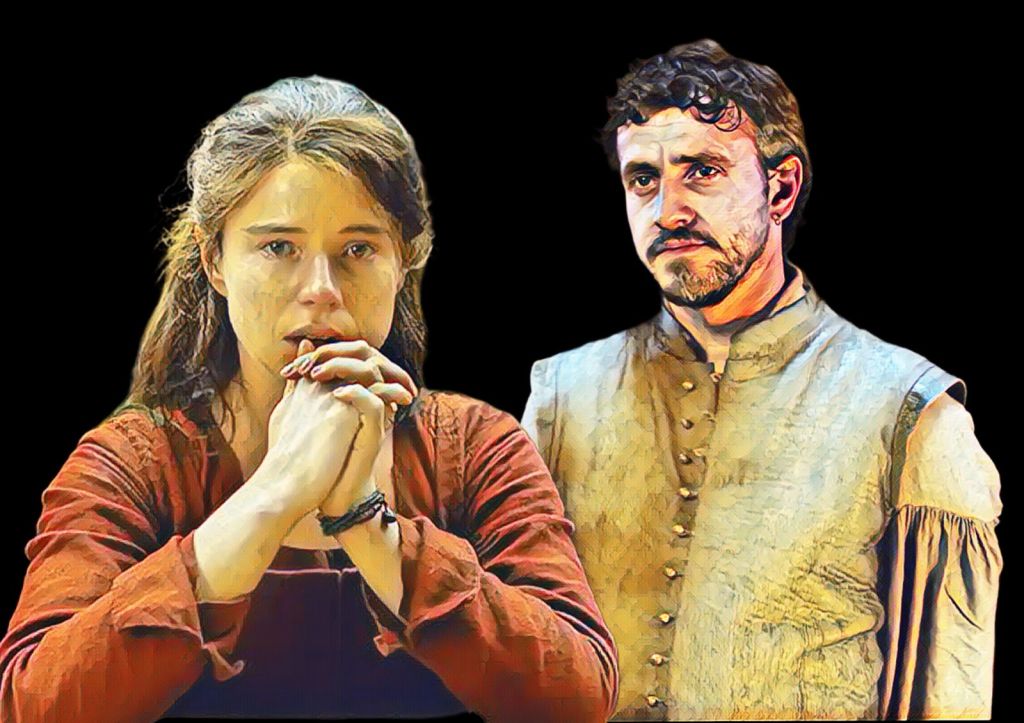
Family life, however, was soon marked by absence. While Agnes remained in Stratford caring for the household and children, Shakespeare went to London to build the career that would make him the greatest writer of the English language. This physical and emotional distance has fueled centuries of speculation: was it a marriage of convenience? Was there love? Are there echoes of his wife in the sonnets and plays? We may never know, but what is certain is that Agnes outlived her husband by seven years, dying in 1623 at the age of 67, and was buried beside him in Holy Trinity Church.
The only direct mention Shakespeare makes of his wife appears in his will, where he left her the “second-best bed.” For some, this was an insult; for others, a gesture of intimacy — the “best bed” was ceremonial, while the “second-best” was the one they actually shared. This detail has since become a symbol of the enigma surrounding their relationship.
Another telling fact of her invisibility is that there is no authenticated visual record of Anne (or Agnes) Hathaway. The portraits circulating today are purely hypothetical, created centuries later by artists or antiquarians, and often reproduced by publishers or museums only as symbolic representations. Even in this sense, she remained “erased,” without an official face in history, unlike her husband, whose canonical portraits have survived through the centuries.
Verses and possible intimacy
Some scholars believe Shakespeare may have left traces of Agnes in his poetry. The most direct case is Sonnet 145, where the play on words “hate away” echoes the sound of “Hathaway,” suggesting a youthful tribute to his future wife. Sonnet 18 — “Shall I compare thee to a summer’s day?” — and Sonnet 116 — “Let me not to the marriage of true minds admit impediments” — are traditionally read as universal reflections on love, though some have linked them to the poet’s personal experience. Unsurprisingly, both appear recited in the film Shakespeare in Love (1998), though there they are attributed to the fictional Viola rather than to his real wife.


This absence is significant: the same film that romanticized Shakespeare’s love life also reinforced the hypothesis of the “Dark Lady,” a supposed lover believed to have inspired the more carnal and ambiguous sonnets. Agnes, meanwhile, remained relegated to the shadows.
And when it comes to their son Hamnet, who died at age 11, the silence is even more eloquent. Shakespeare left no recorded poem in his memory, but critics detect profound resonances in his plays. The very name Hamlet is considered a direct echo of Hamnet. And in King John, Lady Constance’s lament over the death of her son Arthur is so visceral that many believe it to be Shakespeare’s own grief transposed onto the stage:
“Grief fills the room up of my absent child,
Lies in his bed, walks up and down with me,
Puts on his pretty looks, repeats his words…”
It is one of the most moving passages of Elizabethan drama, transforming private grief into collective art.
A legacy of silence and rediscovery
For centuries, Agnes was reduced to merely “Shakespeare’s wife.” But recent scholarship and works of fiction have tried to restore her voice and protagonism. Germaine Greer, in Shakespeare’s Wife, argued that she was central to the playwright’s stability, managing the family and the estate in Stratford. Maggie O’Farrell, in Hamnet, reimagines her as flesh and blood, a mother devastated by the loss of her child — a portrayal now adapted for the screen in a deeply human narrative.
On film, she has rarely appeared. In Shakespeare in Love, she was erased in favor of a romantic invention. In All is True (2018), Kenneth Branagh placed her — played by Judi Dench — at the heart of an intimate portrait of the aging Shakespeare, confronting him over absence, secrets, and resentment. Now, in Hamnet, Agnes finally steps into the spotlight, bearing the name she may truly have carried.
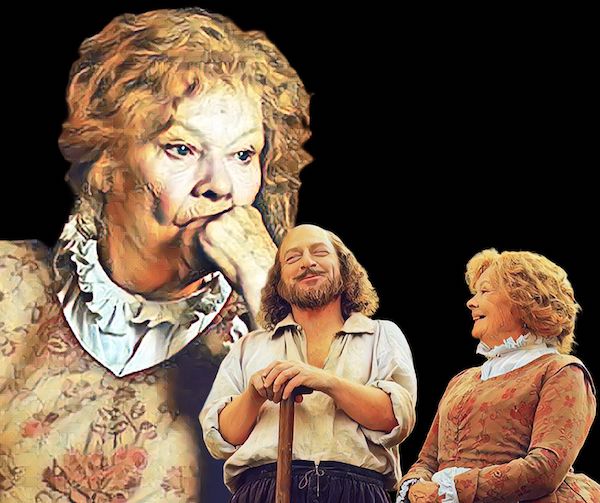
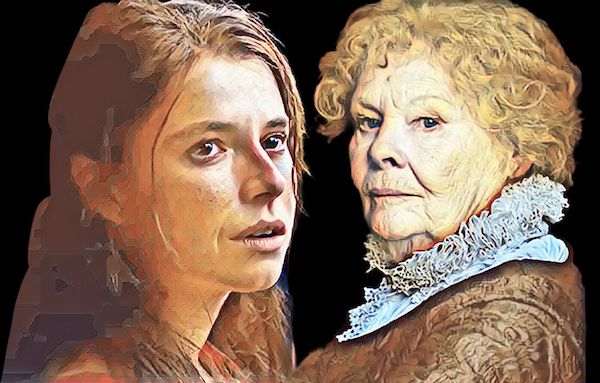
In this unexpected crossing of past and present, Agnes Hathaway emerges not merely as the wife of a genius but as a real woman whose life was marked by motherhood, grief, and historical silence. Should Hamnet triumph at the Oscars, it will also serve as belated recognition of a figure long relegated to the margins — and who, at last, is beginning to be seen with new eyes. About time.
Descubra mais sobre
Assine para receber nossas notícias mais recentes por e-mail.
 miscelana.com