
Amazon Prime Video has officially announced its latest move in the streaming franchise game: Tomb Raider. Based on one of the most iconic video game characters of all time, the series is set to begin production in January 2026 and already carries the weight of high expectations. The ambition is clear — to turn Lara Croft into a cornerstone of Prime’s catalog, much like HBO did with The Last of Us or Netflix with The Witcher. Sophie Turner takes the lead role, with Phoebe Waller-Bridge serving as showrunner. But along with the announcement comes the inevitable questions: why bring her back now? And with this duo at the helm? But along with the announcement comes the inevitable questions: why bring her back now? And with this unusual duo at the helm?

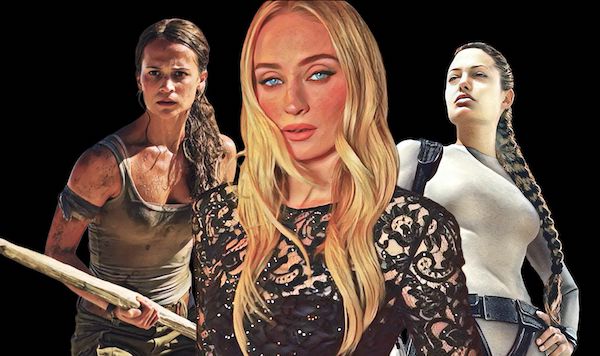
Lara Croft hardly needs an introduction. Created in 1996, the adventurous archaeologist became both a video game legend and a cultural symbol — a mix of intelligence, strength, and allure. On the big screen, she first came to life in 2001 through Angelina Jolie, who redefined the heroine for a generation. Jolie’s charisma and commanding presence made Lara Croft: Tomb Raider a box office success, even if critics were divided. The sequel, The Cradle of Life (2003), showed signs of fatigue but cemented Lara as a pop icon.
Years later, in 2018, came the attempt to reboot the character with Alicia Vikander in Tomb Raider. The goal was to modernize Lara for a younger, more grounded audience. The film, however, failed to catch fire: lukewarm reviews, disappointing box office, and the sense that Lara Croft had lost her cultural moment. Which is why Amazon’s decision to revive the franchise as a series sparks so much curiosity: perhaps television, with its longer narrative arcs, is the perfect medium to explore her complexity.

There are divided opinions about the duo chosen to lead this new phase. On one side, Phoebe Waller-Bridge has never managed to replicate the same success of Fleabag’s global impact or the initial acclaim of Killing Eve. Her contribution to No Time to Die was modest, if not off-key, and her early exit from Mr. & Mrs. Smith drew attention. Not even her appearance in Indiana Jones and the Dial of Destiny was enough to rekindle her creative spark in the popular imagination. Now, as creator, writer, executive producer, and co-showrunner of Tomb Raider, Phoebe carries on her shoulders not only the reinvention of Lara Croft but also a kind of artistic quest for redemption.
On the other side, Sophie Turner. Best known as Sansa Stark in Game of Thrones, Turner’s post-Westeros career has been uneven. She headlined Dark Phoenix within the X-Men franchise, a film that collapsed under poor reception and franchise fatigue. In the years that followed, she was seen more often in fashion campaigns and endorsements than in headline roles. Her casting as Lara Croft is both bold and risky: Turner has charisma, youth, and a loyal fan base, but she will need to prove she can carry a character defined by powerhouse performances from Jolie and Vikander.


Together, Phoebe behind the camera and Sophie in front of it make for a pairing that seems improbable — and yet precisely because of that, the project becomes fascinating. If it works, it could put both women back at the center of pop culture: Phoebe reclaiming her status as a daring, disruptive storyteller, and Sophie finally stepping into a post-Thrones identity worthy of her name.
The real question, of course, is whether Lara Croft still has cultural stamina in 2026. Amazon is betting yes. After all, the character never truly disappeared: she has lived on through games, films, and her enduring place in the global imagination. Now, with streaming resources, expanded storytelling, and two women seeking reinvention in Hollywood, Tomb Raider may at last find its definitive version. Or at least remind us that the archaeologist who never stopped chasing treasures might still be one herself.
Descubra mais sobre
Assine para receber nossas notícias mais recentes por e-mail.
 miscelana.com