
I leave Part 2 of Wednesday Season 2 with that bittersweet feeling of being captivated by everything the show does best — and, at the same time, pulled out of the trance by the flaws of a production that seems to be chasing its own tail. My fascination remains, above all, for the soundtrack and the performances (all perfectly in tune), for the cameo of Lady Gaga — both musically and on screen —, for the visual delight of those “super Tim Burton” effects, and, of course, for the twist that redefines the myth of Thing. But the experience stumbles on excess: too many subplots, too many characters, endless cliffhangers, and the misguided choice of splitting the season into two parts — a Netflix strategy that breaks rhythm and dilutes tension.
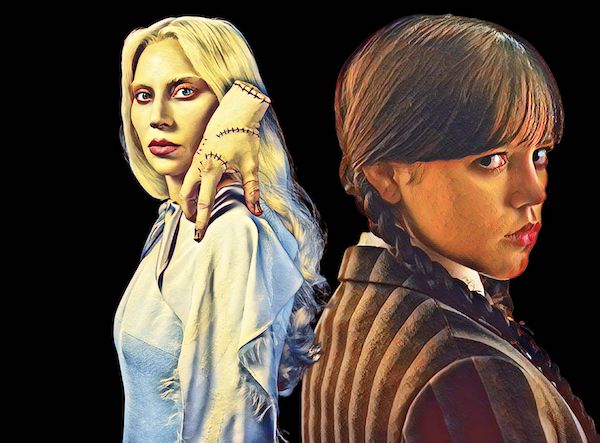
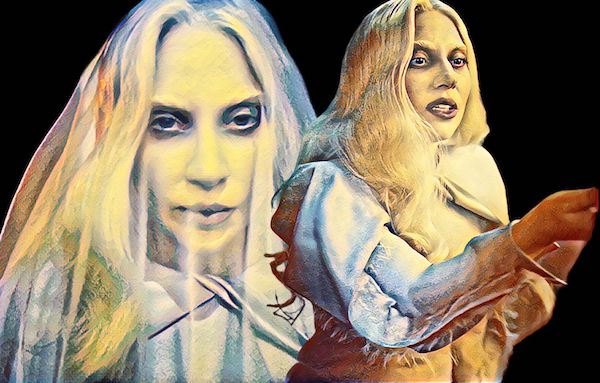
Let’s start with what works beautifully. Music once again acts as a narrative and emotional engine. Wednesday understands that it is also an auditory memory: the gothic accents, the pop dialogue, the conscious nod to a phenomenon born from season one’s virality. Lady Gaga’s cameo, with a new song and a wink straight at the fans, is calculated — yes — but effective. When the show lets choreography take center stage (this time with Emma Myers), it finds a playful, almost farcical tone that blends with the Addams universe without betraying its spirit. It’s where artifice becomes style rather than gimmick.
The cast sustains this world with conviction. Jenna Ortega does the impossible: refines her Wednesday even further, now with cracks of vulnerability that shine especially in her scenes with Morticia. Emma Myers builds, with delicacy, Enid’s tragic arc — from late bloomer to alpha, a role that redefines belonging as risk and leadership as solitude. Gwendoline Christie, even in ghost form, injects dry humor and melancholy; Steve Buscemi finds the right pitch of eccentricity, half satirical commentary, half immersion; Joanna Lumley devours every frame as Hester, part embrace, part dagger. And Evie Templeton (Agnes) grows from comic relief to something delightfully unhinged with rare precision.
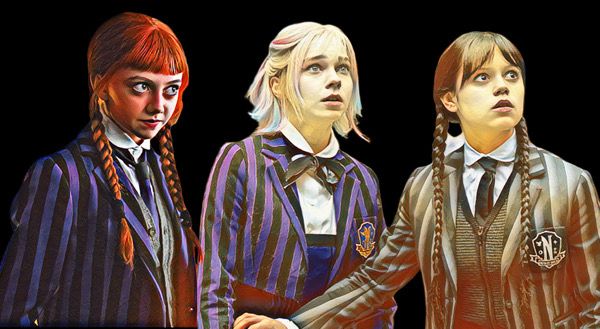
Now, the spoilers — because they’re what explain why, even stumbling, this season remains memorable. The finale reveals that Aunt Ophelia is alive, locked away in Grandmama Hester’s basement, scrawling “Wednesday must die” on the wall: a striking image, a promise of Addams-family-infused conflict, and a hook that, if well handled, can explode in Season 3. Ophelia’s diary, gifted by Morticia to her daughter, isn’t just a plot device; it’s a symbol of trust, of acceptance, of recognition of Wednesday’s independence — the emotional thread that gives the series its heartbeat.
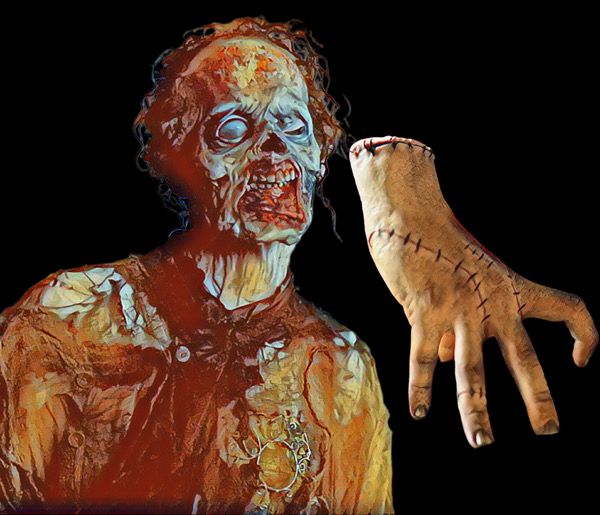
Another highlight is Thing’s origin: discovering that Thing is actually Isaac Night’s severed hand turns a historical gimmick into a domestic tragedy. The “Thing”/“Night” anagram is a clever trick, but the real power lies in the moment when the hand chooses its family — and rips the clockwork heart out of its former master. It’s camp with heart: nonsense given meaning, grotesque turned into affection. In those moments, Wednesday feels written with ink, not in a rushed writers’ room.
On the action front, Isaac’s machine that promises to “cure” Hyde at the cost of loved ones’ lives is unapologetic melodrama — and it works. Watching Tyler kill his mother, Francoise, by accident while in Hyde form is cruel and consistent with the series’ logic: powers as amplifiers of pain. But perhaps the most honest detail is Wednesday’s impulsive decision not to kill Tyler when she has the chance: she “misses” — and that opens an ethical and emotional crack that could, if the writers are brave enough, carry into real growth in the next season. And yes, the end of Principal Dort, petrified and crushed by his own chandelier fire, restores the series’ flair for farce: villains punished by their own folly.
And Enid? Her choice to wolf out as an alpha to save Wednesday, knowing it could trap her forever in wolf form and make her a hunted outcast — even among her own kind — is the most beautiful gesture of the season. That’s where the show remembers its true heart: female friendship, chosen sisterhood, the silent pact between two outcasts who see each other even when the world insists on locking them in different cages. Sending Enid north into exile makes sense; treating that exile as a true journey (and not another “side arc”) is what I hope for in Season 3.
That said, what drags the show down? The same compulsion to juggle too many plates is already evident in Part 1. Mysteries and cults (Morning Song vampirizing Bianca, then disappearing), romances turned into shapeless “love rhombuses,” crowded corridors with no counterpart of… classes. The series barely seems interested in its school setting, once pitched as its defining trait. Ironically, what’s missing is routine — so that the extraordinary feels extraordinary. When everything is an event, nothing is an event.
And there is, undeniably, a format problem that is less artistic and more industrial: Netflix’s choice to split the season into two parts. This isn’t just a release strategy; it directly impacts our relationship with the work. Wednesday depends on atmosphere, emotional continuity, and a crescendo of suspense. Long pauses break the varnish, blur the rhythm, and sabotage the very experience the show wants to deliver. It’s time to admit that releasing “everything at once” for weekend engagement isn’t a strategy — it’s a crutch, and it comes at the cost of pacing and memory.
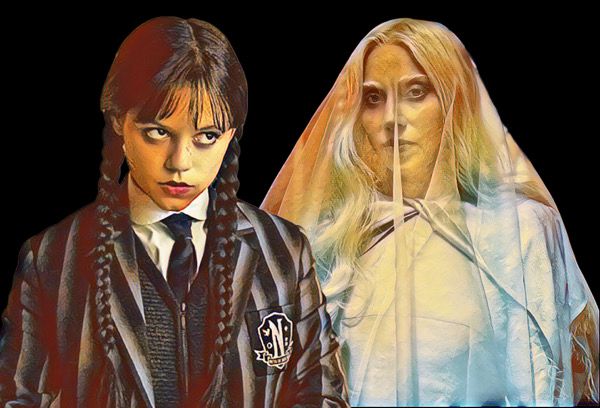
Too many characters also weigh it down. When the show focuses on Ortega and Myers — and, in the body swap episode, it never shines brighter — it remembers what it’s about. Split them apart too often, bury them in CGI fights that mimic Burton’s monsters without the handmade charm, and the magic vanishes. It’s telling that the best episode, balancing a supernatural “problem of the week” with genuine character arcs, comes from the very creators of Smallville, veterans at that kind of episodic structure. The blueprint is there, clear as a stained-glass window.
So, on my scorecard:
What I liked
- The soundtrack as narrative and atmosphere (and the playful nod to the viral phenomenon of Season 1).
- The performances — Ortega and Myers, but also Buscemi, Christie, Lumley, and Templeton.
- The surprise of Lady Gaga (both musically and in her cameo) — calculated, yes, but thrilling.
- The Thing backstory deepens an icon and delivers an emotional, memorable climax.
- The “super Tim Burton” effects, when they embrace camp and craft rather than slick CGI.
What I didn’t like
- Too many subplots and exaggerated twists, draining focus from the core (Wednesday & Enid).
- Too many characters, leaving promising arcs sidelined.
- The two-part release strategy breaks the rhythm of a show that thrives on atmosphere and sustained tension.

In the end, Wednesday remains one of those productions where form is as important as content: a shadow sketch, a choreographed irony, a funereal laugh. When the series dares to trust its two leads and the bond that links them, it finds its strongest pulse. If Season 3 embraces that vocation — less dispersion, more character; less viral noise, more inner music — then the “darkest chapter” promised may also turn out to be the brightest in terms of artistic and emotional direction. Until then, I’m left with the echo of a hand skittering across the floor — choosing, without hesitation, whose applause it truly wants to earn.
Descubra mais sobre
Assine para receber nossas notícias mais recentes por e-mail.
 miscelana.com