
Michael Hirst, the creator of Vikings, traded the icy landscapes of Scandinavia for the dust of the American West and built, in Billy the Kid, one of the most underrated historical series of recent television. Streaming exclusively on MGM+, the show ended up “lost in the crossfire” of the streaming wars, largely unnoticed by mainstream audiences. But this was never a sign of poor quality: from the very first season, Hirst dove into Billy’s childhood to contextualize and follow his short, legendary life, crafting a portrait that balances myth and man, hero and outlaw. Unlike the simplistic versions Hollywood has often immortalized, here the audience is invited to see Billy as a product of a world where the law was fragile, often arbitrary, and where conflicts were settled at gunpoint.

The third and final season arrives on September 28, 2025, to close this journey, delivering Billy’s tragic last fight — a fight for dignity, for justice, and for those he saw as forgotten. The path so far has been marked by losses, unlikely alliances, and painful betrayals, including that of friends turned executioners. Now, Hirst promises an ending that honors the tragic tone of the real story: Billy will fight to the very end, even knowing that the end is inevitable. This sense of fate gives the series a rare weight and a melancholy that feels closer to a Shakespearean tragedy than to a conventional Western.
Critics have acknowledged this achievement. Many praise Hirst’s ability to blend history, drama, and action into an engaging tapestry, as well as Tom Blyth’s magnetic performance as Billy — intense yet vulnerable in just the right measure. The visuals are striking: the period reconstruction, the dusty towns, the cinematography that conveys the heat and danger of every move — and the show builds tension even in moments of silence. Some argue that the second season struggled with a slow pace and subplots that added little to the main arc, but the general consensus is that Billy the Kid is a hidden gem, a series that deserved far more attention.
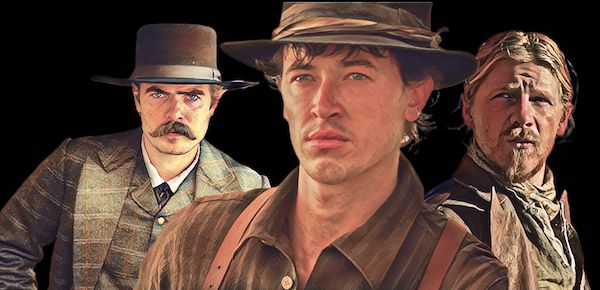
Another of Hirst’s great accomplishments is his decision to break with decades of cinematic and TV stereotypes about Billy. In classic portrayals, such as Paul Newman’s The Left Handed Gun or Sam Peckinpah’s Pat Garrett and Billy the Kid, Billy is either a charming outlaw or a rebellious antihero — almost a pop icon of the Wild West. In series like Young Guns or TV anthologies, he often appeared as a symbol of youthful rebellion, sometimes with a sense of adventurous fun. Hirst, however, gives us a far more complex and human character: an orphaned boy, raised in poverty and violence, who becomes an outlaw not out of glamour but because it was the only path left to survive — and to seek justice in the world he inhabited.
This choice makes the series all the more emotionally powerful. It’s not about watching a myth in action, but witnessing the slow, painful transformation of a young man into a legend — step by step, loss after loss — until the inevitable ending. When the final shot is fired in this last season, it won’t just be the end of a hunted outlaw’s story — it will be the closing of a narrative about a stolen childhood, betrayed friendships, and the price of trying to defy fate.
Descubra mais sobre
Assine para receber nossas notícias mais recentes por e-mail.
 miscelana.com