
Robert Redford’s death has much of the persona he crafted on screen: quiet, discreet, and unexpected. At 89, he passed away at home in Utah, without fanfare — as if giving us one last gift, letting the films, the images, and the memories speak for him.
Robert Redford’s beauty never asked his audience to lower their intelligence. He was — and will remain — a legend as an actor, producer, director, activist, and entrepreneur. He preserved his artistic integrity over the decades, with films and productions that marked generations. Occasionally, he allowed himself to take part in more popular fare — like his turn in the Marvel universe — but never diluted his own persona. He was, without exaggeration, a legend.
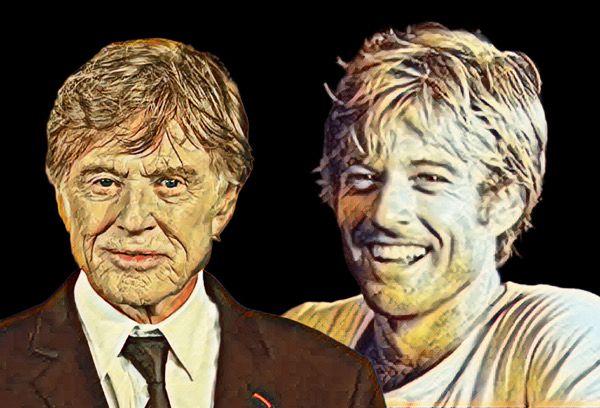
His filmography is a true map of a cinema that is slowly disappearing: Butch Cassidy and the Sundance Kid, The Sting, All the President’s Men, Out of Africa… and even the melodramatic but irresistible Indecent Proposal. Behind the camera, he was just as impeccable: Ordinary People earned him both the Best Director and Best Picture Oscars in 1980 and remains one of the most quietly devastating family dramas ever made.
Redford was born in 1936 in sunny California. He was not the kind of prodigy who always knew what he wanted — quite the opposite. He had a baseball scholarship, dropped everything, and went off to Europe, where a bohemian year in Paris gave him the focus he needed. Returning to the U.S., he found his place on stage. It was on Broadway, in Barefoot in the Park, that he drew attention — a play that introduced him to Jane Fonda and opened the door to Hollywood, where he would reprise the role in the film. Soon came the long partnership with Paul Newman, immortalized in Butch Cassidy and the Sundance Kid.
Politically engaged and alert, he made a point in the 1970s to choose films that reflected reality and spoke of urgent issues such as the environment and political crisis — it’s no coincidence that All the President’s Men remains one of his most iconic works. His relationship with independent cinema reshaped the industry: by creating the Sundance Institute and the Sundance Film Festival, Redford permanently transformed the American cinematic landscape, giving a platform to new generations of filmmakers and becoming the guardian of stories that might otherwise never have been told.
And yet, his romantic side is just as enduring. The Way We Were with Barbra Streisand and Out of Africa with Meryl Streep remain classics that still break hearts. His turn as Jay Gatsby, opposite Mia Farrow, was praised for the melancholy and elegance he brought to the role.

As a director, he was demanding and subtle. He helmed Quiz Show, A River Runs Through It, and The Horse Whisperer, always seeking out moral dilemmas and complex characters. Even late in his career, he was unafraid to take risks. He earned an Oscar nomination for All Is Lost, virtually a wordless performance, one of the boldest and most contained of his life — and one that deserved every bit of recognition.
His personal life was always kept remarkably private. He married Lola Van Wagenen, with whom he had four children. After their divorce, he had a high-profile romance with Brazilian actress Sonia Braga, and since the 1990s, had been with German artist Sibylle Szaggars. In 2018, starring in The Old Man & the Gun, he announced he was retiring from acting — a symbolic gesture, as though saying he had told all the stories he wanted to tell.
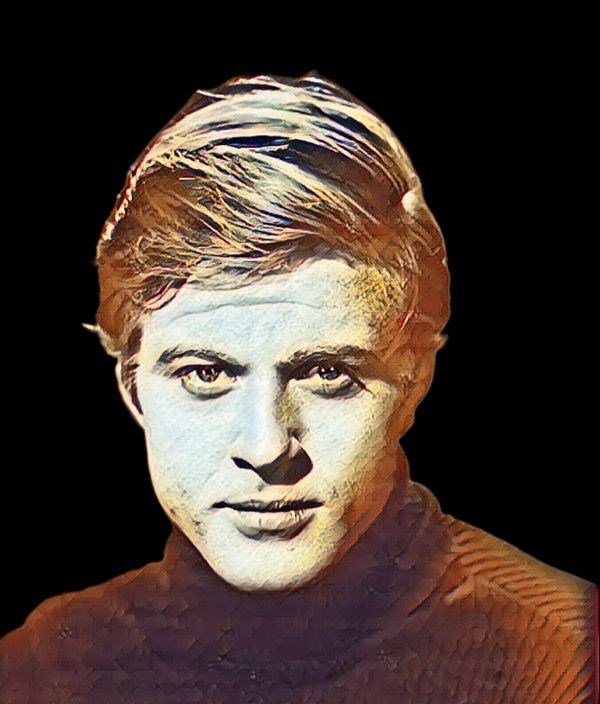
Redford was also a tireless activist, especially for environmental causes, and maintained that commitment until the end. Over the years, he became a rare example of a star who could balance fame with responsibility — never losing his sense of purpose, never failing to use his voice for something bigger than himself.
Today, cinema loses one of its last giants. Not just a blue-eyed leading man, but an artist who elevated everything he touched. His death feels like the end of an era, but it is also a reminder of what he leaves behind: films, characters, stories, ideas, and proof that it is possible to age with grace and coherence, without succumbing to cynicism.
The title of his 1984 film may define him better than any obituary could: Robert Redford was The Natural. And he always will be.
Descubra mais sobre
Assine para receber nossas notícias mais recentes por e-mail.
 miscelana.com